You know what nobody tells you about sharing a small bedroom with your partner? It can either bring you closer together or turn into a daily game of “whose stuff is taking up all the space.” I’ve been there, squeezing two people’s lives into a room that barely fits a queen bed.
But here’s the secret that changed everything for me: small bedrooms for couples don’t have to feel cramped or chaotic. With the right design choices, your tiny bedroom can actually feel more intimate, cozy, and honestly? Way more romantic than those massive master suites that echo when you talk.
After transforming multiple small bedrooms (thanks, apartment living), I’ve figured out exactly what works and what’s a complete waste of money. Whether you’re newlyweds in your first apartment or just trying to make your current space work better, I’m sharing all the tricks that’ll make your small couple bedroom feel like you hired a designer.
Why Warm Neutral Bedrooms Are Perfect for Couples (And Small Spaces)
Let’s talk about color for a second. When you’re sharing a small bedroom, you need colors that both people can live with. That lime green you loved in college? Your partner probably hates it. That navy blue they want? Might make your tiny room feel like a cave.
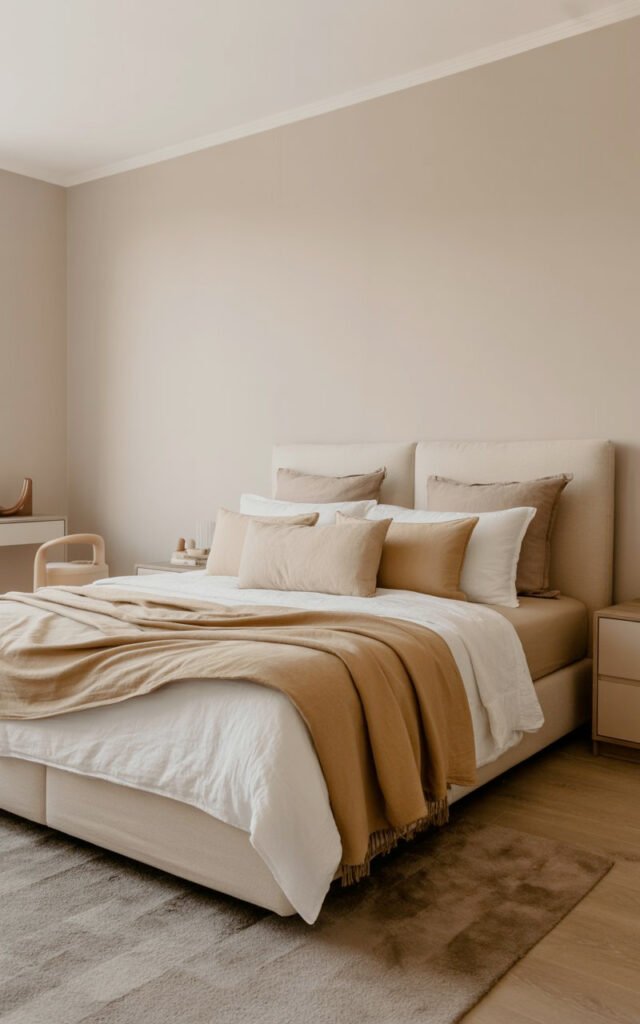
Enter warm neutrals – the relationship saver of bedroom design. We’re talking creams, beiges, taupes, soft whites with warm undertones. These colors make everyone happy because they’re sophisticated without being boring.
Here’s why warm neutrals work so well in small bedrooms:
They reflect light like nobody’s business. In a small room with maybe one window, you need every bit of light bouncing around. Warm neutrals multiply whatever natural light you have, making the space feel instantly bigger.
They create a calming atmosphere that actually helps you sleep. Unlike bold colors that energize you (great for a home office, terrible for where you’re trying to relax), warm neutrals signal to your brain that it’s time to wind down.
I noticed this immediately when I switched from my dark gray walls to warm beige. The room felt 10 degrees warmer and twice as spacious. My partner, who usually has opinions about everything, actually said “this is perfect.” That’s when I knew I’d cracked the code. 🙂
Understanding What Makes a Small Bedroom Work for Two People
Before we get into the pretty stuff, let’s be honest about the challenge here. You’re fitting two people’s sleeping space, storage needs, and probably different bedtime routines into a room that wasn’t designed for all that.
The main issues couples face in small bedrooms:
- Not enough storage for both people’s stuff
- Different lighting needs (one wants to read, the other wants to sleep)
- Making it feel like “our” space instead of one person’s room
- Keeping it from feeling cluttered and chaotic
- Finding room for nightstands on both sides of the bed
The good news? Every single one of these problems has a solution that doesn’t require knocking down walls or winning the lottery.
Creating the Perfect Warm Neutral Color Palette
That Pinterest bedroom with the dreamy beige and cream tones? It’s not using just one beige. The magic is in layering multiple shades of warm neutrals to create depth and interest.
Picking Your Base Colors
Start with your wall color. This is your foundation, and getting it right makes everything else easier.
My top warm neutral paint picks for small bedrooms:
- Behr “Swiss Coffee” – A warm white with just enough cream to feel cozy
- Sherwin Williams “Accessible Beige” – The most popular beige for a reason – it works everywhere
- Benjamin Moore “Manchester Tan” – Slightly warmer, perfect if your room gets lots of natural light
- Farrow & Ball “Skimming Stone” – If you want to splurge, this greige is absolute perfection

Pro tip: In a small bedroom, paint the ceiling the same color as the walls. I know it sounds wrong, but it actually makes the room feel bigger by eliminating the visual boundary between wall and ceiling.
Layering Your Neutrals
Once you’ve got your wall color, you need at least 3-4 other neutral tones to layer in. Think of it like this:
Lightest layer: White or ivory bedding, sheer curtains Medium layer: Beige or taupe furniture, area rug Darker layer: Deeper tan or brown accents in pillows, throws Accent layer: This is where you add your pops of color (we’ll get to that)
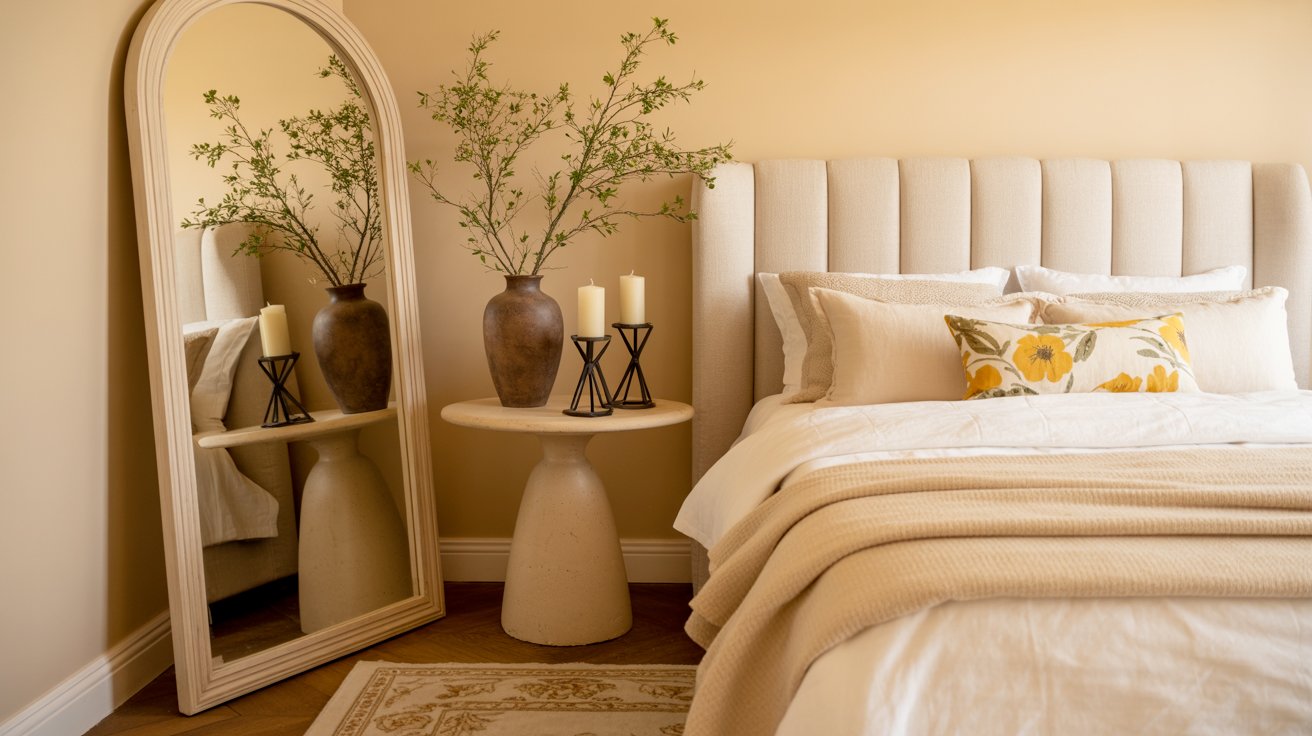
The bedroom in that Pinterest pic? Count the neutrals. There’s cream walls, lighter ivory bedding, beige headboard, tan rug, and those darker brown vases. That’s at least 5 different neutral tones working together.
Small Bedroom Furniture That Actually Fits (And Looks Good)
Here’s where most people mess up their small couple bedroom – they try to cram in all the furniture they’d have in a big room. That king bed, two nightstands, a dresser, a bench at the foot of the bed… Stop. You’re making it worse.
The Bed Situation
Queen over king, always. I don’t care what the mattress salesperson told you. In a small bedroom, a king bed dominates the entire space and makes moving around impossible. A queen gives you both plenty of sleeping room and actual floor space.
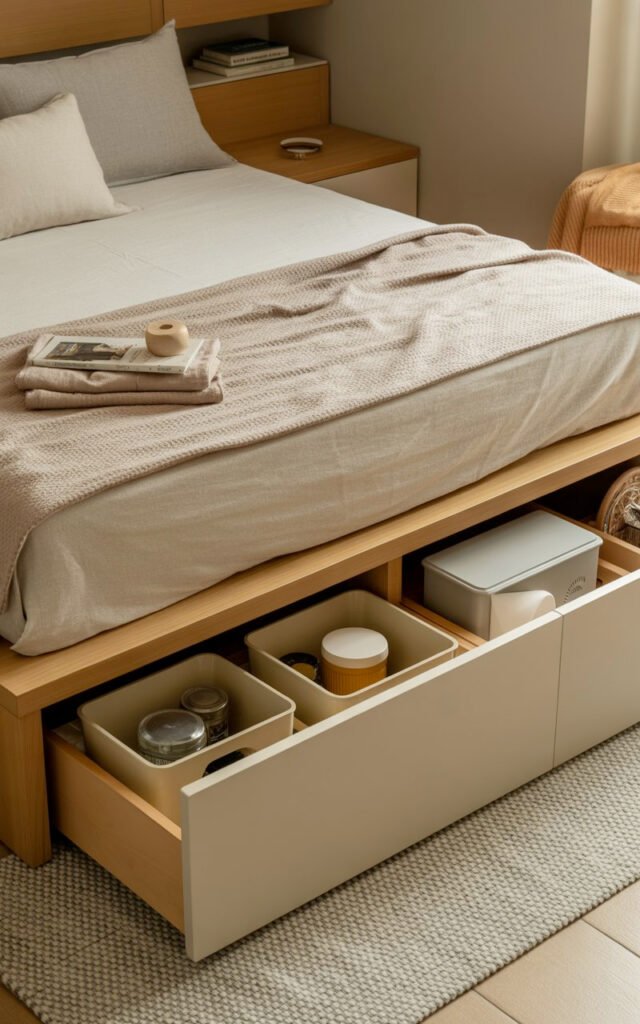
Platform beds are your friend. They sit lower to the ground, which makes your ceiling feel higher. Plus, many have built-in storage underneath – hello, extra space for off-season clothes.
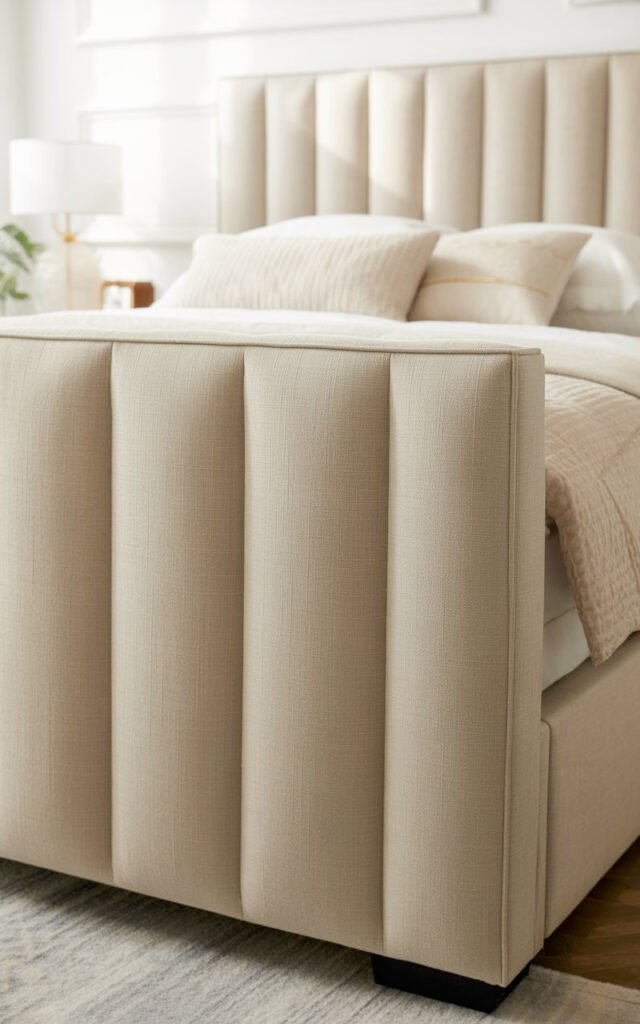
That upholstered channel-tufted headboard in the Pinterest pic? It’s not just pretty – it’s adding soft texture that makes the room feel more luxurious. You can find similar headboards at places like Wayfair for $200-300, or DIY one for under $100 if you’re handy.
Rethinking Nightstands
Traditional matching nightstands on both sides? Not always possible in a small bedroom. And honestly? Kind of boring anyway.
Here are alternatives that work better:
One regular nightstand on one side, a small wall-mounted shelf on the other. This gives you both surfaces without eating up floor space.
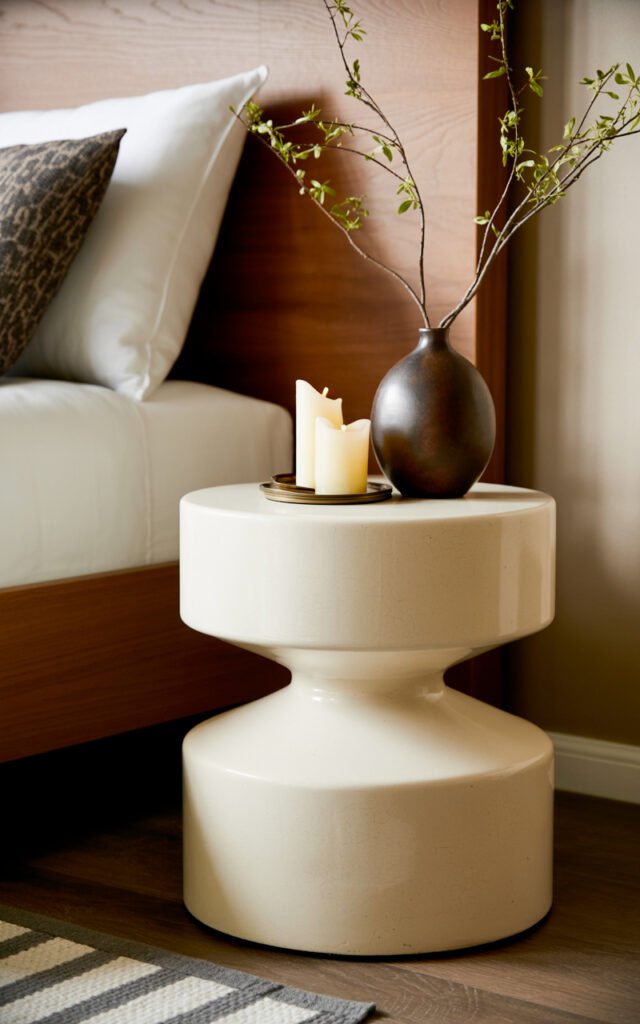
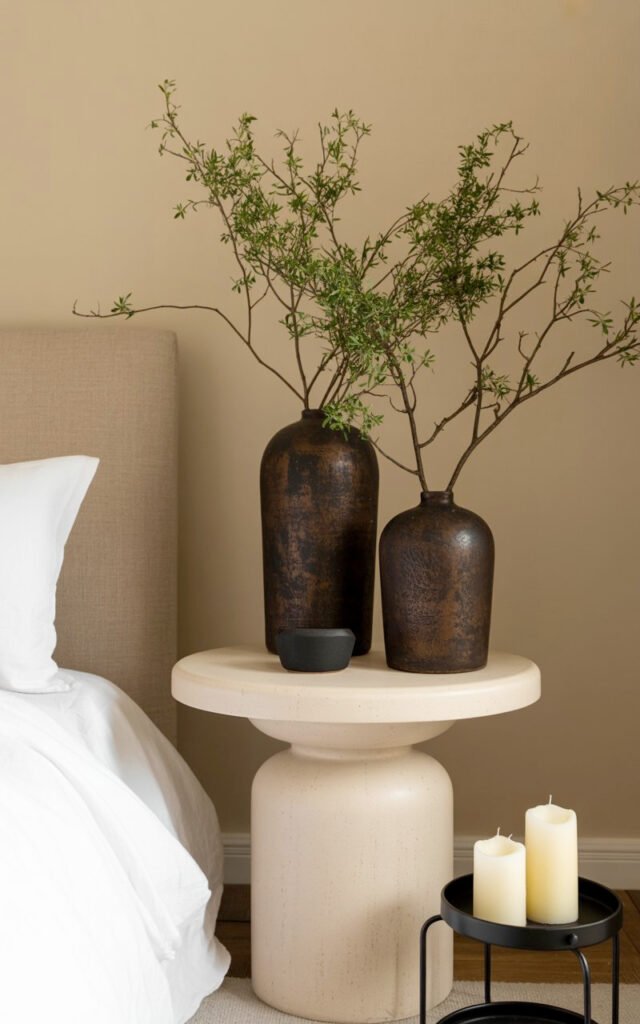
A small sculptural side table (like that gorgeous pedestal table in the Pinterest pic). It takes up minimal floor space but makes a huge visual impact.
Floating nightstands mounted to the wall. They provide surface space without any footprint, and you can vacuum underneath them easily.
IMO, mismatched nightstand situations actually look more interesting and curated than perfect matching sets. It’s like you collected pieces over time instead of buying everything at once from the same store.
Storage Solutions That Don’t Look Like Storage
You need places to put your stuff, but you can’t have a massive dresser taking up half the room. Get creative:
Under-bed storage: Use slim storage containers or drawers that slide under your platform bed. This is prime real estate that most people waste.
Vertical storage: Tall, narrow dressers take up less floor space than wide, short ones. Think upward, not outward.
The closet works harder: Invest in good closet organizers. Double-hanging rods, shelf dividers, and door organizers can literally double your closet capacity.
Multi-functional furniture: That bench at the foot of your bed? Make sure it has storage inside. Your nightstand? Should have at least one drawer.
Lighting That Makes Your Small Bedroom Feel Huge (And Romantic)
Can we talk about how lighting is literally the most important thing in a small bedroom? Because it is, and most people get it completely wrong.
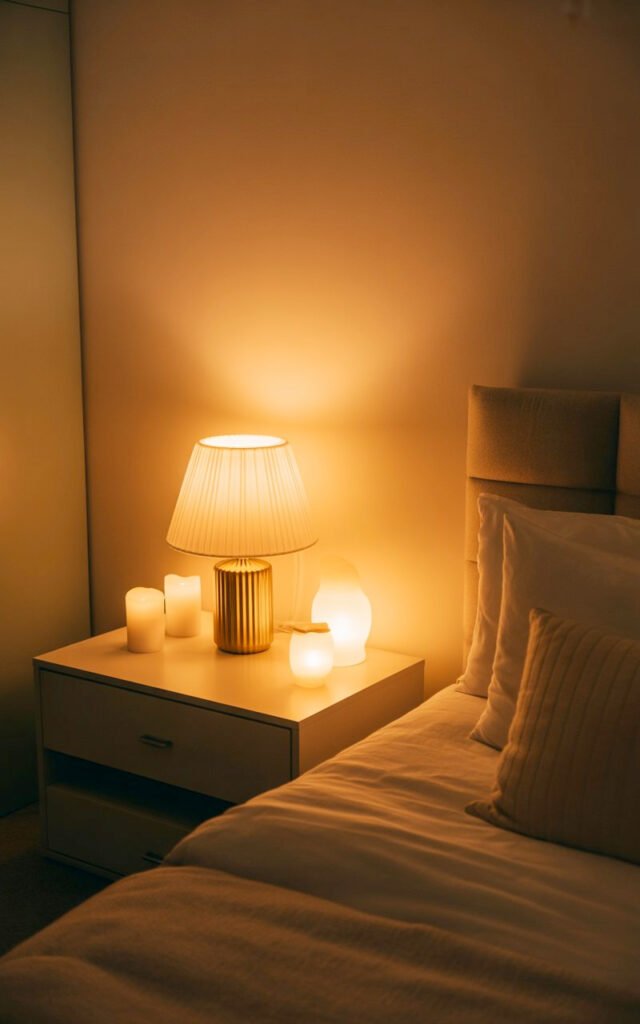
That Pinterest bedroom with the warm, glowing vibe? Notice there’s no harsh overhead light visible. The lighting is soft, layered, and coming from multiple sources at different heights.
Ditch the Ceiling Light (Or At Least Don’t Use It)
Overhead lighting in a small bedroom makes it feel like an interrogation room. It casts harsh shadows, highlights every flaw, and creates zero ambiance.
Instead, you need multiple light sources at different levels:
Ambient lighting: This is your overall room light. Use table lamps, floor lamps, or wall sconces. The key is having them spread around the room, not all in one corner.
Task lighting: Reading lights for each person. These can be adjustable wall-mounted lights or clip-on lamps that don’t take up nightstand space.
Accent lighting: This is the mood setter. Think candles (real or LED), string lights tucked behind the headboard, or even LED strips under floating furniture.
I use plug-in wall sconces on either side of our bed because we literally don’t have room for table lamps. They were $40 each on Amazon, and everyone who visits asks where I got them because they look so high-end.
The Right Bulb Temperature Changes Everything
This is crucial: You want bulbs in the 2700K-3000K range. This is warm white, the same color as candlelight. It makes your warm neutral walls glow instead of looking flat.
Cool white bulbs (4000K+) will make your cozy beige bedroom look gray and depressing. Trust me, I learned this the hard way when I bought the wrong bulbs and couldn’t figure out why my room suddenly looked terrible.
Using Mirrors to Multiply Light
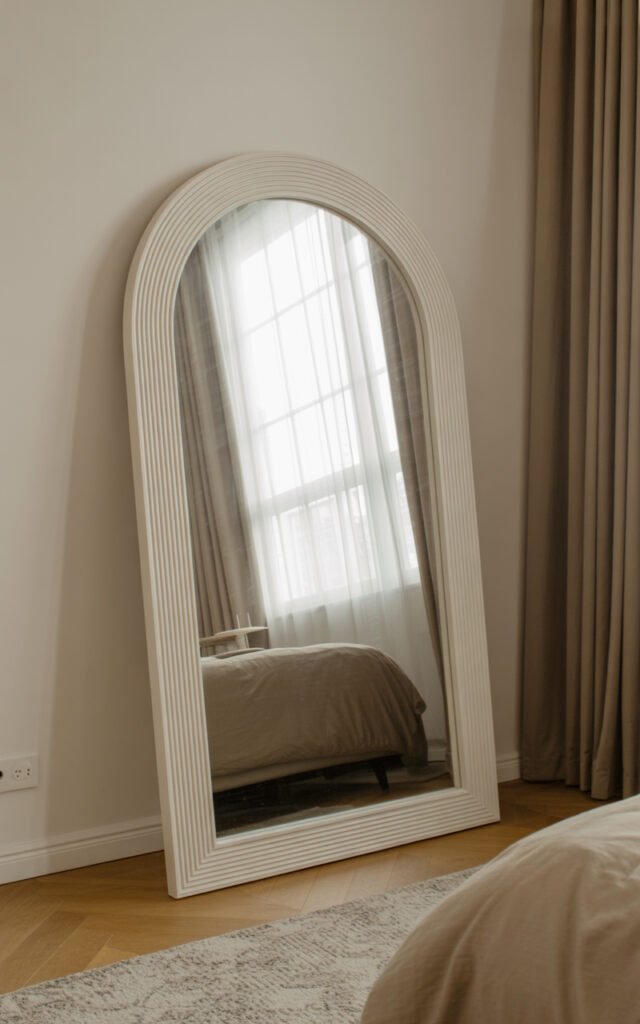
That massive arched floor mirror in the Pinterest pic? It’s not just decorative—it’s doubling the natural light in that room. Every window becomes two windows when you position a mirror to reflect it.
Mirror placement strategies for small bedrooms:
Opposite or adjacent to your window to bounce natural light around the room. This is the biggest impact you can make for the least money.
Behind or next to a light source to amplify it. Put a mirror near your lamp, and suddenly you’ve got twice the glow.
On or leaning against the wall opposite your bed. This makes the room feel twice as deep when you’re lying in bed looking at it.
I found my arched floor mirror at HomeGoods for $80. Similar ones retail for $300+, so definitely check discount stores before buying new.
Bedding That Makes Your Small Bedroom Look Expensive
The bedding makes or breaks your small couple bedroom. You can have perfect walls and furniture, but if your bed looks like a college dorm situation, the whole thing falls apart.
The Foundation: Keep It Simple and Neutral
Start with crisp white or ivory sheets. This is your base that never changes. Cotton or linen, doesn’t have to be expensive – Target’s Threshold line is great and under $50.
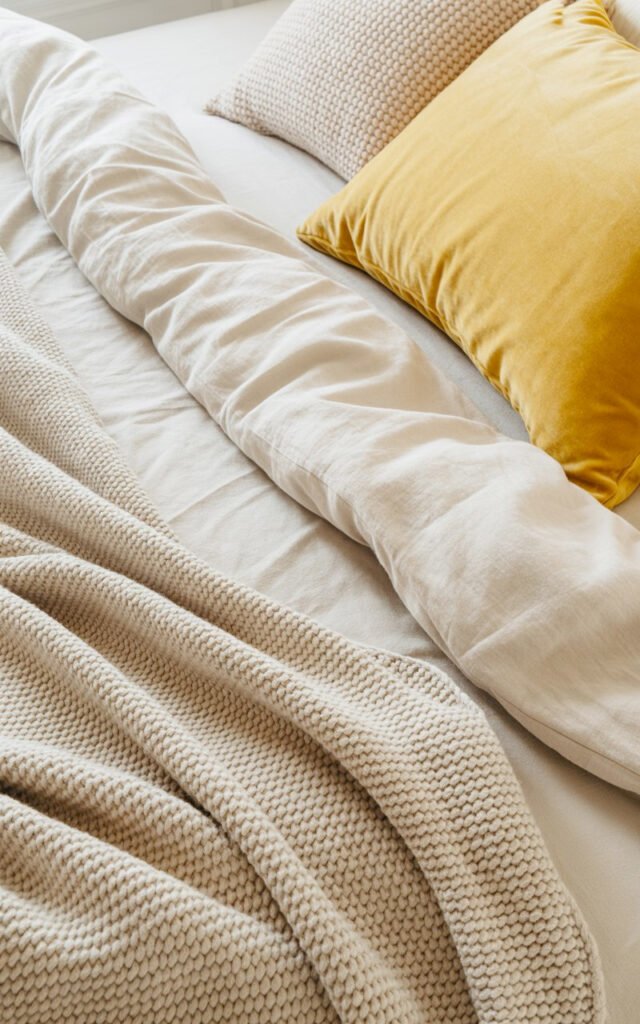
Add a neutral duvet cover in a shade that complements your walls. For that warm neutral look, go with cream, beige, or a soft tan. Linen duvet covers have that expensive, lived-in texture that makes your bed look like a boutique hotel’s.
The Pop of Color (Finally!)
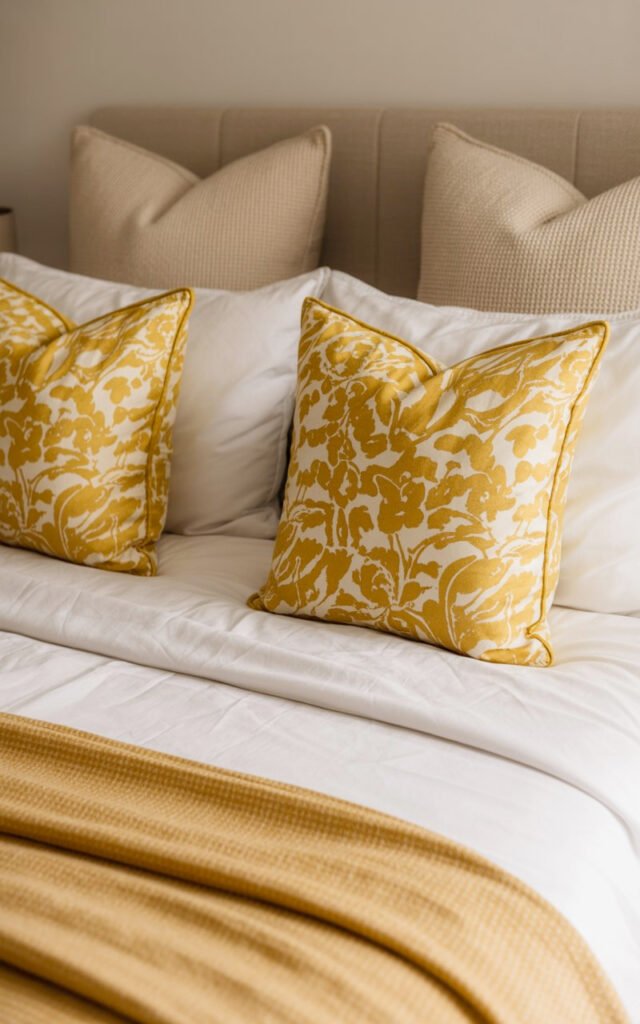
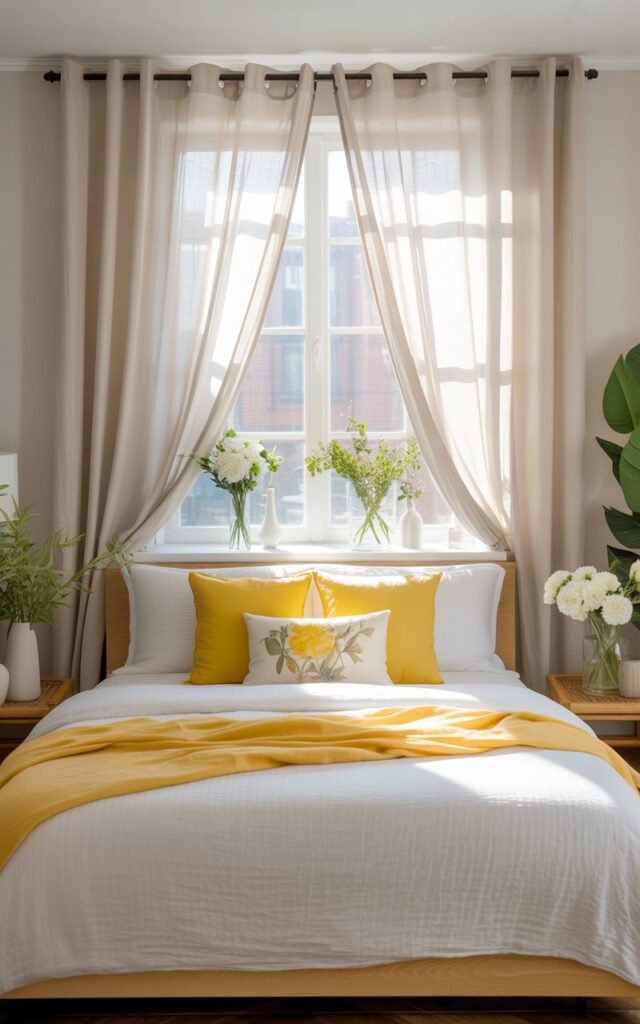
This is where you get to have some fun. In that Pinterest bedroom, it’s those gorgeous yellow floral pillows that make the whole room come alive. Without them, it would be pretty but a little flat.
Best accent colors for warm neutral bedrooms:
Mustard yellow or golden yellow – Adds warmth and energy without being overwhelming. This is what’s in the Pinterest pic, and it’s chef’s kiss perfect.
Terracotta or burnt orange – Earthy and sophisticated, works beautifully with beiges and tans.
Sage green or olive – Brings in a natural element that complements warm neutrals perfectly.
Dusty pink or blush – Soft and romantic, adds a feminine touch without being too sweet.
Deep charcoal or chocolate brown – Grounds the space and adds depth.
FYI, you don’t need a ton of color. Two accent pillows and maybe a throw blanket is enough. More than that and your small bedroom starts feeling busy.
Texture Is Your Secret Weapon
In a neutral bedroom, different textures are what create visual interest. You need:
- Smooth cotton sheets
- Slightly wrinkled linen duvet
- A chunky knit throw
- Velvet or textured accent pillows
- A woven or patterned rug
Each texture catches light differently and adds dimension to your bed. This is how designers make neutral rooms look interesting instead of boring.
Small Bedroom Layout Ideas That Maximize Space
Where you put your bed matters more than you think. The wrong placement can make your small bedroom feel even smaller and create weird traffic flow issues.
The Best Bed Placement Options
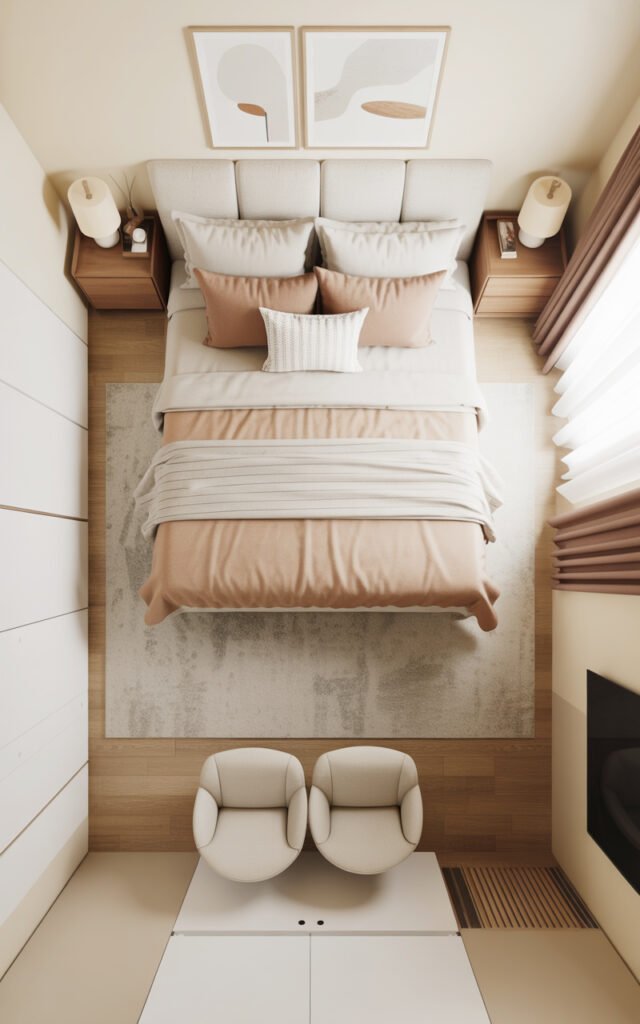
Against the longest wall, centered: This is the classic layout and usually works best. It balances the room and gives you access to both sides of the bed.
In a corner (only if you’re desperate): If your room is really tiny, putting the bed in a corner frees up more floor space. Just make sure both people can still get in and out reasonably easily.
Floating in the middle: If your bedroom is more square than rectangular, pulling the bed slightly away from the wall and positioning it as a focal point can actually work. This creates walk-around space that makes the room feel bigger.
The Pinterest bedroom has the bed centered on the longest wall with equal space on both sides—this is the gold standard layout for couples.
Creating Zones in Your Small Bedroom
Even in a tiny room, you can create distinct areas that make the space feel more functional:
Sleeping zone: Obviously your bed, but define it with a rug underneath that extends beyond the bed on three sides.
Getting ready zone: Even just a corner with a mirror and small stool or standing space counts. This prevents morning traffic jams.
Storage zone: Your closet and any dressers. Keep these together if possible.
Relaxation corner: If you have space, a small chair or floor cushion by the window creates a spot that’s not just about sleeping.
In our first apartment, our bedroom was 10×10 feet. We still managed to create these zones with strategic furniture placement, and it made the room feel way more livable.
Decorative Touches That Add Personality Without Clutter
Small bedrooms can’t handle a lot of knick-knacks. Every decorative piece needs to earn its place by either being beautiful, functional, or ideally both.
The Power of One Statement Piece
In that Pinterest bedroom, the statement piece is clearly that gorgeous arched mirror. It’s dramatic, sculptural, and beautiful—but it’s also functional. That’s the kind of decor that works in small spaces.
Other statement pieces that work in small couple bedrooms:
A large piece of artwork above the bed (instead of multiple small pieces)
An interesting headboard with texture or an architectural shape
A sculptural light fixture or floor lamp
A unique piece of furniture like that pedestal side table in the Pinterest pic
One statement piece > ten small decorative items. This keeps your room from looking cluttered and gives it a focal point.
Plants: The Decor That’s Always Worth It
I’m convinced you can’t have a truly beautiful bedroom without plants. They add life, color, and texture in a way nothing else can.
Best low-maintenance plants for small bedrooms:
Snake plants – Nearly impossible to kill, look sculptural and modern
Pothos – Trailing plants add dimension without taking up surface space
Monstera or philodendron – Big leafy plants make a statement in corners
In the Pinterest pic, those branches in the dark vases? Simple, elegant, and you can literally cut branches from outside or buy them at the grocery store for $5. This is the kind of decor I’m talking about—inexpensive, impactful, easy.
The Art of Styling Surfaces
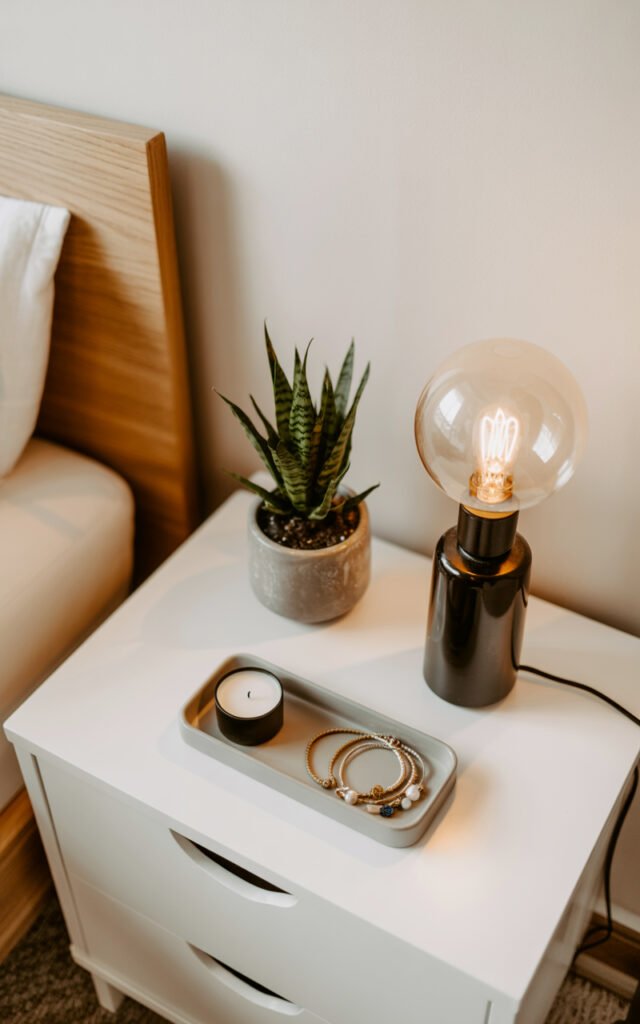
Your nightstands and dresser tops need to be functional but also look good. Here’s my formula:
On each nightstand:
- A lamp (functional)
- One decorative object (a small plant, candle, or object you love)
- A small tray or dish for jewelry/phone
- That’s it. Seriously.
On your dresser:
- A mirror or artwork leaning against the wall
- One larger decorative item (vase with flowers, sculptural object)
- A small grouped collection (candles, small plants, books)
- Keep it to 3-5 items total
The goal is “carefully curated,” not “I put everything I own on display.” :/
Apartment Decor Inspiration: Making It Work as Renters
Most people dealing with small couple bedrooms are renting, which means you’ve got limitations on what you can change. But you’ve also got advantages – when you figure out what doesn’t work, you can try something new at your next place.
Renter-Friendly Updates That Make a Big Impact
Peel-and-stick wallpaper on one accent wall. You can get gorgeous warm neutral patterns or even just a textured solid. Application takes a few hours, removal takes minutes and doesn’t damage walls.
Removable wall hooks and strips. Command strips have gotten so much better. You can hang mirrors, artwork, even floating shelves without putting holes in walls.
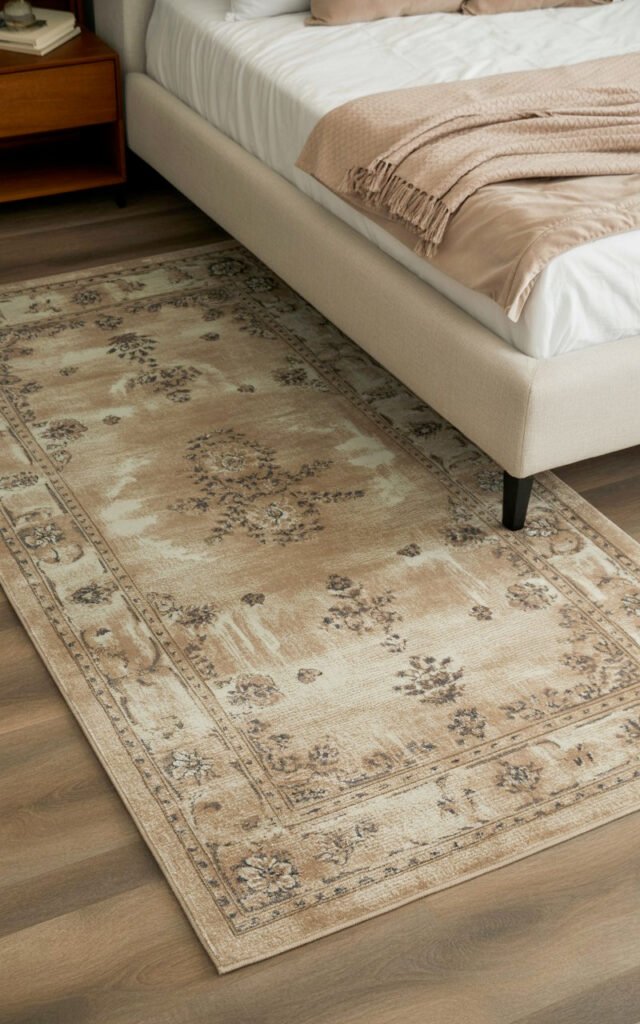
Area rugs define your space. In an apartment with basic carpet or floors you can’t change, a beautiful rug transforms everything. That vintage-style rug in the Pinterest pic pulls the whole room together.
Lighting updates that plug in. You can’t change the builder-grade ceiling fixture, but you can just…not use it. Plug-in sconces, floor lamps, and table lamps create way better ambiance anyway.
Curtains hung high and wide. Even if your windows are small and basic, hanging curtains from the ceiling and extending the rod beyond the window frame makes them look bigger and more luxurious.
I’ve rented for most of my adult life, and honestly? Some of my best design work has been in rentals because I had to get creative instead of just throwing money at problems.
Budget Breakdown: Creating This Look for Under $600
Let’s get real about what it actually costs to transform a small couple bedroom into that warm neutral sanctuary you’re dreaming about.
Here’s how I’d spend $600:
- Paint and supplies: $80 – Two gallons of warm neutral paint, primer if needed, brushes and rollers, painter’s tape
- Bedding: $180 – Linen duvet cover ($70), white sheet set ($40), two yellow accent pillows ($40), textured throw blanket ($30)
- Lighting: $120 – Two wall sconces or table lamps ($80), warm LED bulbs ($20), candles or LED candles ($20)
- Mirror: $100 – Large floor mirror or wall-mounted mirror (check HomeGoods, TJ Maxx, Facebook Marketplace)
- Rug: $80 – 5×7 or 6×9 area rug (look for sales at Rugs USA, Wayfair, or Target)
- Decor and plants: $40 – Two small plants and pots ($25), vases or decorative objects ($15)
That’s $600 total to completely transform your bedroom. If you already have some of these items or find good deals, you can do it for even less.
The most expensive single item is the bedding, but that’s because you’re using it every single day. It’s worth investing in quality here.
Common Small Bedroom Mistakes Couples Make (And How to Fix Them)
I’ve made literally every mistake possible in small bedrooms. Let me save you the trouble of learning these lessons the hard way.
Mistake #1: Too Much Furniture
Just because you have space against a wall doesn’t mean you need to put furniture there. Empty floor space actually makes a room feel bigger.
The fix: Look at your room and remove one piece of furniture. I’m serious. That accent chair you never sit in? The extra dresser that’s just collecting clutter? Get rid of it. You’ll be shocked how much bigger your room feels.
Mistake #2: Pushing All Furniture Against the Walls
Counterintuitively, pulling furniture slightly away from walls can make a small room feel bigger. It creates depth and makes the space feel intentional.
The fix: Pull your bed 6-12 inches away from the wall. Put your nightstands at an angle instead of flush against the wall. This creates visual interest and actually improves traffic flow.
Mistake #3: Not Enough Lighting
One overhead light and maybe a lamp is not enough. Small bedrooms need multiple light sources to avoid feeling cave-like.
The fix: Add at least two more light sources. This could be wall sconces, a floor lamp, string lights, or candles. Layer your lighting for different moods and times of day.
Mistake #4: Clashing Styles Between Partners
One person wants modern minimalist, the other wants cozy traditional. You end up with a room that looks like two different people decorated opposite sides.
The fix: Warm neutrals are the great compromiser. They work with both modern and traditional styles. Agree on a neutral base, then each person gets to add a few personal touches within that framework.
Mistake #5: Ignoring Vertical Space
You’re focusing all your attention on floor space and forgetting about all that empty wall space above eye level.
The fix: Use tall bookshelves, floating shelves near the ceiling, hooks on walls, over-door organizers. Going vertical adds storage without eating into your limited floor space.
Seasonal Updates That Keep Your Bedroom Fresh
One cool thing about a warm neutral bedroom? You can easily switch up the vibe with small seasonal changes without redecorating everything.
Spring/Summer Updates
Lighter, breezier textiles: Swap heavy velvet pillows for cotton or linen. Trade your chunky knit throw for a lighter waffle-weave blanket.
Brighter accent colors: Switch from mustard yellow to a brighter lemon yellow, or swap in fresh white and light blue accents.
Fresh flowers and greenery: This is the easiest seasonal update. Branches, fresh flowers, or new plants immediately make your room feel spring-like.
Sheerer curtains: If you have blackout curtains in winter, swap for lighter linen curtains that let in more light.
Fall/Winter Updates
Warmer, cozier textures: Bring back the velvet pillows, chunky knit throws, and heavier bedding layers.
Deeper accent colors: Swap bright yellows for burnt orange, rust, or deeper gold tones. Add forest green or burgundy accents.
Mood lighting: Add more candles, string lights, or a Himalayan salt lamp for that cozy winter vibe.
Layered rugs: Put a smaller, plush rug on top of your existing rug for extra warmth underfoot.
These small tweaks keep your bedroom feeling current without spending a fortune or starting from scratch every season.
Where to Shop for the Best Deals on Neutral Bedroom Decor
You absolutely do not need to spend designer prices to get this look. Here’s where I actually shop:
For furniture: Facebook Marketplace (seriously, check it daily), estate sales, Habitat for Humanity ReStore, IKEA with some styling, Target’s threshold line
For bedding: Target, H&M Home, Amazon (read reviews carefully), West Elm sale section, Parachute during sales
For mirrors and decorative items: HomeGoods and TJ Maxx (go weekly for best selection), thrift stores, estate sales, antique malls
For rugs: Rugs USA (always running sales), Wayfair during Way Day, RugsUSA outlet section, Facebook Marketplace for vintage rugs
For lighting: Amazon for plug-in sconces, Lowe’s for affordable floor lamps, thrift stores for vintage lamps you can update
For paint: Behr at Home Depot or Sherwin Williams during 40% off sales, check the “oops paint” section for massive discounts on mixed colors that might be perfect
For plants: Lowe’s or Home Depot (way cheaper than nurseries), propagate from friends’ plants for free, Facebook plant groups for swaps
The key is mixing a few new pieces with thrifted finds. That’s how you get a room that looks curated and expensive instead of like you bought everything at once from the same store.
Making Your Small Bedroom Feel Like “Home” for Both of You
Here’s the thing nobody talks about: sharing a small bedroom is intimate in a way that big master bedrooms aren’t. You’re literally in each other’s space constantly. This can be really beautiful or really frustrating, depending on how you approach it.
Creating a space that feels like both of yours:
Both people get equal say in major decisions. The paint color, the bedding, the furniture – these should be discussions, not one person deciding.
Each person gets some personal items displayed. Your partner’s book collection, your plant babies, their artwork, your vintage camera – the room should reflect both of you.
Respect each other’s needs. If one person needs darkness to sleep and the other needs light to read, invest in a good reading light and blackout curtains. Problem solved.
Create systems that work for both of you. Where do clothes go at the end of the day? Where does jewelry live? When you agree on systems upfront, you avoid the daily annoyances that build up.
The warm neutral approach makes all of this easier because it’s not about one person’s style dominating. It’s a blank canvas that you’re both painting together.
Final Thoughts: Your Small Bedroom Can Be Your Favorite Room
Look, I’m not going to pretend that a small bedroom is as easy as a big one. You have to be more intentional, more organized, and more creative. But honestly? That constraint often leads to better design.
Every piece has to earn its place. There’s no room for stuff you don’t love or use. Your small couple bedroom becomes this carefully curated space that’s truly yours.
That Pinterest-perfect warm neutral bedroom? It’s not about having a huge space or unlimited budget. It’s about smart choices, good lighting, and creating a vibe that makes you both actually want to spend time there.
Start with one thing. Maybe it’s painting the walls that warm neutral color you love. Maybe it’s investing in new bedding that makes your bed feel like a hotel. Maybe it’s just decluttering and rearranging what you already have.
Small changes add up fast in a small space. Within a few weeks, you can completely transform how your bedroom looks and feels.
And at the end of the day, you’re sharing this space with someone you love. Make it a room you’re both excited to come home to. That’s what actually matters.