Let’s be honest: hallways are where good intentions go to die. You know what I’m talking about—shoes piling up by the door, coats thrown over whatever’s available, bags dropped wherever there’s floor space, and that general chaos that greets you (and your guests) the second you walk in.
I used to have an entryway that looked like a tornado hit it daily. Shoes everywhere, coats draped on doorknobs, my bag perpetually on the floor. It drove me crazy, but I didn’t know how to fix it without spending a fortune or taking up the entire narrow hallway with bulky furniture.
Then I discovered the magic of intentional hallway ideas that prioritize function without sacrificing style. My entryway went from “please don’t look over there” to “yes, come on in!” And the best part? The solutions were simpler than I thought.
If your hallway or entryway feels like a dumping ground rather than a welcoming space, let me show you how to transform it into something that actually works for your daily life.
Understanding Your Hallway’s Real Purpose
Before we start buying storage solutions and mirrors, let’s talk about what your home entrance decor actually needs to DO, not just how it needs to look.
The True Functions of an Entryway
Drop zone for daily essentials:
- Keys, wallet, phone
- Mail and packages
- Bags, backpacks, purses
- Outerwear (coats, jackets, scarves)
Shoe storage and management:
- Removing and storing shoes
- Keeping them organized and accessible
- Preventing dirt from tracking through the house
Last-minute prep station:
- Checking your appearance before leaving
- Quick touch-ups
- Making sure you have everything
First impression creator:
- Sets the tone for your entire home
- Welcomes guests
- Reflects your style
Transition space:
- Mental shift from outside world to home
- Physical transition (shoes off, coat off)
- Decompression zone
When your hallway serves ALL these functions smoothly, coming home feels easier. When it doesn’t? Everything feels harder.
The Foundation: Shoe Storage That Actually Works
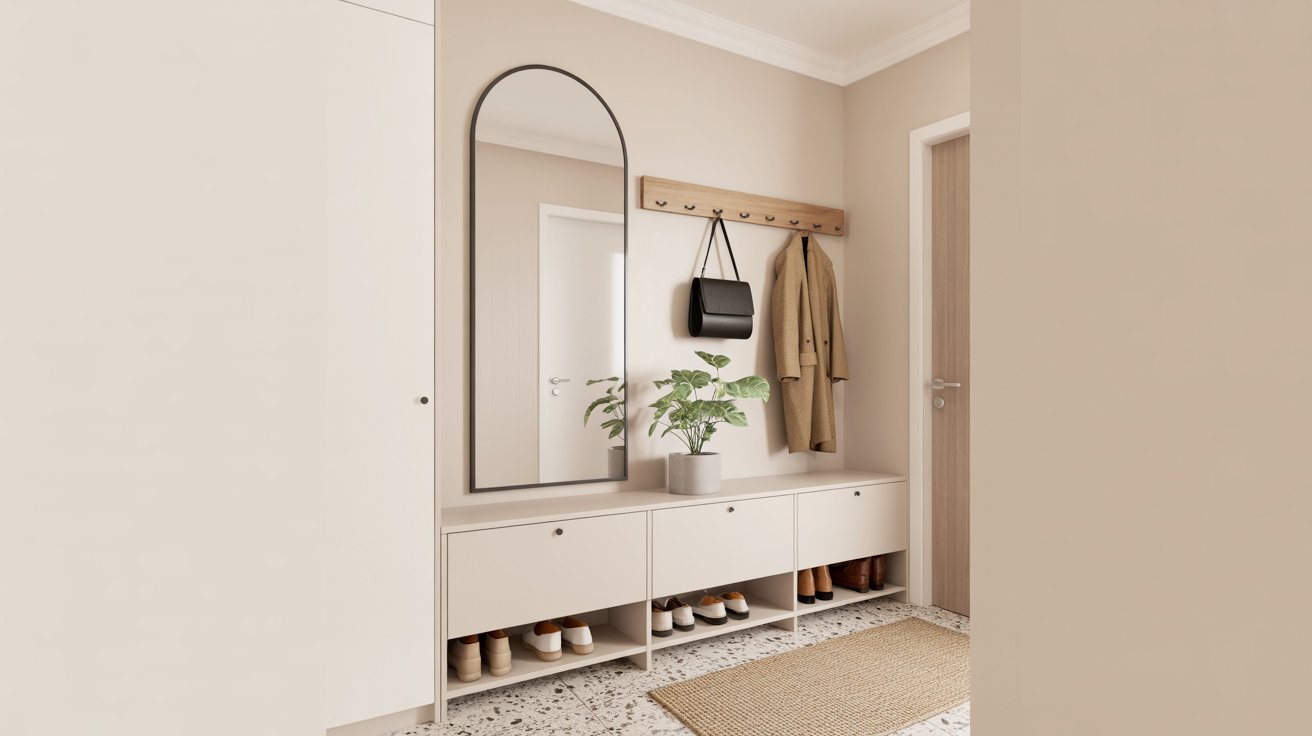
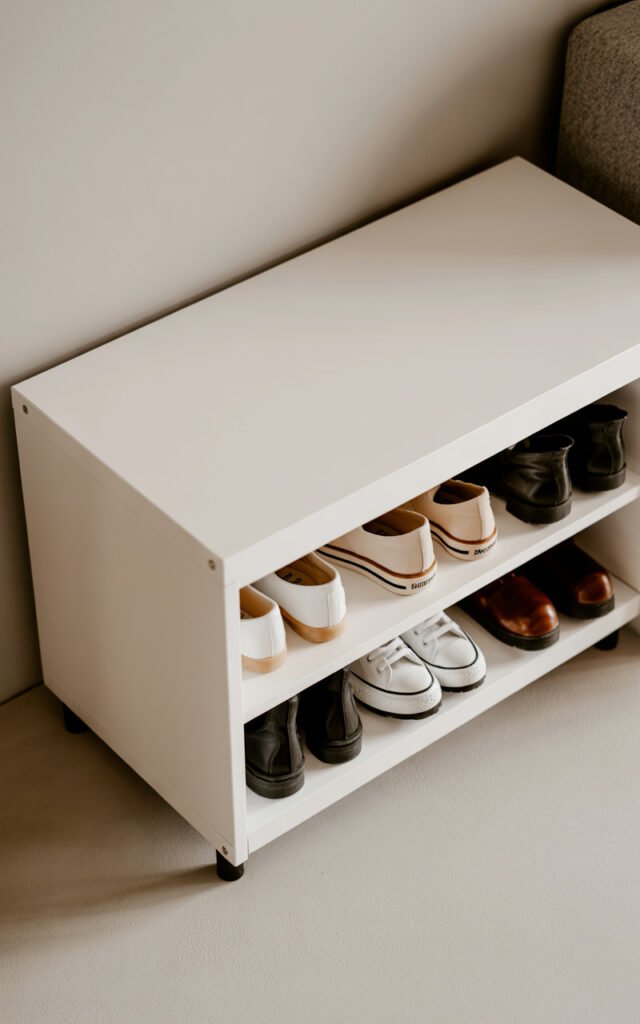
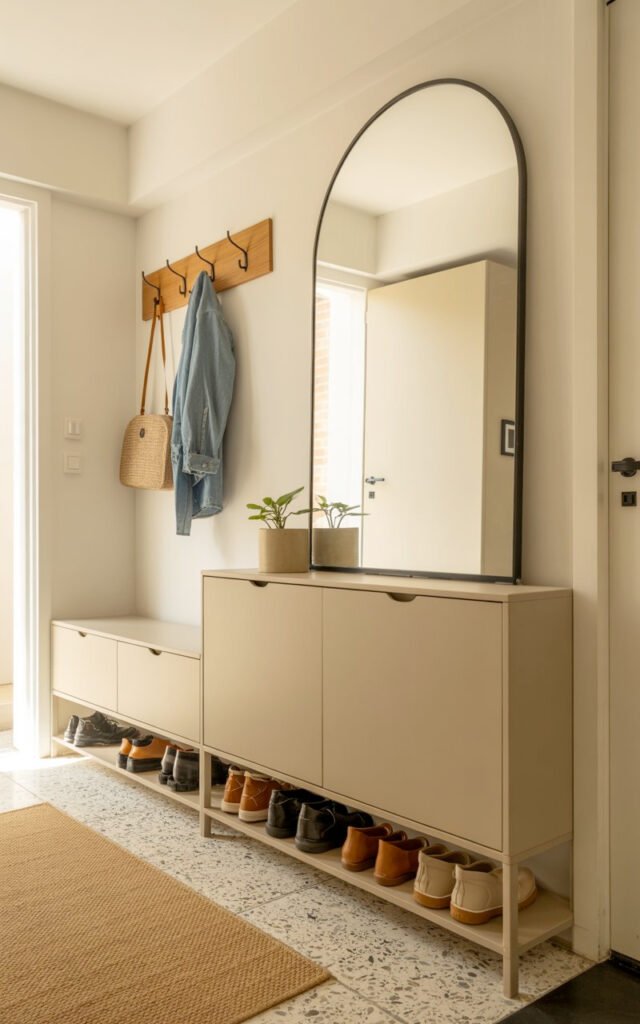
Look at that inspiration image—those shoes neatly stored in that low cabinet? That’s not just pretty styling. That’s strategic entrance decor that solves the #1 entryway problem: shoe chaos.
Why Shoe Storage Matters Most
Shoes take over fast: A family of three can easily have 20+ pairs of shoes that cycle through the entryway.
Visible shoe piles look messy: Even if everything else is organized, scattered shoes make the whole space feel chaotic.
Tracking dirt inside is gross: Proper shoe storage encourages removing shoes at the door.
You need them accessible: Shoe storage needs to be convenient or people won’t use it.
Low-Profile Shoe Cabinet Solution
The cabinet in the inspiration image is genius because:
It’s low and shallow: Doesn’t stick out into the hallway or block sightlines.
Multiple tiers visible: You can see what shoes you have without digging.
Open front: Easy to grab shoes quickly (closed doors = people won’t put shoes away).
Fits multiple pairs: Looks like 15-20 pairs easily.
Surface on top: Bonus space for keys, plants, decor.
Where to find similar:
- IKEA Trones (slim, stackable)
- IKEA Hemnes shoe cabinet (larger capacity)
- Wayfair low shoe storage cabinets
- DIY option: shallow bookcase on its side with added base
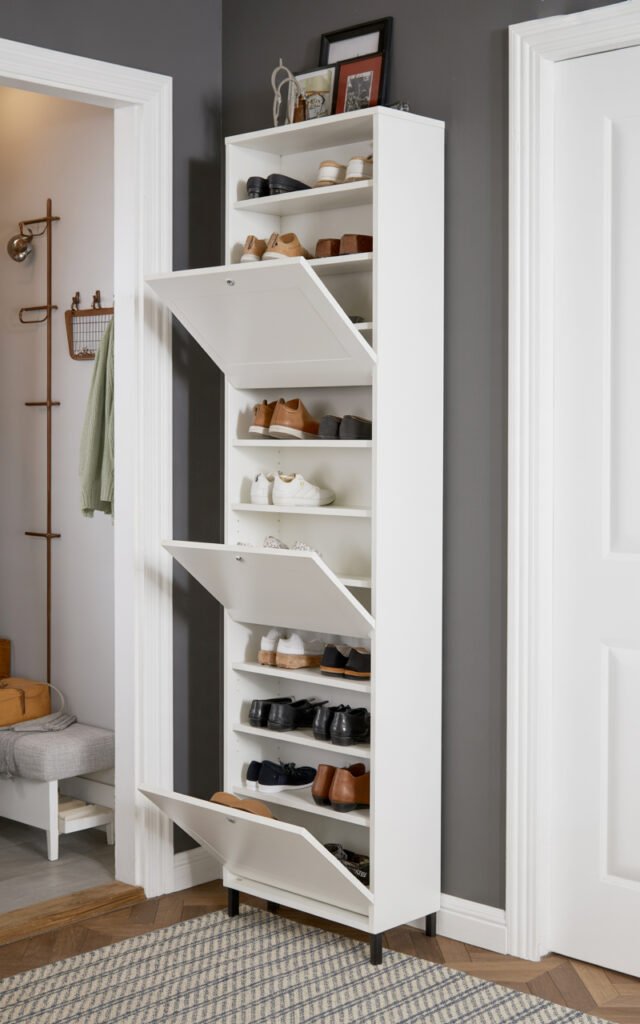
I installed two IKEA Trones units side-by-side in my narrow hallway. They’re only 7 inches deep, hold about 12 pairs total, and cost me $60. Complete game-changer for our shoe situation.
Alternative Shoe Storage Solutions
If you have more width:
- Bench with shoe storage underneath
- Shoe cubbies or shelving unit
- Larger cabinet with closed doors
If you have more height:
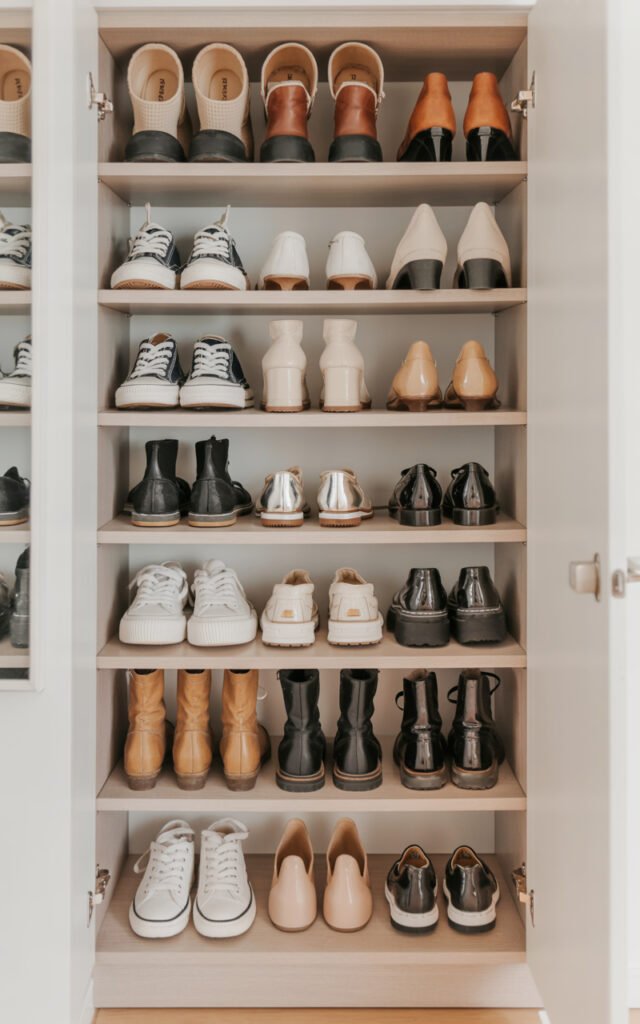
- Tall narrow shoe cabinet
- Over-door shoe organizer
- Wall-mounted shoe racks
If you have less space:
- Boot tray or mat for just a few pairs
- Small basket for current-season shoes
- Rotate shoes seasonally
The Shoe Storage Rules
Make it easy: If it’s complicated, people won’t use it.
Keep it visible: Closed systems work for some, open for others. Know your household.
Provide enough capacity: If you can only store 5 pairs but need 15, it won’t work.
Add a shoe tray: For wet or dirty shoes that can’t go directly in storage.
Seasonal rotation: Keep only current-season shoes in prime storage.
The Power of the Large Mirror
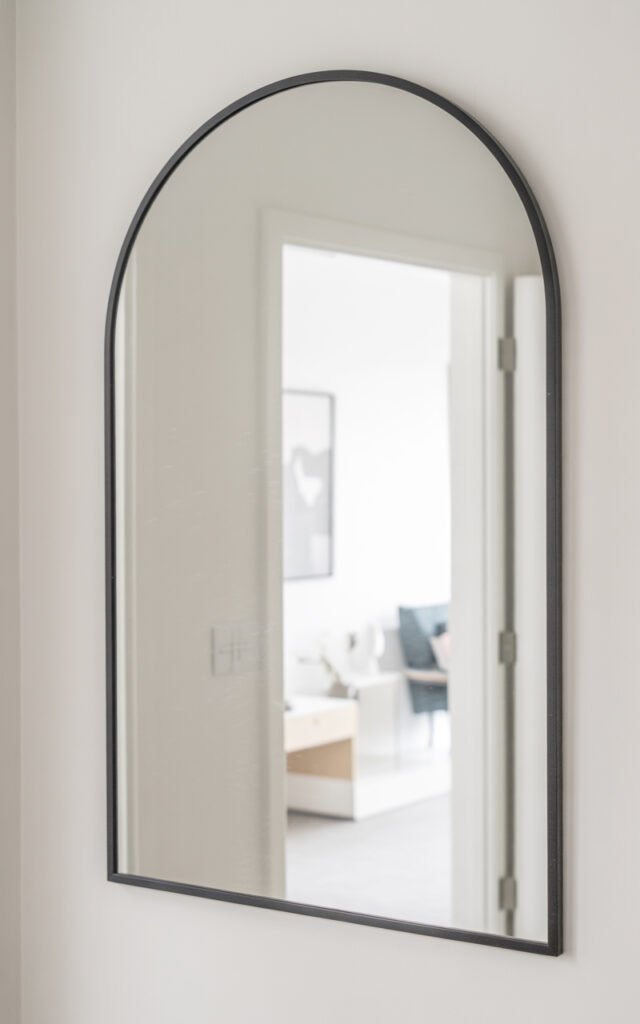
That oversized mirror in the inspiration image isn’t just decorative—it’s doing serious work in that home hall design.
Why Large Mirrors Are Essential
Make narrow spaces feel wider: Reflects light and creates visual depth.
Provide last-minute checks: See yourself before leaving the house.
Reflect light: Bounces natural or artificial light around the space.
Create a focal point: Draws the eye up and makes the space feel intentional.
Make small entryways feel larger: Essential in tight spaces.
Choosing the Right Mirror
Size considerations:
- Go bigger than you think you need
- Minimum 24″ wide for functionality
- Ideally 36″+ wide for impact
- Height: should hit around eye level when standing
Shape options:
- Arched/rounded: Like the inspo image—softer, more modern, trending
- Rectangular: Classic, works in any style
- Circular: Good for narrower walls
- Asymmetric: Modern, interesting
Frame styles:
- Thin black metal (like inspo image): Modern, clean, doesn’t overwhelm
- No frame: Contemporary, makes mirror appear to float
- Wood frame: Warmer, traditional
- Ornate frame: Statement piece, traditional or eclectic
Placement tips:
- Hang it so the center is around 57-60″ from the floor
- In narrow hallways, center it on the wall
- Make sure it doesn’t reflect something awkward (toilet, unmade beds)
I found my 36″ arched mirror at a home goods store for $80. The black metal frame is thin enough not to overwhelm my narrow hallway, and it makes the space feel literally twice as wide.
Installation and Safety
Proper hanging:
- Find studs or use heavy-duty wall anchors
- Large mirrors are heavy—don’t skip proper hardware
- Level it carefully (crooked mirrors drive people crazy)
- Consider professional installation for very large/heavy mirrors
Safety:
- Use mirror clips or safety brackets for extra security
- Consider non-glass options in high-traffic areas with kids
- Ensure proper weight rating for your walls
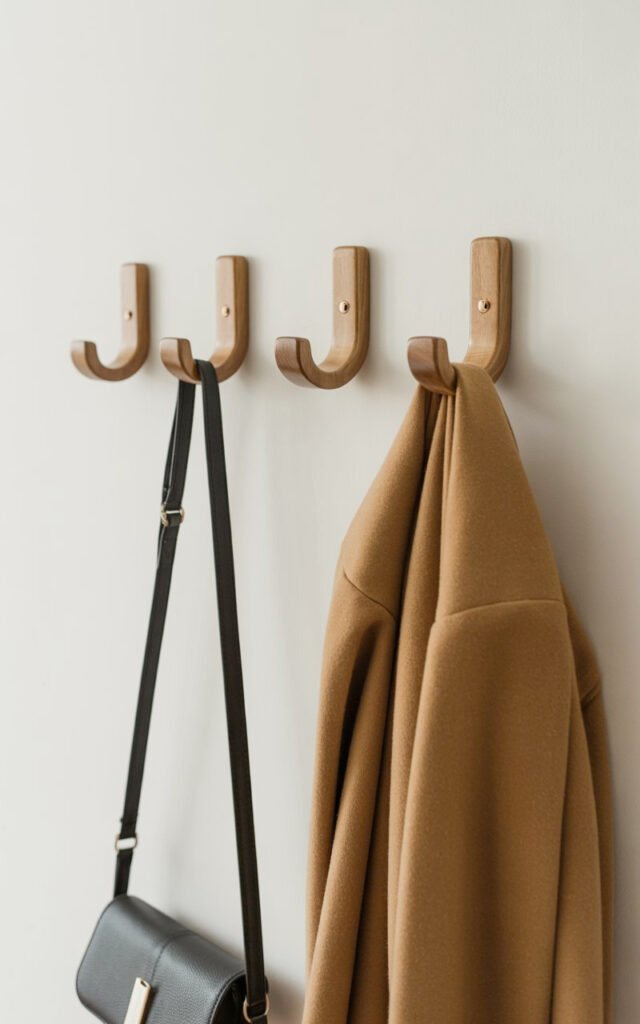
Wall Hooks: The Unsung Heroes of Entryway Organization
Those wall hooks in the inspiration image holding the bag and jacket? Absolute essentials for functional entrée maison design.
Why Wall Hooks Matter
Instant drop zone: Come in, hang your coat. Done.
Keeps coats accessible: No digging through closets for daily-use items.
Uses vertical space: Critical in small or narrow hallways.
Prevents chair/floor piles: If there’s nowhere to hang it, it ends up on furniture or floors.
Flexible: Can hold coats, bags, hats, scarves, dog leashes, whatever.
Choosing and Installing Wall Hooks
Types of hooks:
- Individual decorative hooks: Like the inspo image—spaced along the wall
- Hook rail: Multiple hooks on one mounting board
- Coat rack: Freestanding if you can’t or won’t drill
- Over-door hooks: For renters
How many hooks:
- Minimum 2 per person in the household
- Add extras for guests
- Spread them out (12-18″ apart)
Height placement:
- Adult hooks: 60-65″ from floor
- Kid hooks: 36-48″ from floor (if applicable)
- Consider two rows if you have kids
Spacing:
- Allow 6-12″ between hooks
- More space for bulky winter coats
- Less space for just bags and light jackets
Materials and style:
- Wood or brass for warm, traditional
- Metal in black, brass, or silver for modern
- Ceramic or decorative for personality
- Industrial pipe for edgy/rustic
I installed four brass hooks spaced 10 inches apart at 62″ high. Cost about $30 for all four. We use them daily for coats, bags, and my dog’s leash.
What NOT to Hang
Skip the hooks if:
- You have plenty of closet space immediately accessible
- Your hallway is super narrow (hooks stick out 3-5″)
- You prefer a totally minimal look
Don’t hang:
- So many items that it looks cluttered
- Heavy items on hollow wall hooks (they’ll pull out)
- Items that block walkways or doorways
The Narrow Hallway Challenge
Most of us aren’t working with grand foyers. We’ve got narrow hallways where every inch matters. Let’s talk home entrance decor strategies for tight spaces.
Furniture Depth Matters
Standard furniture depths:
- Console tables: 12-18″ deep
- Benches: 12-18″ deep
- Shoe cabinets: 6-12″ deep
- Coat racks: 12-15″ deep
Narrow hallway rules:
- Leave at least 36″ of walking clearance
- Measure before buying anything
- Prioritize shallow/slim furniture
- Consider wall-mounted over freestanding
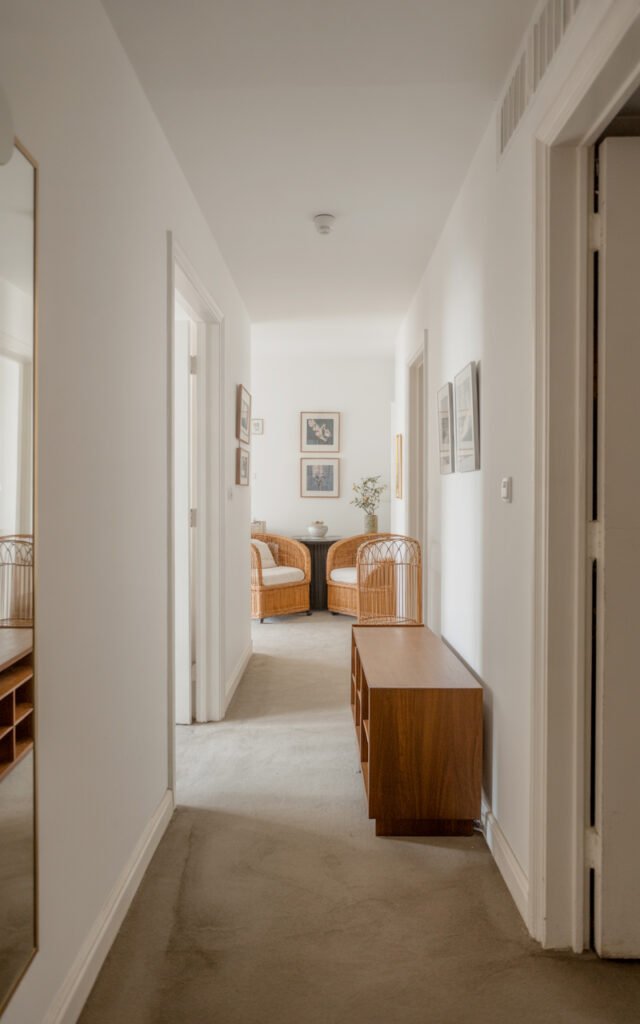
The inspiration image solution:
- That shoe cabinet looks about 10-12″ deep maximum
- Leaves plenty of walking space
- Low profile doesn’t crowd the vertical space
Creating the Illusion of Width
Design tricks:
- Large mirror (check—already discussed)
- Light paint colors on walls
- Vertical lines draw eye up
- Minimal furniture leaves floor visible
- Wall-mounted items instead of floor-standing
What makes narrow hallways feel MORE narrow:
- Dark paint colors
- Bulky furniture
- Clutter on walls
- Too much stuff on the floor
- Closed-in feeling
Color and Paint Strategies
The inspiration image uses a soft, warm neutral that makes the space feel calm and open. Let’s talk rénovation maison color strategies.
Best Paint Colors for Hallways
Light neutrals (like the inspo):
- Warm white, cream, or beige
- Soft greige (gray + beige)
- Light warm gray
- Pale taupe
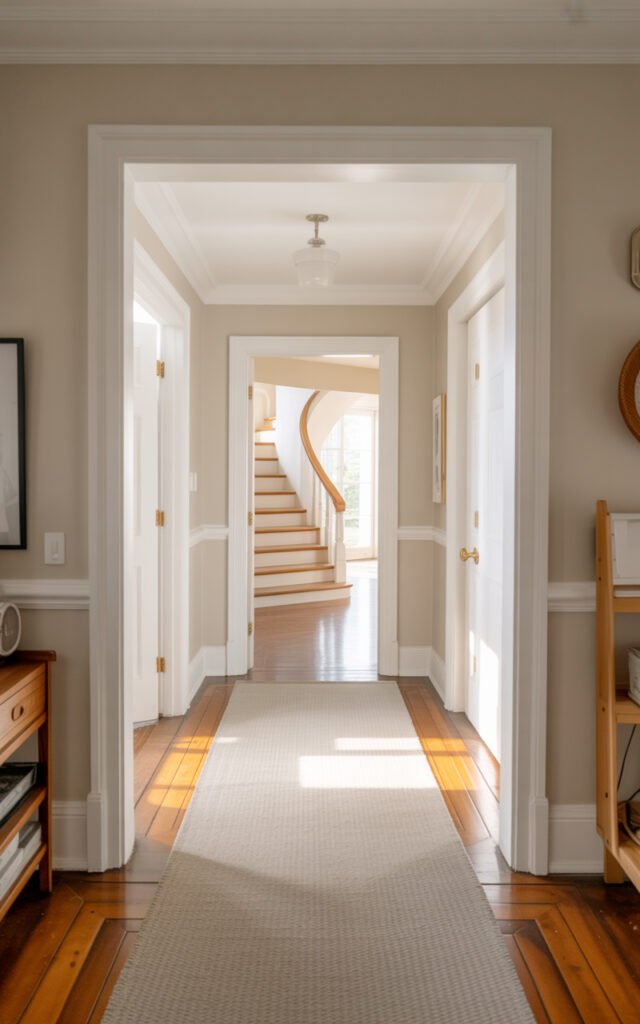
Why these work:
- Reflect maximum light
- Make narrow spaces feel wider
- Create calm, welcoming atmosphere
- Neutral backdrop for furniture and decor
- Won’t show scuffs as much as pure white
Specific color recommendations:
- Benjamin Moore: White Dove, Edgecomb Gray, Revere Pewter
- Sherwin Williams: Alabaster, Accessible Beige, Agreeable Gray
- Behr: Swiss Coffee, Sculptor Clay
Accent Wall Considerations
When to do an accent wall:
- If your hallway is wider (not narrow)
- On the end wall of a hallway (not the long walls)
- If you want drama and have the space for it
When NOT to:
- In very narrow hallways (makes them feel more narrow)
- If your hallway is already dark
- If you have limited natural light
Ceiling and Trim
Paint the ceiling:
- Same color as walls to eliminate boundaries
- Or slightly lighter for more height
- Never darker in narrow spaces
Trim and molding:
- White or cream keeps it fresh
- Match the walls for a monochromatic look
- High-gloss or semi-gloss for durability
I painted my narrow hallway Benjamin Moore’s “White Dove” on walls and ceiling, with trim in “Simply White” in semi-gloss. It’s bright, clean, and makes the 42-inch-wide hallway feel as open as possible.
Lighting Your Entryway
Good lighting transforms a hallway from dingy to welcoming. Let’s illuminate your diseño interiores casas entrance properly.
Types of Hallway Lighting
Overhead ambient:
- Flush or semi-flush ceiling fixture
- Recessed lights (if you have them or can install)
- Should provide general, even lighting
Wall sconces:
- Flanking the mirror (like in many setups)
- Along a long hallway
- Adds ambiance and dimension
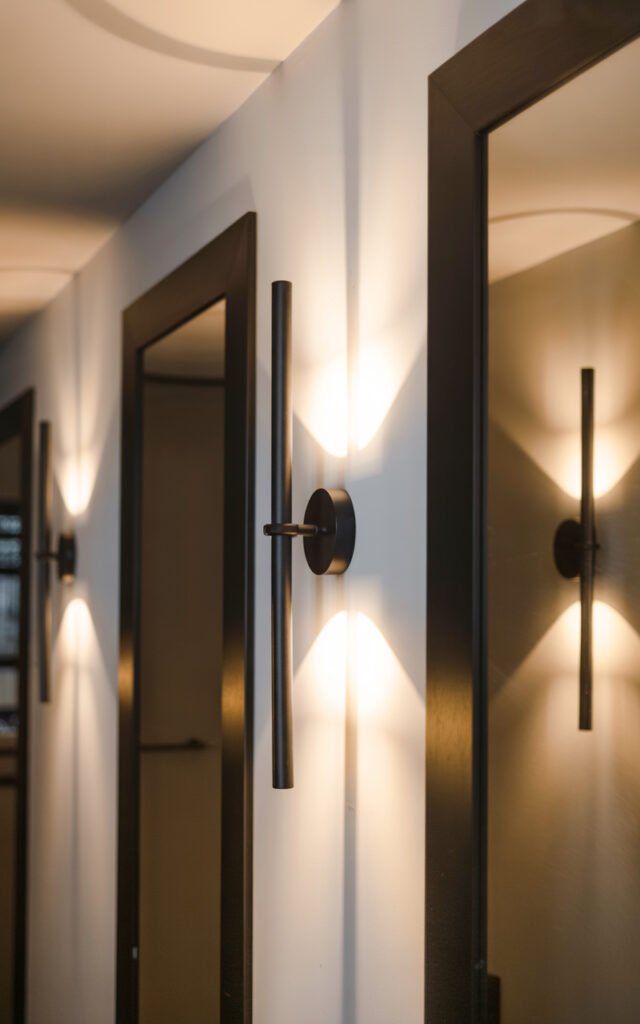
Table or floor lamps:
- If you have surface space
- Only works in wider hallways
Natural light:
- If you have a window or door with glass, maximize it
- Use sheer curtains or no curtains
Choosing Fixtures
For low ceilings (under 8′):
- Flush-mount fixtures
- Slim profile wall sconces
- Recessed lighting if possible
For narrow hallways:
- Fixtures that don’t stick out far
- Slim wall sconces
- Overhead lighting that distributes evenly
Style considerations:
- Match your overall home aesthetic
- Black fixtures (like potential sconces for the inspo look) are very current
- Brass or gold for warmth
- Keep it simple—hallways aren’t the place for statement chandeliers usually
Lighting Tips
Warm bulbs: 2700-3000K creates welcoming atmosphere
Dimmers: Allow you to adjust for time of day and mood
Multiple sources: Layer ambient + task lighting
Light the mirror: Wall sconces on either side or above if possible
Night lights: For safe midnight navigation
I added two simple black wall sconces on either side of my mirror for $60 total. With dimmers, I can have them bright when I’m getting ready or dimmed for ambient evening lighting.
The Console Table Dilemma
Notice the inspiration image doesn’t have a console table—just that low shoe cabinet. This is actually smart for narrow hallways. But let’s discuss when and how to use console tables.
When Console Tables Work
You have the width: Need at least 48″ wide hallway to accommodate 12″ deep console and 36″ walking space.
You need the surface space: For keys, mail, decorative items.
You have wall space: Between door and other features.
You want to make a statement: Consoles can be decorative focal points.
When to Skip Them
Your hallway is too narrow: Don’t sacrifice walkability.
You have sufficient storage: Like that shoe cabinet providing a top surface.
You prefer minimal: Less furniture can feel more spacious.
You have kids/pets: Things get knocked off console tables constantly.
Console Table Alternatives
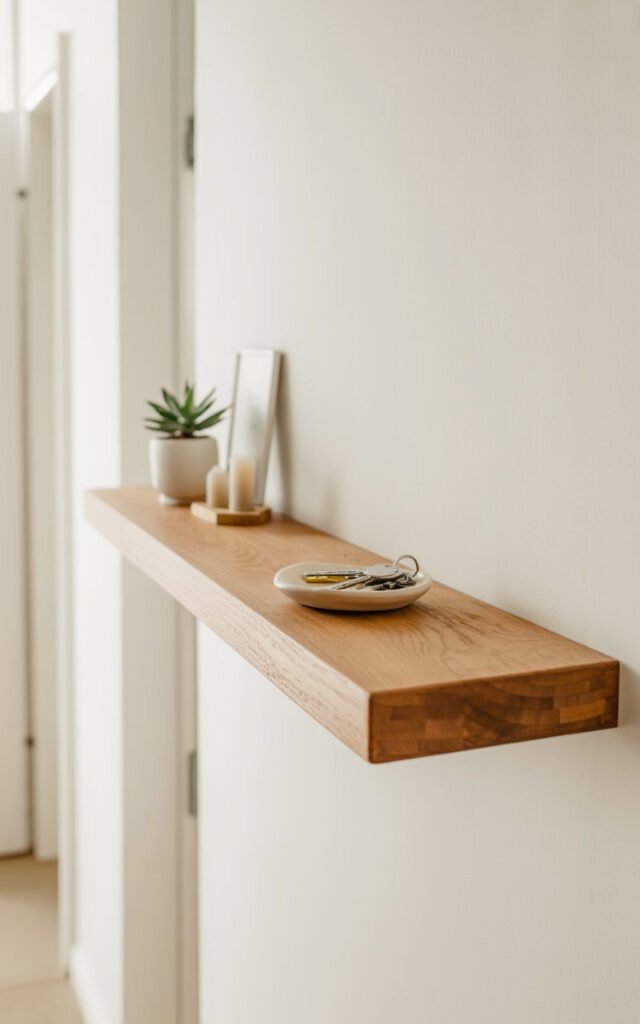
Wall-mounted shelf:
- Same surface space, zero floor footprint
- Can go as shallow as 6-8″
- Holds keys, mail, small decor
Shoe cabinet with top surface:
- Like the inspiration image
- Dual purpose
- Better use of space
Small wall-mounted drop zone:
- Hooks with a small shelf above or below
- Minimal but functional
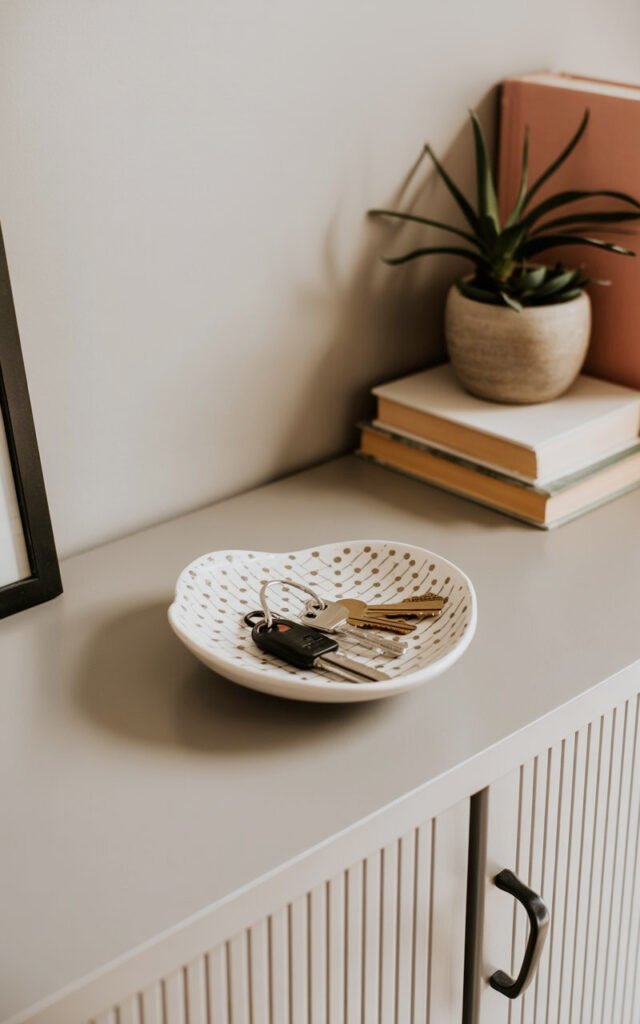
I skipped a console table entirely and just have my shoe cabinet with hooks above. The top of the cabinet holds my keys in a dish, a small plant, and one decorative object. It’s enough surface without taking up more space.
Flooring Considerations
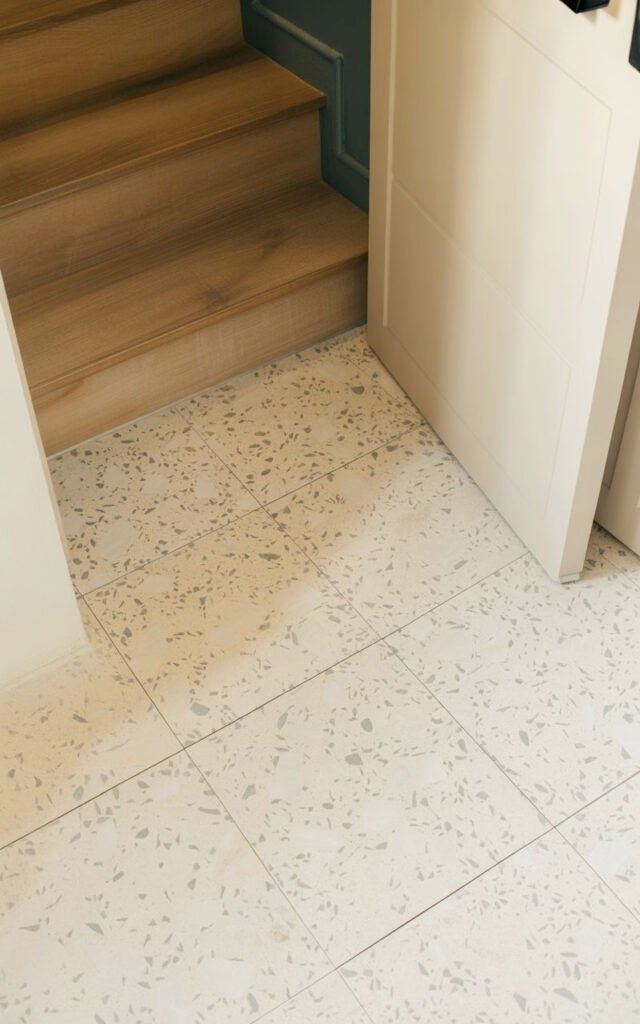
The inspiration image shows what looks like terrazzo or speckled tile—practical and beautiful for entrée maison moderne design.
Best Flooring for Entryways
Tile (ceramic, porcelain, or natural stone):
- Durable and easy to clean
- Water-resistant (important for wet shoes/umbrellas)
- Can handle dirt and debris
- Variety of styles available
- Cold underfoot (con)
Luxury vinyl plank (LVP):
- Looks like wood but waterproof
- Easier on feet than tile
- Durable and scratch-resistant
- More affordable than hardwood
- Easy DIY installation
Sealed hardwood:
- Beautiful and classic
- Can show wear in high-traffic areas
- Needs protection from water
- More maintenance required
Concrete (sealed/polished):
- Modern industrial look
- Extremely durable
- Can be stained or polished beautifully
- Cold and hard underfoot
The Entryway Rug Decision
Why add a rug:
- Defines the entry zone
- Adds warmth and texture
- Traps dirt before it spreads
- Softens hard flooring
Choosing an entryway rug:
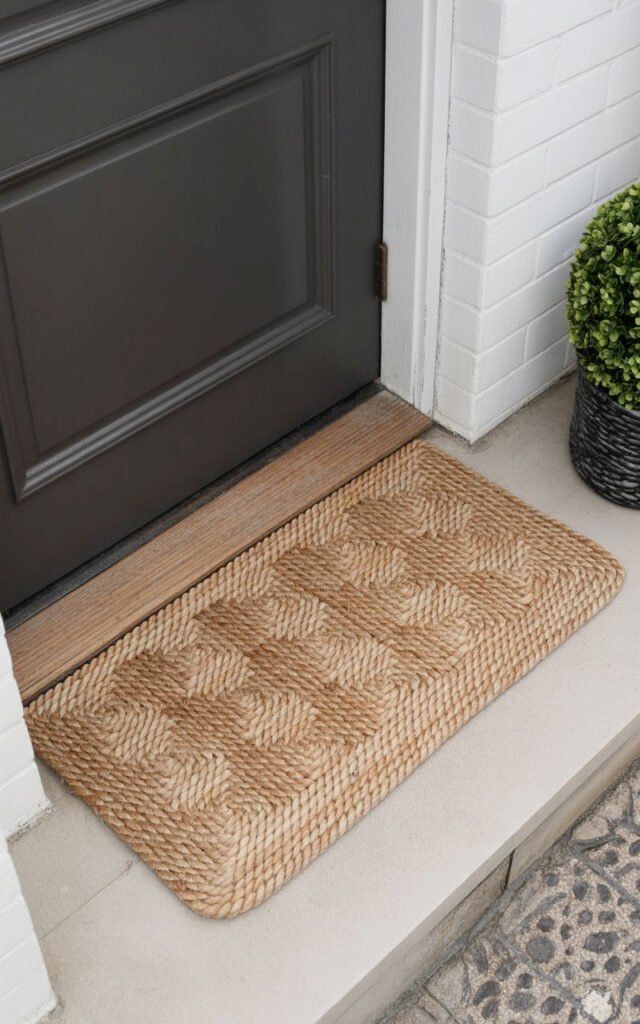
- Natural fibers (jute, sisal) for texture
- Flatweave for easier door clearance
- Neutral colors hide dirt better than light or dark extremes
- Washable if possible
- Non-slip backing essential
Size guidelines:
- Should fit your available floor space
- Leave walking clearance
- 3×5 or 4×6 common sizes
- Runner style for long narrow hallways
I have a 3×5 jute rug with a geometric pattern that hides dirt well. It’s flat enough that my door clears it, and it defines my entryway zone. Cost $50 on sale.
Keeping It Clutter-Free: The Maintenance Systems
Creating a beautiful entryway is one thing. Keeping it that way? That requires systems.
The Daily Drop Zone System
Designate spots for everything:
- Keys always go in the dish/hook
- Mail goes in a specific basket/tray
- Shoes immediately go in storage
- Coats go on hooks
- Bags go on hooks or in closet
The “touch it once” rule:
- Don’t put it down, put it away
- Train everyone in the household
- Items should go directly to their spot
Weekly Maintenance
Quick tidy (5 minutes):
- Return any items that don’t belong
- Straighten shoes in cabinet
- Wipe down mirror
- Shake out rug
Every weekend:
- Vacuum or sweep floor
- Wipe down surfaces
- Remove any clutter accumulation
- Process mail
Seasonal Rotations
Change with seasons:
- Rotate coats (winter coats out, light jackets in)
- Swap heavy boots for sandals
- Update decor if desired
- Deep clean
Décor That Works Hard
Every decorative item in your hallway should earn its place by being beautiful AND functional.
The Short List of Worthy Décor
Mirror: Beautiful + functional (already discussed)
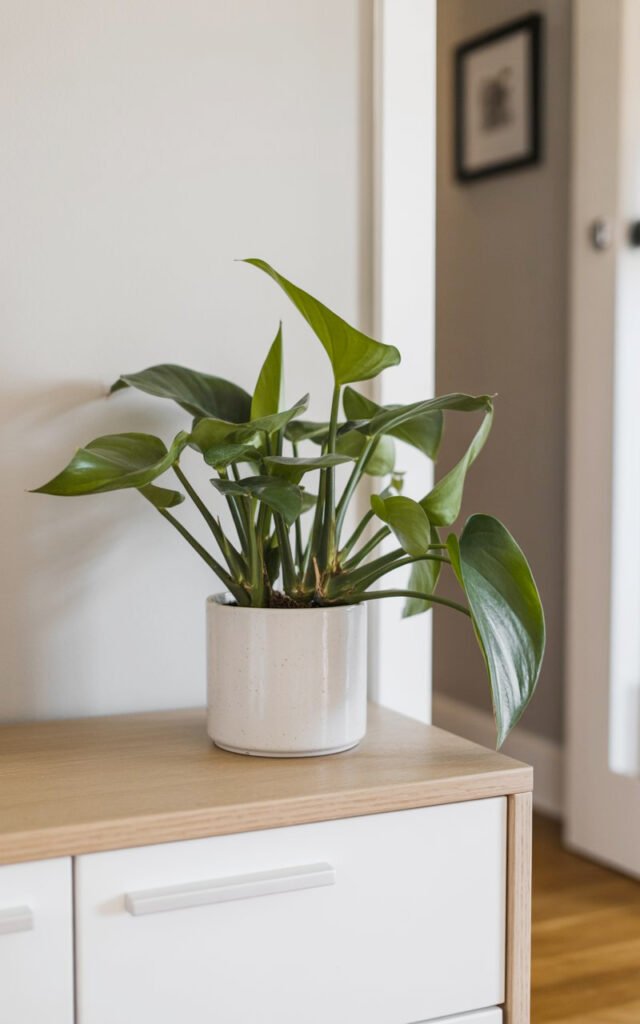
Plant:
- Adds life and warmth
- Choose low-maintenance (pothos, snake plant)
- Don’t let it become dead plant graveyard
Key/catch-all dish:
- Holds essentials
- Keeps them visible
- Decorative dish or tray works
Artwork or photos:
- One or two pieces maximum in small spaces
- Reflects your personality
- Not so much it feels cluttered
Baskets or boxes:
- Pretty storage for mail, gloves, dog items
- Functional + decorative
Candle or diffuser:
- Makes entrance smell welcoming
- Optional luxury touch
What NOT to Include
- Collections of anything (too cluttered)
- Too many photos (gallery walls better elsewhere)
- Anything fragile at kid/pet height
- Furniture or decor that blocks movement
- Anything you constantly have to move to use the space
Budget Breakdown: Functional Entryway Makeover
Here’s how to allocate a $500 budget for an entryway transformation:
Paint and supplies: $50
- Neutral wall paint
- Primer if needed
- Paint supplies
Shoe storage cabinet: $150
- Shallow cabinet or shelving
- Most important investment
Large mirror: $80-100
- Oversized mirror with frame
- Proper hanging hardware
Wall hooks: $40
- Set of 4-6 hooks
- Hardware for installation
Lighting upgrade: $80
- New fixture or sconces if needed
- Or keep existing and just use nice bulbs: $10
Area rug: $50
- Durable, flatweave or natural fiber
- 3×5 or similar size
Organizational accessories: $40
- Key dish or tray
- Mail basket
- Plant and pot
Total: ~$490-510
You can absolutely do this for less by:
- Shopping secondhand for mirror and cabinet
- DIY shoe storage
- Skipping the rug initially
- Using existing lighting
Small Space Solutions
Even the tiniest idee arredamento soggiorno entrance can be functional with the right approach.
For Really Narrow Hallways (36″ or less)
Skip:
- Console tables
- Freestanding furniture
- Bulky storage solutions
Use instead:
- Wall-mounted everything
- Ultra-slim shoe cabinet (under 8″ deep)
- Floating shelf instead of table
- Over-door hooks
For Hallways With No Wall Space
If your hallway is all doors:
- Use over-door hooks
- Slim shoe tray on floor
- Utilize any available corner
- Small corner shelf unit
For Open-Concept Entries
If there’s no defined hallway:
- Create a visual zone with rug
- Use furniture to define space
- Floating wall unit creates entry area
- Hooks on nearest available wall
Common Entryway Mistakes
Let me save you from these:
Mistake #1: Choosing Looks Over Function
That beautiful but impractical console table with no storage? Nope. Function first in entryways.
Mistake #2: Not Enough Shoe Storage
Underestimating how many shoes you actually need to store leads to floor piles.
Mistake #3: No Designated Drop Zones
Without clear spots for keys/bags/mail, they end up everywhere.
Mistake #4: Wrong Scale Furniture
Oversized furniture makes small entryways feel cramped and unusable.
Mistake #5: Forgetting About Door Clearance
That rug or bench interfering with door swing? Annoying every single day.
Mistake #6: No Lighting Strategy
Relying on one dim overhead light makes entryways feel unwelcoming.
Final Thoughts: Your Entryway, Perfected
Your entryway might be small, narrow, or awkwardly shaped—but it’s also one of the most important spaces in your home. It’s the transition zone between the outside world and your sanctuary. It sets the tone for everything that comes after.
A well-designed entryway isn’t about having a grand foyer with a chandelier and marble floors. It’s about having a spot for your shoes, a place for your keys, somewhere to hang your coat, and a mirror to check yourself before you head out. When those functions work smoothly, everything else feels easier.
The inspiration image we’ve been working from gets it right: shallow shoe storage, wall hooks, a large mirror, neutral calming colors, and nothing extraneous. Simple, functional, beautiful.
Start with the biggest pain point in your current entryway. Is it shoes everywhere? Install shoe storage first. Is it coats on doorknobs? Add hooks. Is it feeling dark and cramped? Paint and add a mirror. You don’t have to do everything at once.
My entryway went from chaos to calm in one weekend with about $250 spent. Every time I come home now, I feel that little moment of relief—everything has a place, it looks intentional, and it actually works for my daily life.
Your entryway can do the same. Make it functional first, beautiful second, and you’ll love coming home every single day.