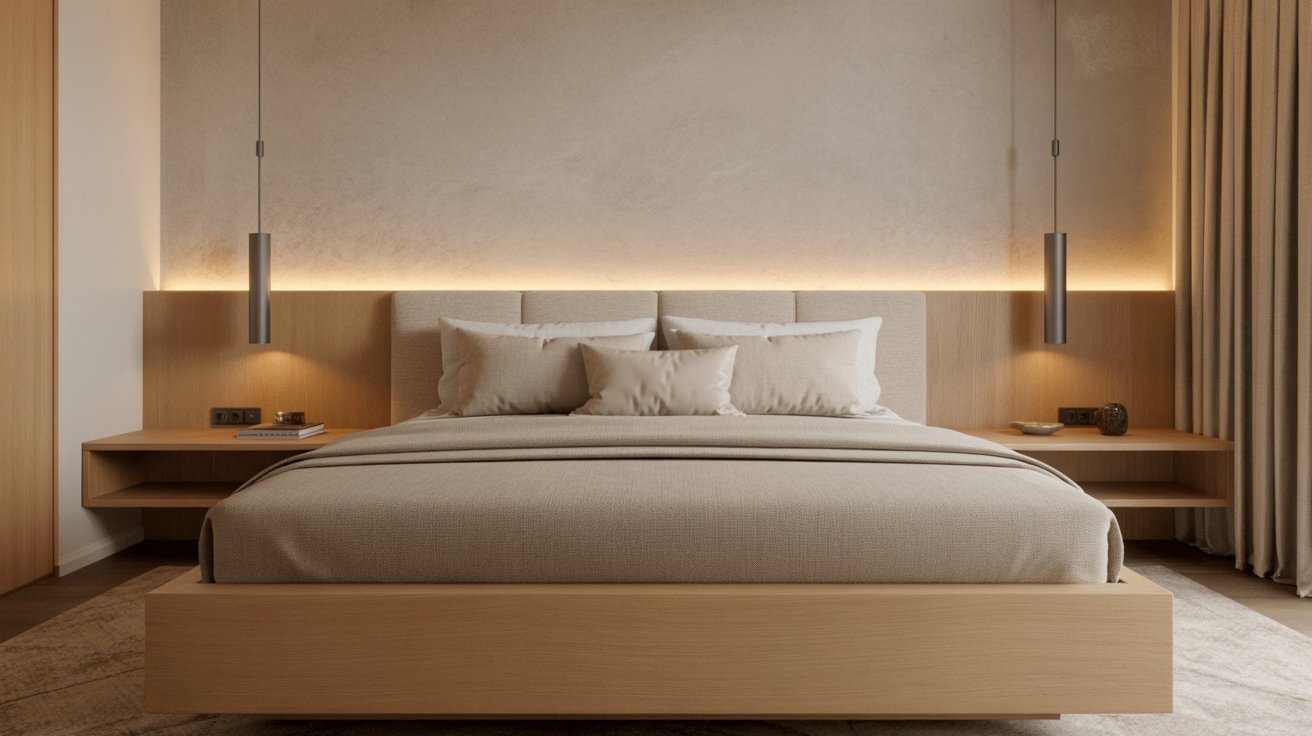
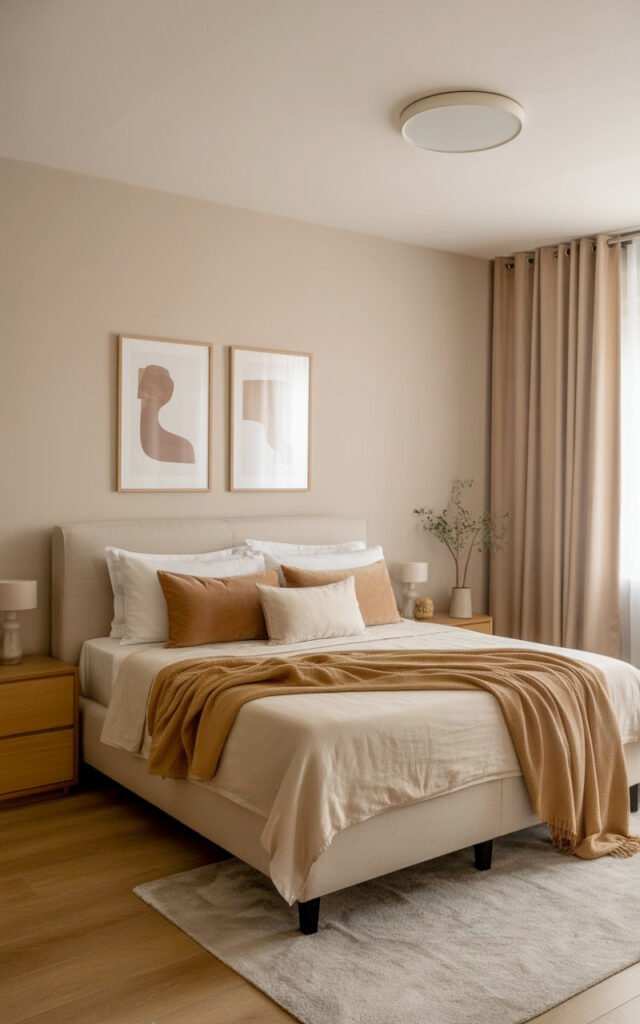
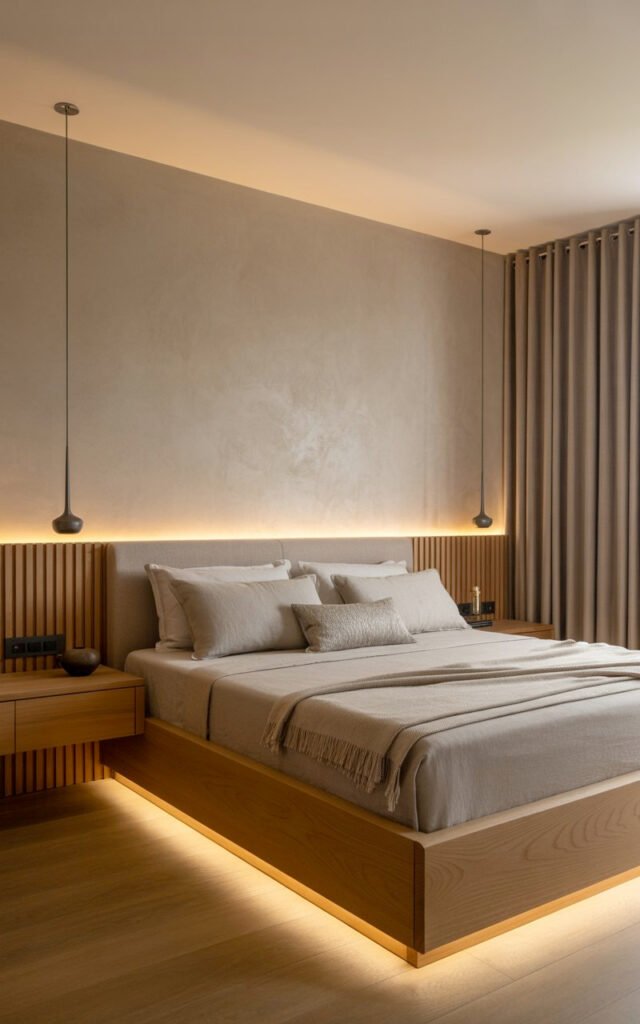
That bedroom in the image looks like it belongs in a five-star hotel, right? The warm minimalist palette, the floating bed, those suspended pendant lights, the LED-backlit headboard wall – it’s the kind of space that makes you want to immediately book a vacation just to sleep there.
But here’s the thing: the principles behind this minimal bedroom design are actually achievable at various budgets. It’s not about spending a fortune – it’s about understanding what makes hotel room design feel so luxurious and applying those concepts to your own space.
Let me break down exactly how to create this elevated, serene bedroom aesthetic that’s dominating interior design in 2026.
The 2026 Minimal Bedroom Aesthetic
Minimal bedroom design in 2026 isn’t cold or stark – it’s warm, textured, and intentionally cozy while maintaining clean lines and uncluttered spaces.
2026 bedroom design trends:
- Warm neutrals (beiges, taupes, warm grays)
- Natural materials (wood, linen, wool)
- Integrated LED lighting (hidden and subtle)
- Floating furniture (beds, nightstands)
- Textured accent walls
- Minimal but luxe bedding
- Statement lighting (pendants instead of lamps)
- Technology integration (hidden, not visible)
What’s out in 2026:
- Cool grays and stark whites
- Excessive decoration
- Visible tech clutter
- Bulky furniture
- Overhead-only lighting
- All-white everything
The image perfectly captures 2026’s direction – warmth within minimalism, luxury through restraint, and sophistication via simplicity.
Hotel Room Interior: Bringing Luxury Home
Hotel room interior design works because it’s been perfected to create instant calm and comfort. Hotels spend millions figuring out what makes people feel relaxed.
What makes hotel rooms feel luxurious:
- Extremely high-quality bedding (this is non-negotiable)
- Layered lighting (ambient, task, accent)
- Minimal visible clutter (everything has hidden storage)
- Neutral calming colors
- Quality over quantity in furniture
- Thoughtful layout (easy to navigate in dark)
- Consistent aesthetic (nothing random)
Applying hotel design at home:
- Invest in mattress and bedding first
- Install dimmers on all lights
- Remove all non-essential furniture
- Choose a neutral palette and stick to it
- Add one or two luxury touches (good linens, quality pillows)
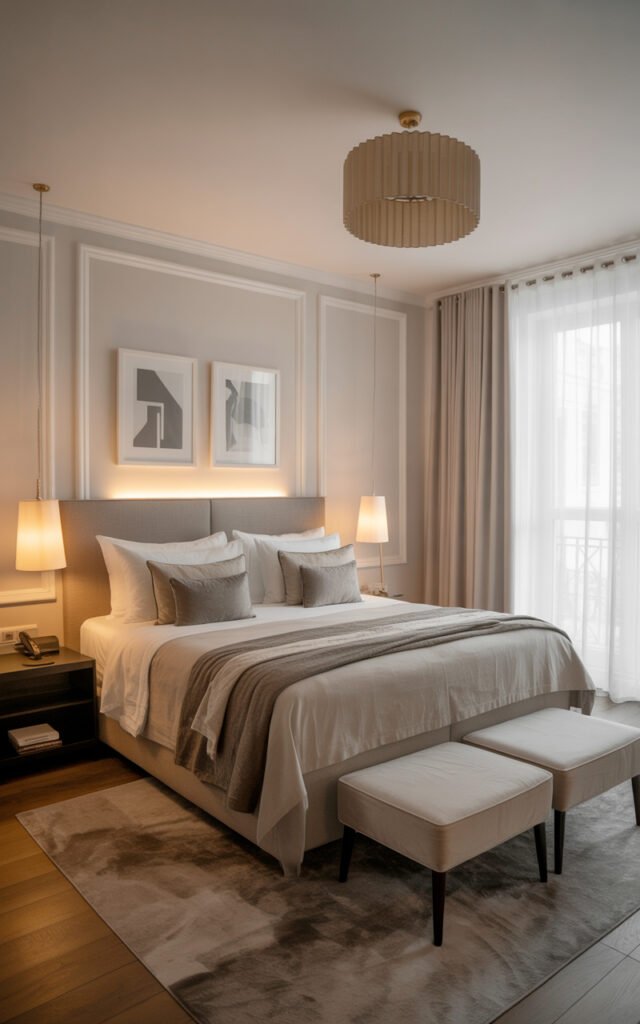
The bedroom in the image could literally be a luxury hotel suite – that’s not accidental. It’s using every hotel design principle.
The Floating Bed Trend
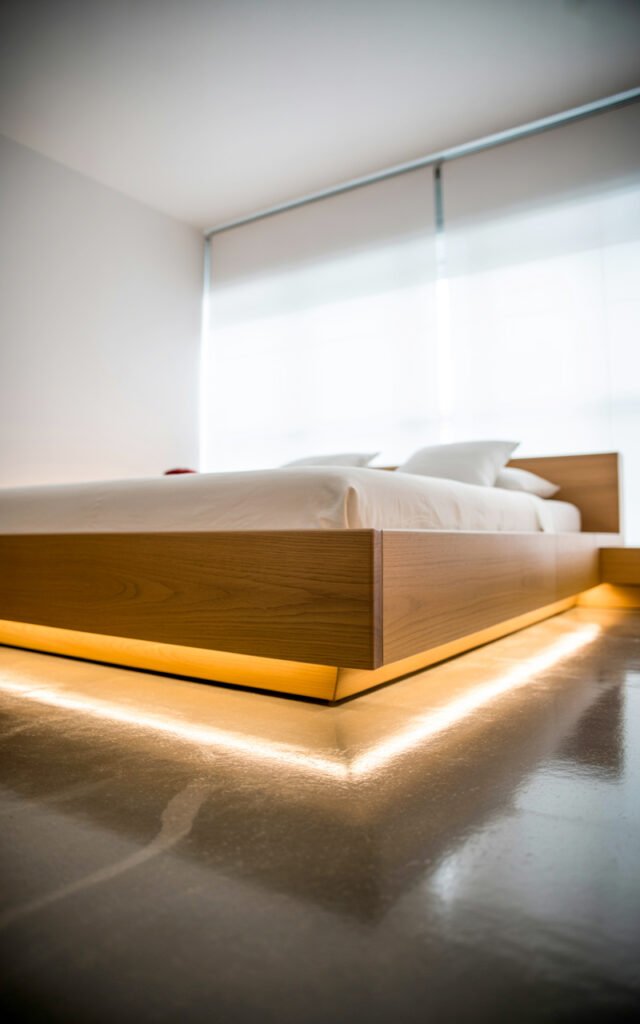
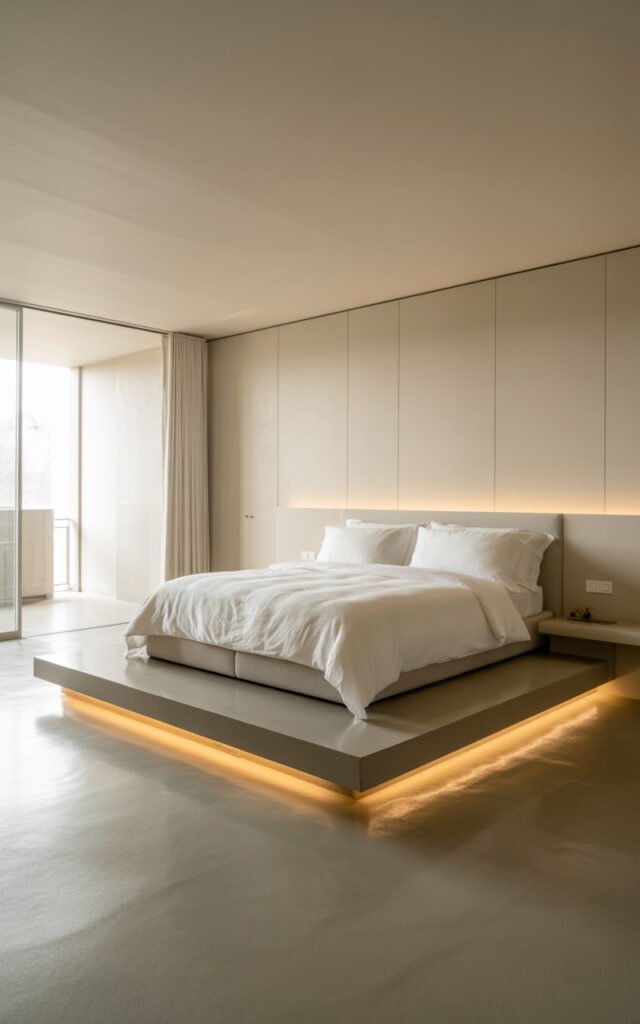
That platform bed appears to float – there’s space underneath creating this light, airy feeling that’s huge in minimal bedroom design right now.
Why floating beds work:
- Make rooms feel larger (see floor underneath)
- Create modern, clean aesthetic
- Allow for under-bed lighting (LED strips)
- Easier to clean (robot vacuum fits under)
- Visually lighter than heavy frames
Achieving the floating look:
- True floating beds (wall-mounted, expensive)
- Platform beds with recessed base (affordable)
- Beds with legs set back from edge
- Add LED strips under bed for glow effect
Budget options:
- IKEA platform beds ($300-600)
- Amazon platform frames ($200-500)
- DIY platform with lumber ($150-300)
- Add LED strips ($20-40)
I built a simple platform bed with hidden legs and added LED strips underneath for $250 total, and the floating effect is genuinely impressive for the cost.
LED Backlighting: The Game-Changer
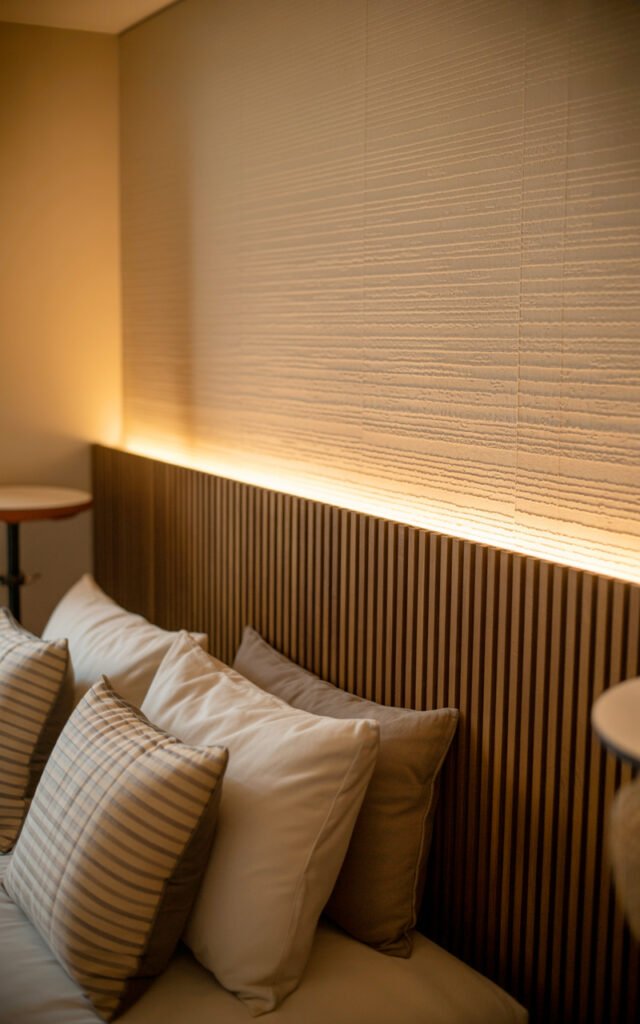
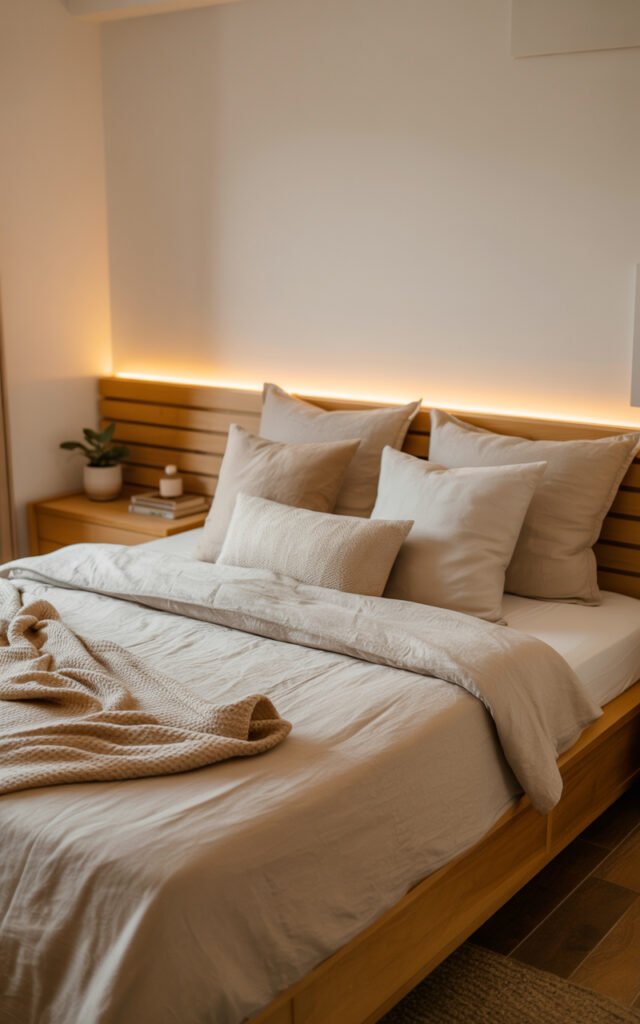
That glowing wall behind the bed? That’s LED strip lighting creating that warm, expensive hotel vibe.
Why LED backlighting matters:
- Creates ambient mood lighting
- Makes walls appear to glow (luxe effect)
- Provides gentle nighttime light
- Highlights architectural features
- Costs almost nothing to run
Where to add LED strips:
- Behind headboard wall (like image)
- Under floating bed
- Behind floating nightstands
- In recessed ceiling details
- Under window treatments
Installation:
- LED strip lights: $15-50
- Aluminum channel (optional, cleaner look): $20-40
- Power supply and dimmer: $15-30
- Total: $50-120 for complete setup
The warm glow in the image comes from LED strips behind that headboard panel – it’s the detail that makes this feel like a $10,000 designer bedroom when the actual lighting cost was probably under $100.
Cozy Modern Bedroom: Warmth Within Minimalism
Cozy modern bedroom design is the evolution of minimalism – it’s still clean and uncluttered, but now it’s warm and inviting, not cold.
Creating cozy minimalism:
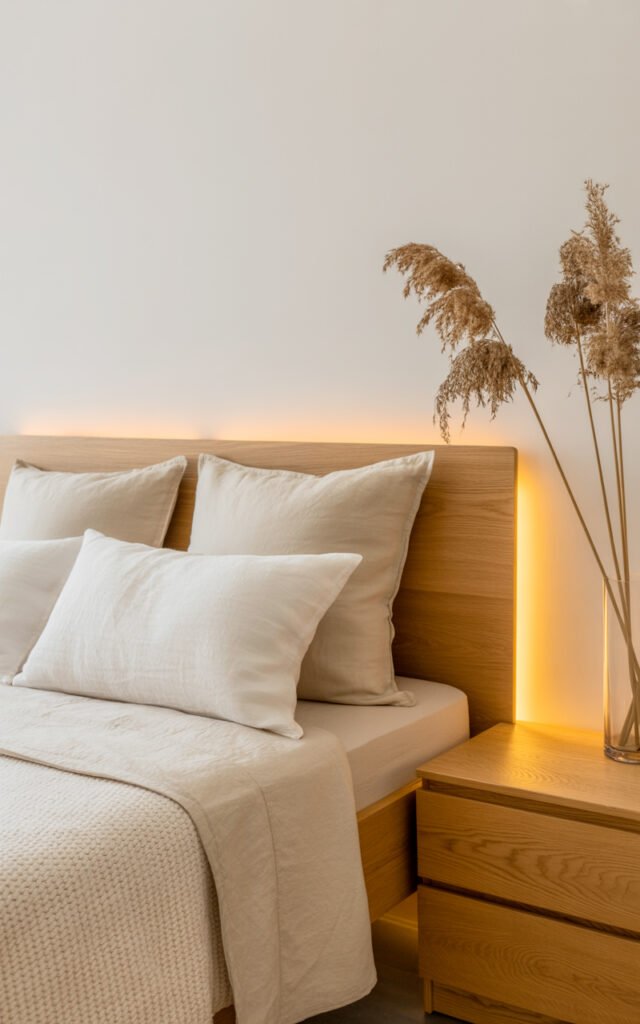
- Warm wood tones (like that oak bed)
- Layered neutral textiles
- Warm white lighting (2700-3000K)
- Soft textures (linen, wool, knit)
- One or two organic elements (plants, dried grasses)
- Matte finishes (not glossy)
Avoiding cold minimalism:
- Don’t use all white and gray
- Include wood tones
- Layer bedding (don’t just use duvet)
- Add warm lighting
- Include soft textures
The image achieves cozy through warm oak wood, layered beige bedding, warm LED glow, and soft taupe walls – it’s minimal but definitely not cold.
Bedroom Design Styles: The Warm Minimalist Category
Bedroom design styles in 2026 are converging on “warm minimalism” – it’s the new sweet spot.
Warm minimalist characteristics:
- Clean lines (minimal furniture)
- Neutral palette (beige, taupe, warm gray, oak)
- Quality materials (real wood, linen, wool)
- Intentional lighting design
- Uncluttered surfaces
- Organic accents (plants, natural fibers)
- Textured walls or accents
Who it works for:
- People who want calm spaces
- Those overwhelmed by clutter
- Anyone seeking hotel-like retreat
- Fans of Scandinavian or Japanese design
- People with small spaces (makes them feel bigger)
Who might not love it:
- Collectors who need to display items
- People who find minimalism sterile
- Those who prefer bold colors
- Maximalists at heart
If you’re reading this and thinking “yes, this is the vibe I want,” warm minimalism is probably your style.
Master Bedrooms Decor: The Elevated Approach
Master bedrooms decor in 2026 is about creating a true retreat – this is the one room that should be completely selfish and optimized for rest.
Master bedroom priorities:
- Sleep quality first (mattress, blackout, temperature)
- Calm aesthetic (minimal visual stimulation)
- Ambient lighting (no harsh overhead)
- Luxury bedding (you spend 1/3 of life here)
- Hidden storage (maintain calm aesthetic)
- Technology management (charge stations hidden)
What to skip in master bedrooms:
- TVs (controversial but better sleep without)
- Work desk (separate work and sleep)
- Excessive decoration
- Bright or stimulating colors
- Visible clutter
The image shows a master bedroom optimized purely for rest – there’s a bed, integrated nightstands, perfect lighting, and basically nothing else. That’s the point.
Suspended Pendant Lighting
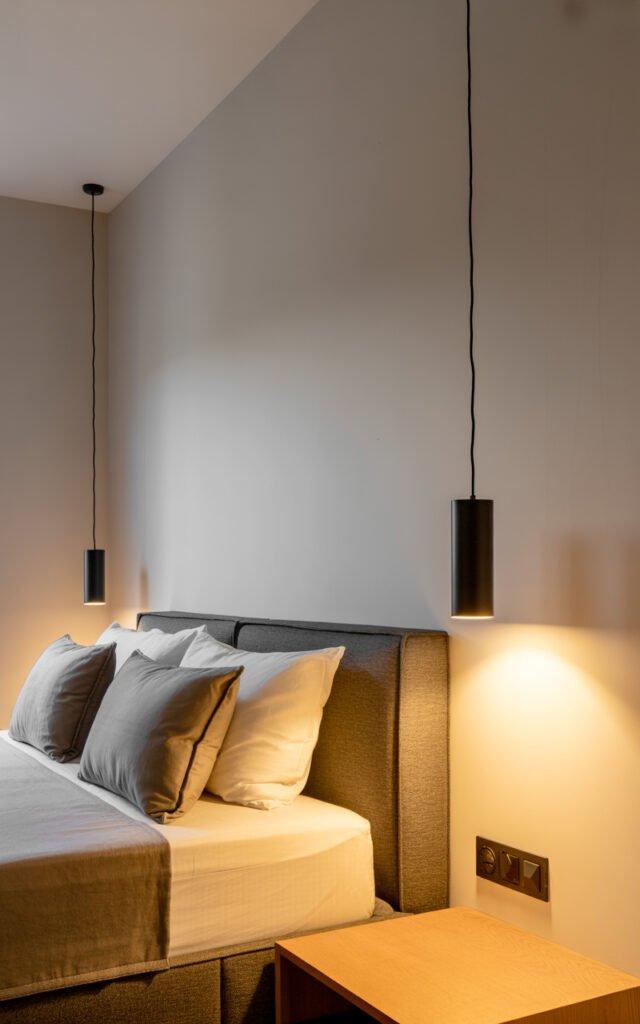
Those black pendant lights hanging on either side of the bed? That’s replacing traditional bedside lamps and it’s everywhere in 2026 design.
Why pendant bedside lights work:
- Save nightstand surface space
- Create symmetry and drama
- Provide focused task lighting
- Look more architectural
- Feel very hotel-luxury
Choosing pendant lights:
- Long drop (24-30″ from ceiling)
- Hang 18-24″ above nightstand surface
- Dimmable (essential for bedrooms)
- Simple design (match minimal aesthetic)
- Adjustable height (allows customization)
Installation considerations:
- Requires ceiling electrical box
- May need electrician ($100-200 per light)
- Consider weight rating
- Plan before building/renovating
Budget alternatives:
- Plug-in pendants with long cords
- Wall-mounted swing-arm lamps
- Wall sconces (similar effect, easier install)
The black pendants in the image are perfectly scaled and positioned – they’re functional and beautiful without overwhelming the minimal aesthetic.
The Textured Accent Wall
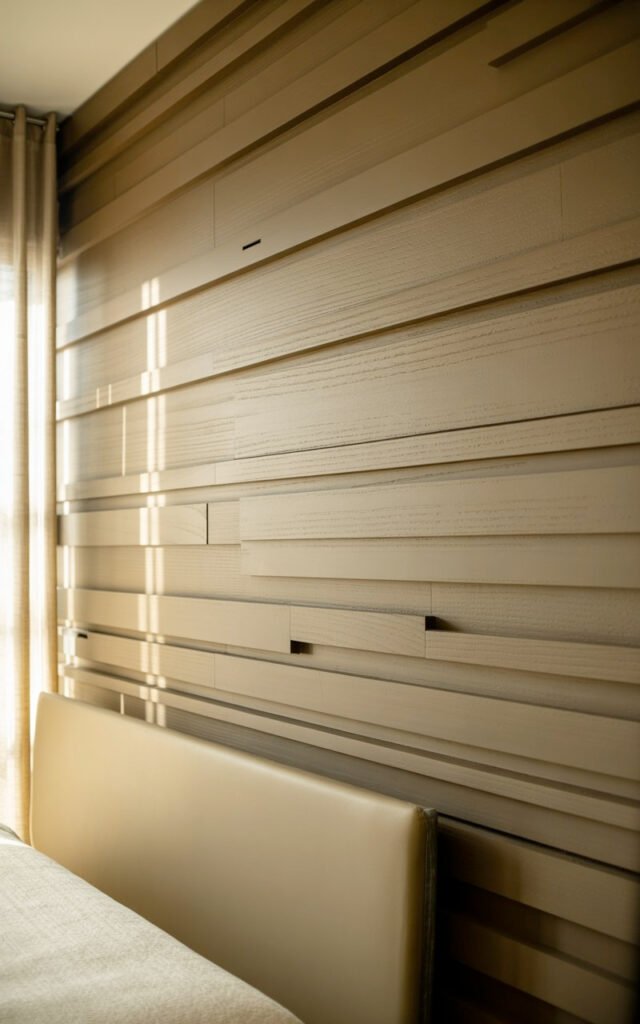
That wall behind the bed has subtle texture – it’s not just flat paint. This adds depth without busyness.
Accent wall options for minimalism:
- Wood panel wall (horizontal planks)
- Textured plaster (subtle not dramatic)
- Fabric wrapped panels
- Grasscloth wallpaper
- Microcement or Venetian plaster
- Large-format wood slats
Why textured walls work:
- Add visual interest without decoration
- Create luxury feel
- Hide wall imperfections
- Provide acoustic benefits
- Serve as headboard
The image appears to have a horizontal wood panel or textured wall treatment – it’s subtle enough to stay minimal but adds the warmth and interest the room needs.
Décoration Chambre Parentale: The French Approach
Décoration chambre parentale (French for “master bedroom decoration”) emphasizes elegance, quality, and restraint – very aligned with 2026’s minimal aesthetic.
French bedroom design principles:
- Quality over quantity always
- Neutral sophisticated palette
- Beautiful bedding (high thread count linen)
- Architectural lighting
- Minimal but perfect accessories
- Natural materials
- Timeless not trendy
French vs. American bedroom differences:
- French: Fewer items, higher quality each
- American: More stuff, mixed quality
- French: Neutral palette, texture for interest
- American: More color and pattern
- French: Understated luxury
- American: More obvious luxury
The image has very French sensibilities – everything is elevated and refined, but nothing is showy or excessive.
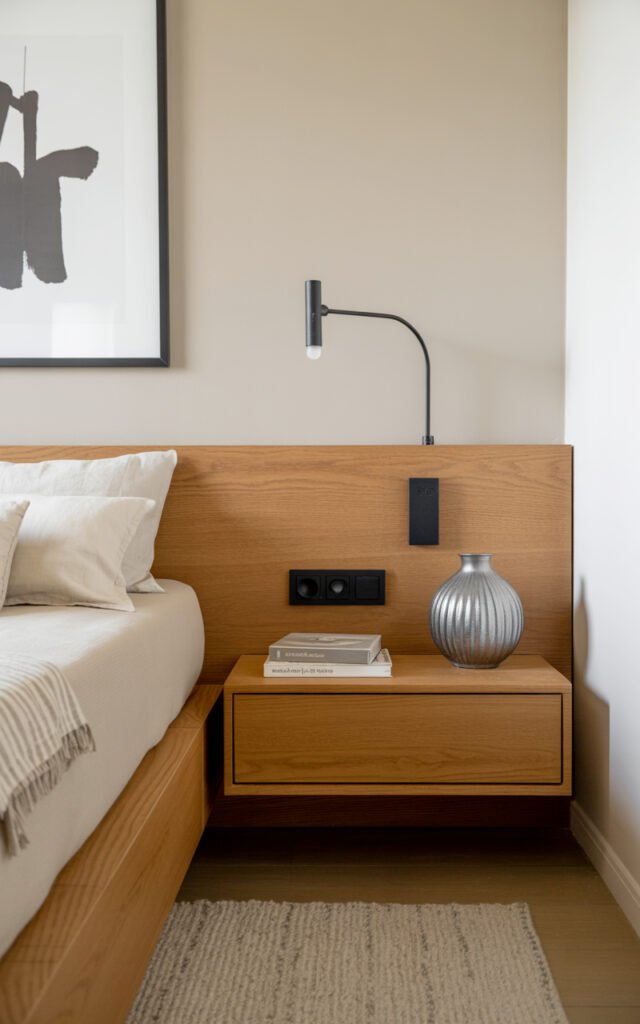
Integrated Nightstands
Notice the nightstands appear to float and integrate with the headboard wall? This is the direction minimal bedroom storage is going.
Integrated nightstand benefits:
- Cleaner aesthetic (seamless)
- Can’t see gaps or cords
- More modern looking
- Custom-fit to your space
- Easier to clean (no legs)
Creating integrated nightstands:
- Floating shelves with drawers (IKEA hack)
- Built-in wall units
- Extended platform from bed frame
- Wall-mounted boxes
- Recessed wall niches
Budget approach:
- Floating shelf + small drawer unit ($40-80)
- Wall-mounted nightstand ($60-120)
- DIY floating box ($30-60)
The integrated look costs more if custom-built but can be achieved affordably with strategic use of floating shelves and small storage boxes.
The Bedding Strategy
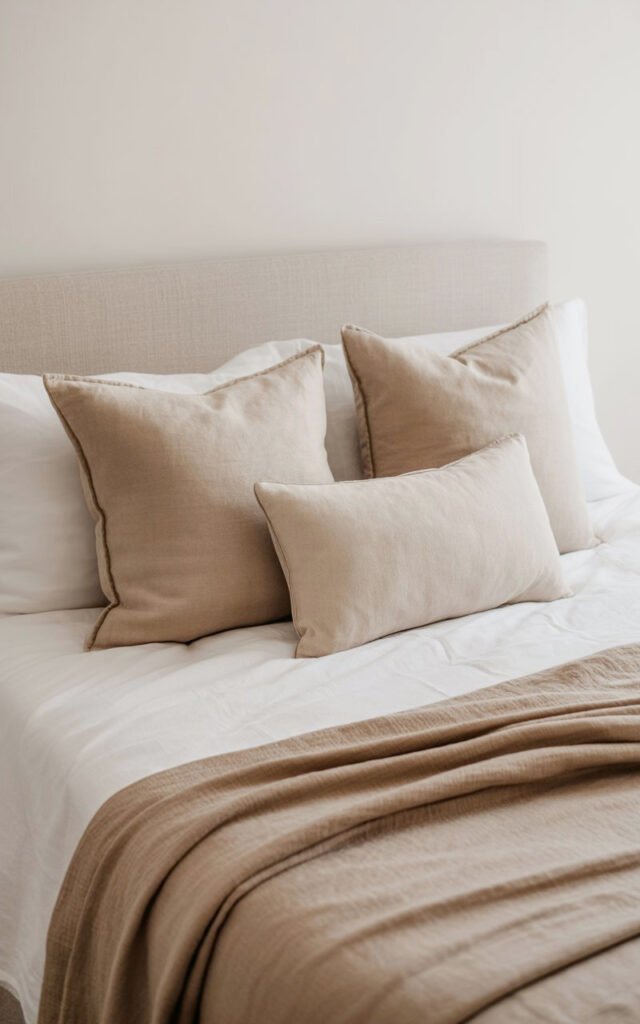
The bedding in the image looks expensive, but the formula is actually simple.
Minimal bedroom bedding formula:
- Quality duvet or comforter (neutral color)
- Two sleeping pillows per person
- Two Euro shams (square pillows for backing)
- One lumbar or accent pillow
- Simple throw blanket at foot
Fabric choices:
- Linen (textured, expensive-looking, affordable)
- Cotton sateen (smooth, classic)
- Percale (crisp, hotel-like)
- Avoid busy patterns (solid or subtle texture only)
Color palette:
- White and cream (classic, always right)
- Warm beiges and taupes (like image)
- Light gray (cooler minimal)
- Layered neutrals (depth without color)
Budget approach:
- Target Threshold line ($80-150 for full set)
- Amazon Mellanni or Beckham ($50-100)
- IKEA basics ($60-120)
- Upgrade gradually (start with good duvet)
The bedding in the image is probably linen or a linen-look in warm beige tones – that’s the 2026 look.
Design Interior: The Cohesive Approach
Design interior success comes from treating the bedroom as one complete design, not separate furniture pieces.
Creating cohesion:
- Choose palette first (2-3 neutral colors)
- Select materials (wood tone, metal finish)
- Plan lighting together (all warm white)
- Buy furniture that coordinates
- Avoid random pieces
The image’s cohesion:
- All wood is same warm oak tone
- All metal is matte black
- All lighting is warm white
- All textiles are neutral beige/taupe
- Everything works together
Achieving cohesion on budget:
- Start with mood board (Pinterest)
- Shop intentionally, not impulsively
- Buy similar wood tones
- Paint mismatched items same color
- Return things that don’t fit vision
Technology Integration
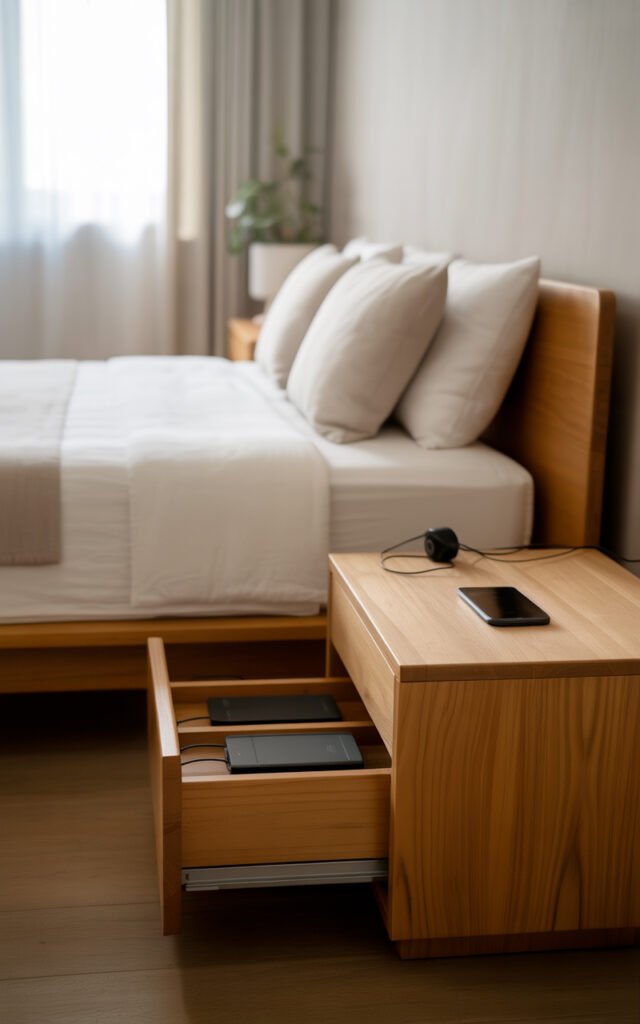
Notice you don’t see any tech in the image? That’s intentional and important in 2026 minimal design.
Hiding technology:
- Charging stations in nightstand drawers
- TV behind artwork or hidden panel
- Smart home controls via phone
- Wireless charging pads in furniture
- Cords managed with raceways
Tech that stays visible:
- Alarm clock (if minimal design)
- Smart speaker (if matches aesthetic)
- Simple lamp controls
The goal is bedroom as sanctuary, not bedroom as media room.
Budget Breakdown: Creating This Look
Let’s talk real costs for achieving this aesthetic.
Budget version ($1,500-2,500):
- Platform bed (IKEA/Amazon) ($300-600)
- Quality mattress ($400-800)
- Bedding upgrade ($150-300)
- LED lighting ($50-100)
- Paint and DIY accent wall ($100-200)
- Budget pendant lights or lamps ($100-200)
- Rug ($150-300)
- Accessories ($100-200)
Mid-range version ($2,500-5,000):
- Better platform bed ($600-1,200)
- Quality mattress ($800-1,500)
- Linen bedding ($300-600)
- Professional LED install ($200-400)
- Textured accent wall ($300-600)
- Good pendant lights ($200-500)
- Quality rug ($300-600)
- Curated accessories ($200-400)
High-end version ($5,000-15,000+):
- Custom bed frame ($1,500-4,000)
- Luxury mattress ($2,000-5,000)
- Designer bedding ($600-1,500)
- Professional lighting design ($500-2,000)
- Custom built accent wall ($800-2,500)
- Designer pendant lights ($500-2,000)
- Designer rug ($600-2,000)
- High-end finishing ($500-1,500)
Most people can achieve the essence of this look in the $2,000-3,500 range with smart shopping and some DIY.
Common Minimal Bedroom Mistakes
Don’t make it too cold. Use warm tones, wood, textiles – minimal doesn’t mean sterile.
Don’t skip the lighting layers. Multiple warm light sources are essential.
Don’t cheap out on bedding. This is where you should spend – you use it every day.
Don’t forget texture. All-smooth surfaces feel cold – add textile and wood texture.
Don’t leave surfaces bare. Minimal doesn’t mean empty – a few perfect items on nightstand is right.
Maintaining The Aesthetic
Minimal bedrooms only stay minimal with discipline.
Daily habits:
- Make bed every morning
- Put clothes away immediately
- No items on floor
- Keep nightstand to 2-3 items max
- Charge devices in drawer
Weekly maintenance:
- Change sheets (easier with minimal bedding)
- Dust all surfaces
- Vacuum/sweep floor
- Declutter any accumulated items
- Check all lights functioning
This is genuinely 5 minutes daily and 20 minutes weekly – minimal style requires minimal maintenance if you stay on top of it.
The Final Design
Creating a minimal bedroom inspired by 2026’s top designers comes down to warm neutral palette (beige, taupe, warm oak), quality over quantity in every choice, integrated LED lighting for ambiance, floating or minimal furniture, and hotel-inspired luxury bedding.
That’s it. Five principles that work whether you’re spending $1,500 or $15,000.
The image shows that minimal doesn’t mean boring or cold – it means intentional, refined, and focused on what actually matters: creating a space that promotes rest and calm.
Your bedroom can look like a luxury hotel suite. It just requires restraint, a cohesive plan, and investing in the few things that truly matter (mattress, bedding, lighting) while eliminating everything that doesn’t.
Now go assess your current bedroom. What can you remove? What needs upgrading? Where can you add warm lighting? That’s where transformation starts – with less, not more. 🙂