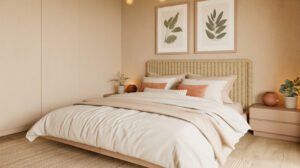
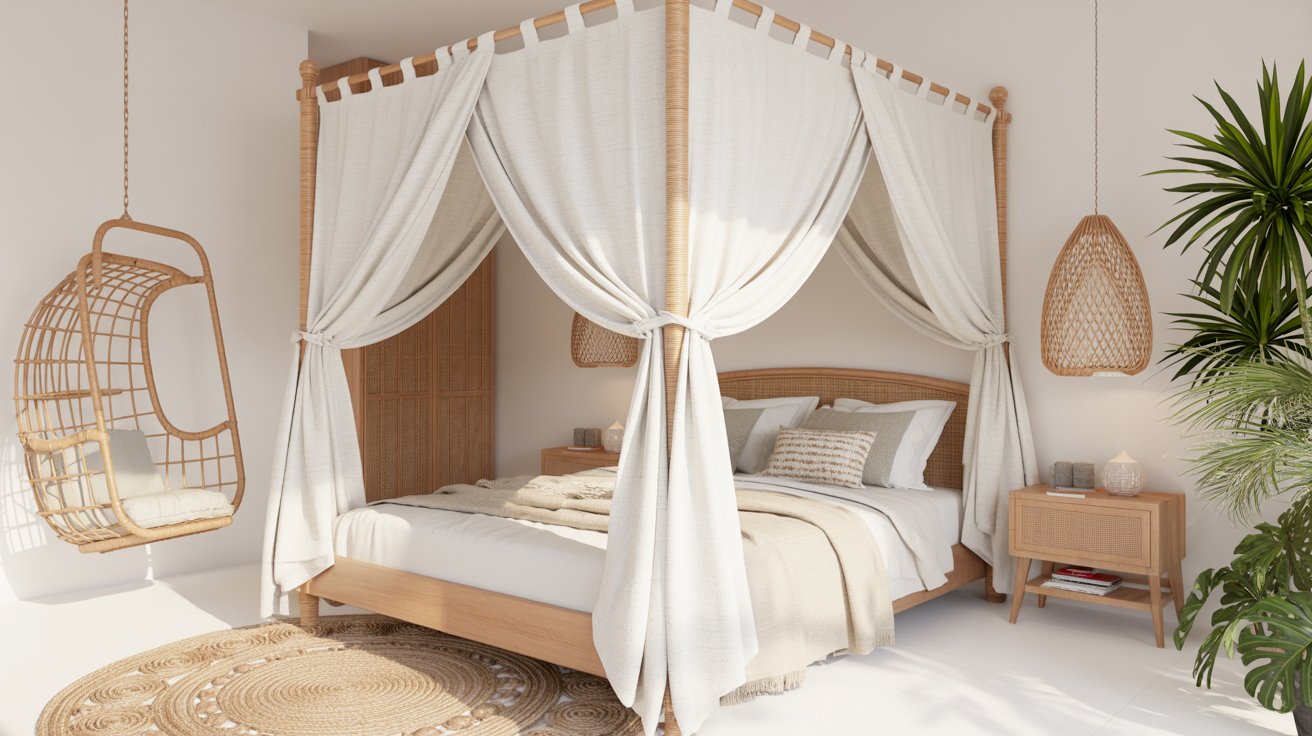
Let me tell you about the moment I fell in love with canopy beds. I was scrolling through Pinterest at 2 AM (as you do), and I saw this absolutely stunning bedroom with flowing white curtains, woven rattan everything, and this vibe that screamed “luxury resort but make it affordable.” I literally screenshot it and thought, “I need this in my life.”
Fast forward a few months, and my bedroom went from boring builder-grade blah to a space that makes me actually excited to go to bed. And no, I didn’t spend thousands of dollars or hire a designer. Just me, some determination, and a whole lot of rattan.
If you’ve been dreaming about creating a rattan bedroom decor paradise with a gorgeous canopy bed, you’re in the right place. Let’s make it happen without breaking the bank or looking like you bought out an entire home store in one trip.
Why Rattan and Canopy Beds Are Actually Perfect Together
Before we get into the how, let’s talk about the why. What is it about rattan inspired bedroom design that just works so perfectly with canopy beds?
Here’s the thing: both elements bring texture, visual interest, and that breezy, vacation-at-home feeling. Rattan adds warmth and organic texture, while a canopy bed creates drama and intimacy. Put them together? Magic.
Rattan furniture has this incredible ability to feel both casual and elevated at the same time. It’s not stuffy like traditional wood furniture, but it’s not cheap-looking like that particle board stuff from college either. It’s right in that sweet spot of sophisticated-but-approachable.
And canopy beds? They’re not just for fancy hotels anymore. Modern canopy beds—especially when you skip the heavy, dark wood and go for lighter materials—create this cocoon-like feeling that makes your bedroom feel like a private retreat.
Together, they create what I call the “permanent vacation” aesthetic. Every time you walk into your room, it feels like you’re checking into a boutique hotel in Bali or Tulum. And who doesn’t want that?
Understanding the Rattan Style Bedroom Aesthetic
Let’s clear something up right away: a rattan style bedroom doesn’t mean covering every surface in woven furniture until your room looks like a basket store exploded.
The key to nailing this look is balance. Think of rattan as your supporting actor, not the star of the show (that’s your canopy bed’s job).
What Defines Rattan Style?
Rattan bedroom decor is characterized by:
- Natural woven textures throughout the space
- Light, airy color palettes (lots of whites, creams, and natural tones)
- Organic materials mixed with soft textiles
- Bohemian influences without going full boho-overload
- A laid-back, coastal or tropical vibe
- Plenty of natural light (or the illusion of it)
The vibe you’re going for is “I just came back from a yoga retreat in the tropics and brought the aesthetic home with me.” Relaxed, natural, and effortlessly cool.
Rattan vs. Wicker: Does It Matter?
Quick tangent: people always ask me about the difference between rattan and wicker. Here’s the deal—wicker is actually a weaving technique, while rattan is the material (a type of palm plant). So you can have rattan furniture that’s wicker-woven. Mind blown, right?
For our purposes, both work beautifully in this aesthetic. The important thing is that natural woven texture—whether it’s technically rattan, wicker, seagrass, or bamboo. Don’t stress too much about the terminology.
Choosing Your Canopy Bed: The Foundation of Your Room
Your bedroom with canopy starts with—surprise—the canopy bed itself. This is your biggest investment and focal point, so let’s get it right.
Canopy Bed Frame Options
You’ve got several routes you can take:
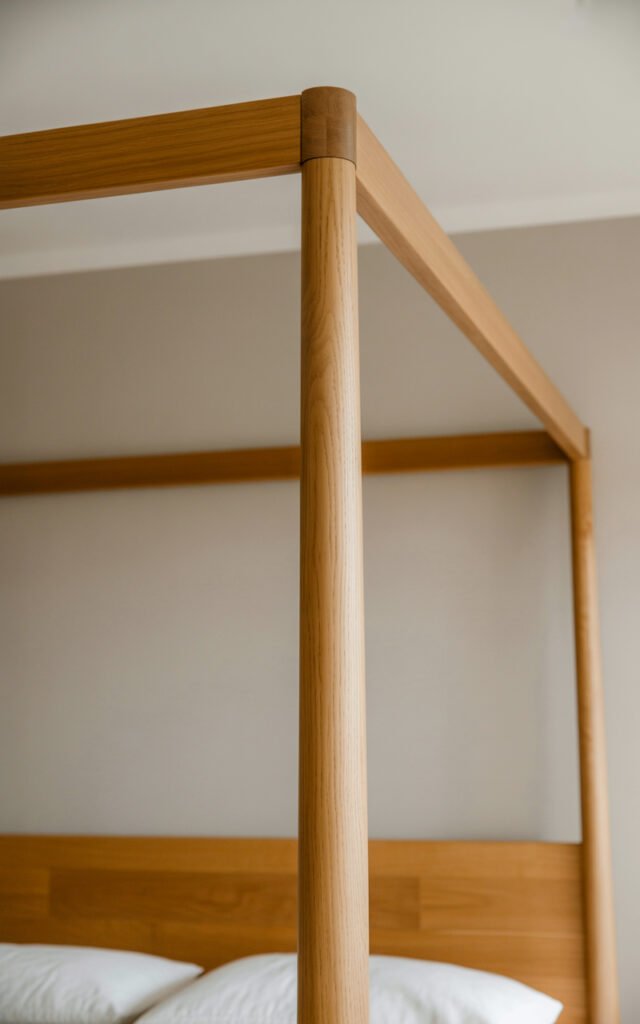
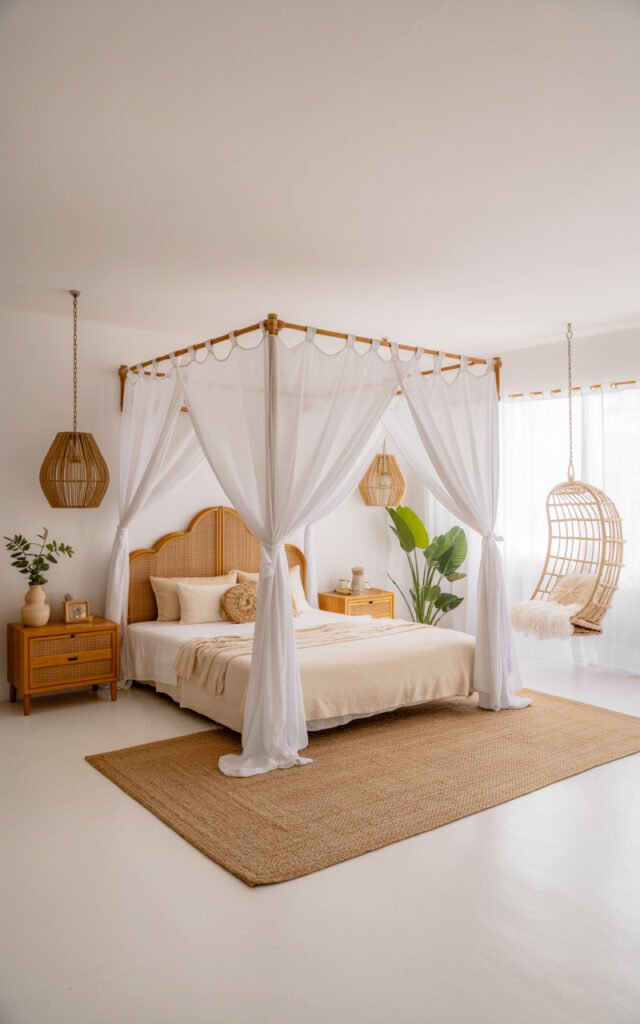
Four-Poster Canopy Beds: The classic. Four posts at each corner that extend upward, with a frame connecting them at the top. This is what you see in that gorgeous inspo image.
- Pros: Dramatic, stable, can support heavier draping
- Cons: More expensive, takes up visual space, needs high ceilings to really shine
- Best for: Larger bedrooms with 9+ foot ceilings
Minimal Metal Canopies: Thin metal rods creating a canopy frame without bulky posts.
- Pros: Modern, affordable, works in smaller spaces
- Cons: May not support heavy fabrics, less traditional
- Best for: Modern boho looks, smaller budgets
DIY Canopy Frames: Ceiling-mounted or wall-mounted poles that create a canopy effect.
- Pros: Super affordable, renter-friendly, customizable
- Cons: May not look as polished, requires installation
- Best for: Renters, tiny budgets, creative types
I went with a wooden four-poster frame I found secondhand for $150. It was dark mahogany (very not my vibe), so I spent a weekend sanding it down and applying a light natural wood stain. Total transformation for under $200 including materials.
Frame Materials That Work
For a rattan inspired bedroom, your canopy frame should complement—not compete with—your rattan elements:
Light wood: Oak, ash, or teak in natural or light finishes. This is my top choice because it coordinates beautifully with rattan’s warm tones.
Bamboo: If you can find a bamboo canopy bed, even better. It’s basically rattan’s cousin and creates an incredibly cohesive look.
White or cream-painted wood: Gives you that breezy, coastal feel. Super versatile and makes small rooms feel bigger.
Natural wood with rattan details: Some canopy beds actually incorporate woven rattan into the headboard or posts. These are gold for this aesthetic.
Avoid heavy, dark woods (mahogany, espresso finishes) unless you’re going for a more dramatic colonial vibe. We want light, airy, and natural here.
The Canopy Draping: Where the Magic Happens
Here’s where your modern boho bedroom canopy bed really comes to life. The draping is everything—it’s what transforms a basic four-poster bed into a romantic, resort-like retreat.
Fabric Choices for Canopy Draping
Not all fabrics are created equal for canopy beds. You want something that drapes beautifully, filters light softly, and doesn’t look stiff or formal.
Sheer linen: My absolute favorite. It has that perfectly imperfect, slightly wrinkled look that feels effortless and expensive at the same time. Filters light beautifully while maintaining privacy.
Cotton voile: Lightweight, affordable, and comes in wider widths. Great budget option that still looks elevated.
Muslin: Super affordable, gets softer with washing, and has that natural organic look. Can be a bit more casual than linen.
Gauze: Ultra-lightweight and breezy. Perfect for that tropical vibe but offers minimal privacy.
Whatever you choose, go for white or cream. Seriously. I know colored canopies can look cool in photos, but in real life, they often feel dated or overly themed. Stick with neutrals—you won’t regret it.
How Much Fabric Do You Actually Need?
This is where people mess up. Too little fabric and your canopy looks sad and skimpy. Too much and you’ve created a fabric fort (which, fair enough, sounds kind of fun).
Here’s my formula for a queen-size bed:
- Full draping on all sides: 30-40 yards of fabric
- Draped at corners only: 15-20 yards of fabric
- Minimal accent draping: 8-10 yards of fabric
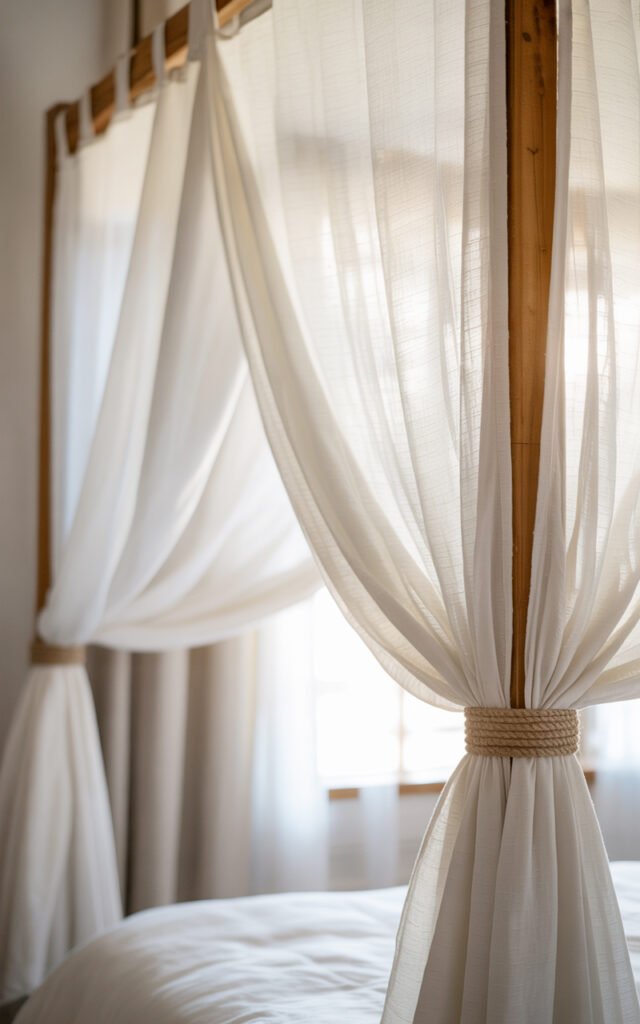
I went with the corner draping method using about 18 yards of linen. Got it from a fabric outlet for a steal—sometimes you can find decorator linen remnants for under $10/yard.
Installation Methods
If you have a four-poster frame: Simply drape fabric over the top frame and let it cascade down. You can:
- Tie it at the corners with ribbon or jute twine
- Let it hang straight for a clean look
- Gather it at the posts for more volume
- Create swoops and gathers for added drama
If you’re DIY-ing: Install ceiling hooks or a ceiling-mounted curtain rod system above your bed. Drape fabric from the ceiling in a square or circular pattern.
Pro tip: Don’t make it too perfect. The beauty of this aesthetic is that slightly undone, organic look. Let the fabric hang naturally, with some wrinkles and movement. It should look effortless, not like you spent three hours with a steamer and measuring tape.
Incorporating Rattan Furniture Throughout Your Bedroom
Now that your canopy bed is the star, let’s talk about the supporting cast: your rattan furniture.
Rattan Nightstands and Side Tables
This is the easiest place to start incorporating rattan. Nightstands get used every day, so you want them functional AND beautiful.
What to look for:
- Natural honey or light brown tones (avoid anything too orange or dark)
- Sturdy construction (cheap rattan can be wobbly—give it a shake test)
- Drawers or shelves for storage
- Height that works with your bed (top should be level with or slightly higher than your mattress)
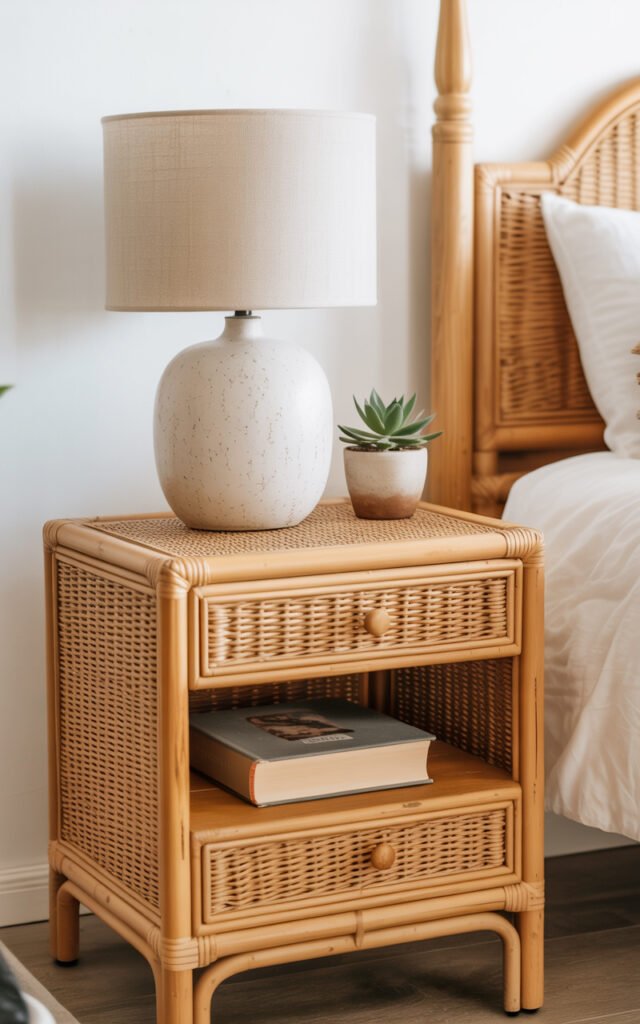
I found mine at a local thrift store for $25 each. They were slightly dusty but structurally perfect. A good cleaning and they looked brand new. Sometimes older rattan furniture is actually better quality than new stuff—that vintage piece was often made when people actually gave a damn about craftsmanship.
Rattan Seating Options
Adding seating to your bedroom elevates the whole space. It’s no longer just a place to sleep—it’s a retreat.
Hanging rattan chairs: Okay, yes, they’re trendy. But you know what? They’re trendy for a reason. These things are magical. Hanging in a corner with some cushions, maybe a throw blanket, and suddenly you have a reading nook that belongs in a magazine.
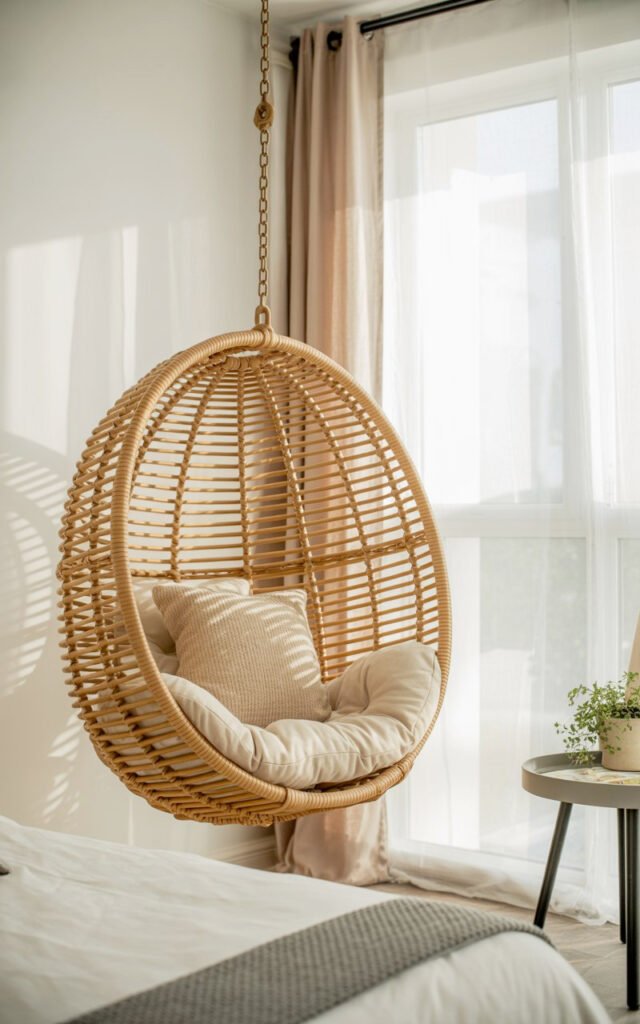
Installation tip: Make sure you’re drilling into a ceiling joist or using a heavy-duty hanging kit rated for your weight plus the chair. Safety first, aesthetics second.
Rattan accent chairs: If ceiling installation isn’t happening, a regular rattan chair works beautifully. Look for ones with cushions—bare rattan isn’t super comfortable for extended sitting.
Rattan benches: Perfect at the foot of your bed. Adds seating, provides a place to throw tomorrow’s outfit, and adds more of that gorgeous texture.
Other Rattan Pieces
Don’t forget about:
- Rattan mirrors: Circular sunburst designs are classic and add dimension
- Rattan storage baskets: For corralling clutter while staying on-theme
- Rattan headboards: If you’re not doing a four-poster bed, a rattan headboard gives you similar texture
- Rattan shelving: Open shelving in natural rattan is both decorative and functional
- Rattan light fixtures: Pendant lights or table lamps with woven shades
The key is distribution. Don’t cluster all your rattan pieces on one side of the room. Spread them out so the whole space feels cohesive.
Creating Your Wicker Room Without Overdoing It
Here’s where people go wrong with wicker room design: they think more is more. Spoiler alert—it’s not.
The 60-30-10 Rule for Rattan
I use a modified version of the classic design rule:
- 60%: Soft textiles and painted/neutral surfaces (walls, bedding, curtains)
- 30%: Wood elements and larger furniture pieces
- 10%: Rattan and woven accents
This keeps rattan as an accent rather than the entire personality of your room. Think of it as the perfect amount of salt in a recipe—enough to enhance everything, not so much that it’s all you taste.
Mixing Rattan with Other Materials
A successful rattan bedroom decor space mixes materials thoughtfully:
Pair rattan with:
- Smooth white linens and soft textiles
- Natural wood furniture
- Ceramic or clay accessories
- Greenery and plants
- Jute or sisal rugs
- White or cream painted furniture
- Brass or gold metal accents
Avoid pairing with:
- Too much dark wood (creates visual heaviness)
- Chrome or silver metals (feels too cold and modern)
- Overly colorful or patterned textiles (competes for attention)
- All-over rattan (basket-store effect)
Balance is everything. For every woven texture piece, you want something smooth to offset it.
Color Palette for Your Bohemian Bed Paradise
The color scheme makes or breaks a bohemian bed setup. Too much color and you lose that serene, spa-like feeling. Too little and it feels sterile.
Your Base Colors
Start with these neutrals as your foundation:
Whites and creams: Your canopy draping, bedding, and walls. This is what makes the space feel open and airy.
Natural wood tones: Your rattan furniture and bed frame. Warm honey and natural tan tones work best.
Warm beiges and tans: Rugs, throw pillows, and textiles. These add warmth without color.
Soft grays: Optional, but can work for bedding or paint if you keep them warm-toned (think greige, not cool gray).
This neutral base lets your rattan furniture and canopy bed shine without competing for attention.
Adding Subtle Color Accents
IMO, the best boho bedroom with canopy bed designs keep color to a minimum, but you can add subtle touches:
- Sage green or dusty eucalyptus (in plants or textiles)
- Warm terracotta or clay pink (in ceramics or one accent pillow)
- Soft ochre or mustard (very sparingly, maybe one throw)
- Natural greenery from plants (this is your main “color”)
I added color through plants exclusively in my room. A large palm frond in the corner, some trailing pothos on a shelf, and a bird of paradise by the window. All that green against white and natural tones? Perfect.
Patterns and Prints
Keep patterns minimal and natural:
- Subtle geometric prints in neutral tones
- Organic shapes and abstract prints
- Botanical or leaf prints (but not too literal—we’re not decorating a jungle-themed kids’ room)
- Textured solids over busy patterns
Avoid: Bold tribal prints, too many patterns at once, anything too busy or bright.
Lighting Your Rattan Canopy Bedroom
Lighting can make or break the vibe. You want soft, warm, ambient lighting that makes your modern boho bedroom canopy bed feel like a five-star resort.
Overhead Lighting Options
Traditional overhead lighting is tough with a canopy bed—you don’t want a fixture competing with your beautiful draping.
Rattan pendant lights: If you’re hanging these, position them on either side of the bed rather than directly over it. Woven pendant shades add texture and diffuse light beautifully.
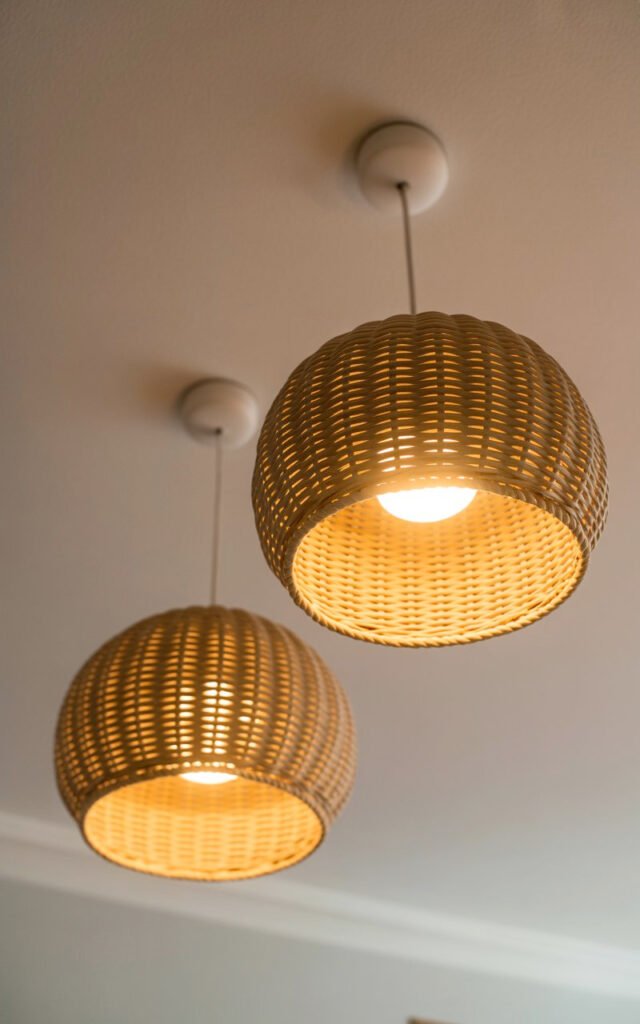
Flush-mount woven fixtures: Lower profile options that provide light without visual clutter.
Recessed lighting: If you’re able to install them, recessed lights with dimmers are ideal. They disappear into the ceiling and let your canopy be the star.
I installed two woven pendant lights on either side of my bed, hung from ceiling hooks. They flank the canopy and provide soft, diffused light that makes the whole space glow at night.
Task and Ambient Lighting
This is where you really set the mood:
Table lamps on nightstands: Look for ceramic bases in neutral tones with linen shades, or rattan lamps that coordinate with your furniture. Warm-toned LED bulbs only (2700K-3000K).
String lights: Yes, they can work in adult bedrooms! Warm white LEDs strung inside your canopy or along a wall create magical ambiance. Keep it subtle—you’re not decorating a dorm room.
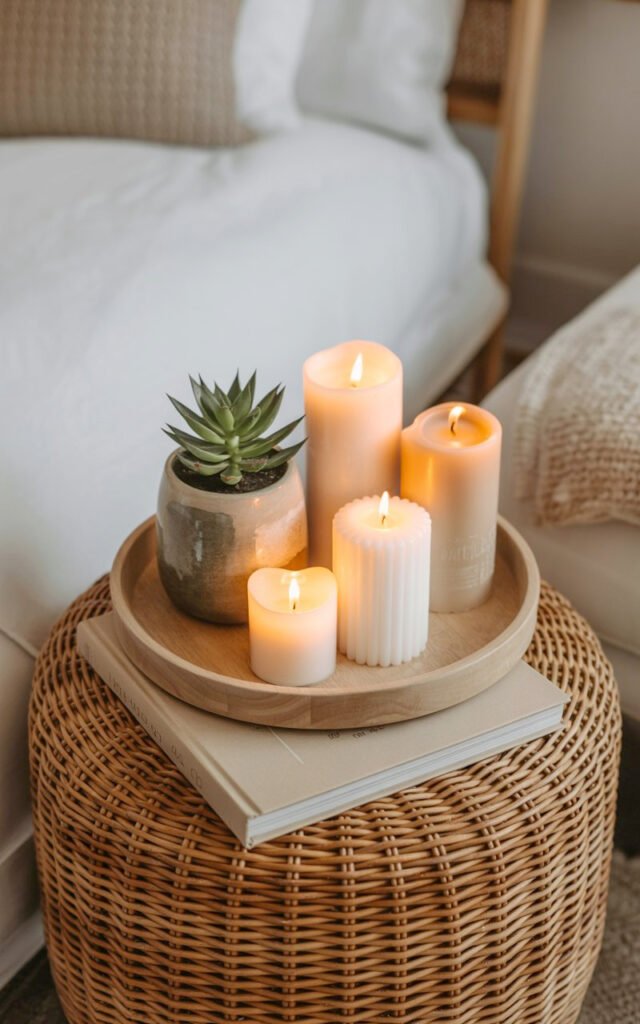
Candles: Real or battery-operated, they add instant coziness. Group them on a tray or shelf for impact.
Floor lamps: A rattan or wood floor lamp in a corner creates a cozy reading spot.
Layer your lighting so you can adjust the mood. Bright and functional when you need it, soft and romantic for winding down.
Textiles and Bedding for Your Boho Canopy Setup
Your bedding needs to complement your canopy without competing with it. Remember, you’ve got flowing fabric around your bed—your bedding should be the calm, neutral anchor.
The Perfect Bedding Combination
Here’s my go-to formula for a bohemian bed:
Base layer: White or cream linen sheets. Quality matters here—splurge a bit if you can. Linen gets softer with every wash and has that perfectly imperfect texture.
Middle layers:
- A lightweight cotton or linen duvet in white or natural
- A waffle-weave blanket or textured cotton throw
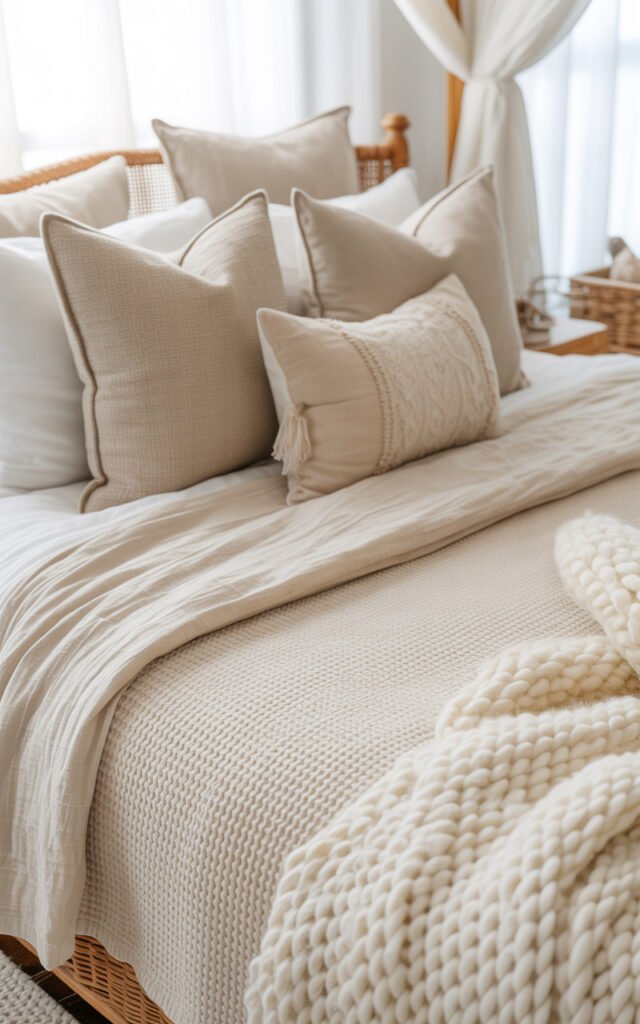
Top layer: One throw blanket with interesting texture—chunky knit, macramé, or a simple cotton throw with fringe.
Pillows: Mix of sizes in neutral tones with varied textures. Maybe one or two pillows with subtle patterns, but mostly solids.
The goal is texture on texture without adding color. Let different weaves, knits, and materials create visual interest.
Rug Selection
Your rug anchors the whole room and needs to work with all that rattan and woven texture.
Best options:
- Large natural jute or sisal rug (adds texture without pattern)
- Neutral wool rug with subtle pattern
- Vintage or vintage-style rug in cream and tan tones
- Layered rugs—jute base with smaller patterned rug on top
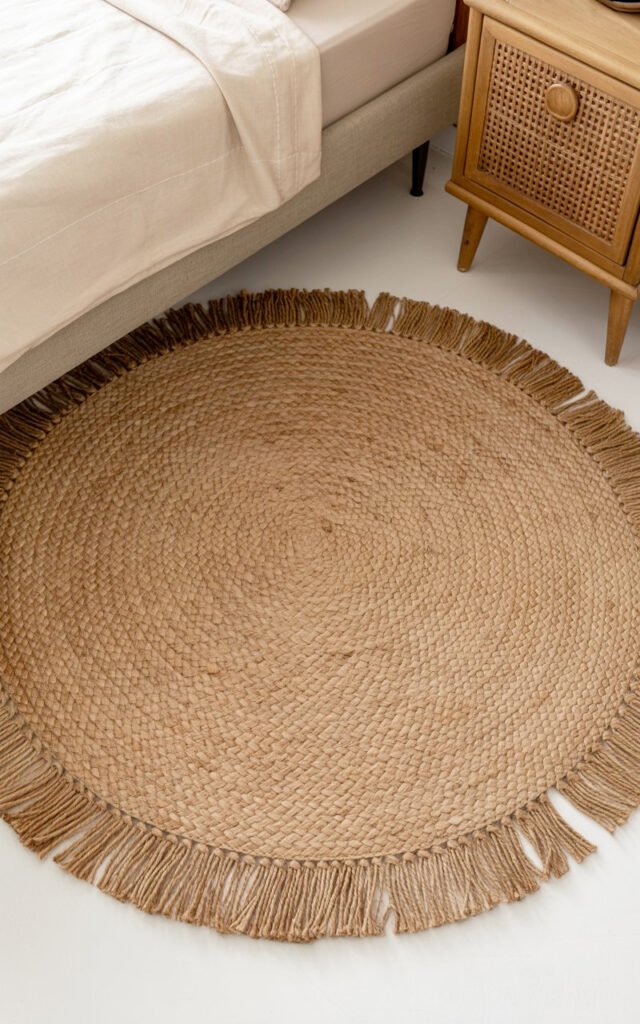
Avoid: Anything too busy, too colorful, or in materials that feel synthetic. This isn’t the place for your bold Persian rug (save that for another room).
I went with an oversized jute rug that extends well beyond all sides of my bed. It cost about $120 from a big-box store during a sale and completely transformed the space.
Wall Treatments and Decor
Your walls provide the backdrop for all this beautiful texture, so let’s get them right.
Paint Colors That Work
Stick with warm neutrals that won’t compete with your rattan and white canopy:
- Warm white (not stark white)
- Cream or ivory
- Light warm beige
- Pale sandy tan
- Soft greige (gray + beige)
I painted my walls in a warm white with the slightest hint of cream. It looks bright and fresh during the day, warm and cozy at night. The key is avoiding any paint with blue or cool undertones—those will fight with the warm tones of your rattan.
Wall Decor Strategies
With a canopy bed, your headboard area is partially obscured, so traditional “art above the bed” doesn’t work. Instead:
Focus on other walls:
- Large mirror with rattan or wood frame
- Botanical prints or photography
- Woven wall hangings (but don’t overdo it—you’ve already got rattan furniture)
- Macramé wall hanging on a side wall
- Floating shelves with plants and neutral decor
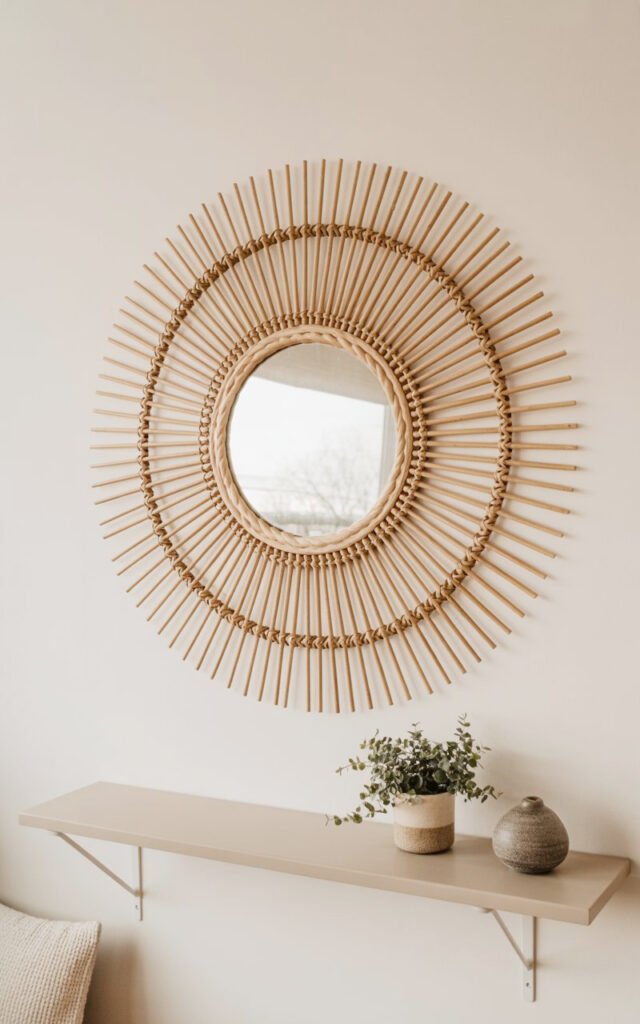
Keep the bed wall minimal: Your canopy bed IS your art. You don’t need much else behind it. Maybe one simple piece or none at all.
I have a large circular rattan mirror on the wall opposite my bed, and some small botanical prints on another wall. The bed wall? Just the gorgeous canopy doing its thing.
Plants: Your Secret Weapon
No rattan inspired bedroom is complete without plants. They add life, color (in the best way), and enhance that tropical, resort-like vibe.
Best Plants for Bedrooms
Look for plants that don’t need intense light and are safe for bedrooms:
Large statement plants:
- Bird of paradise (needs bright indirect light)
- Monstera deliciosa (medium light, dramatic leaves)
- Fiddle leaf fig (if you have good light)
- Large palms (kentia, areca, or bamboo palm)
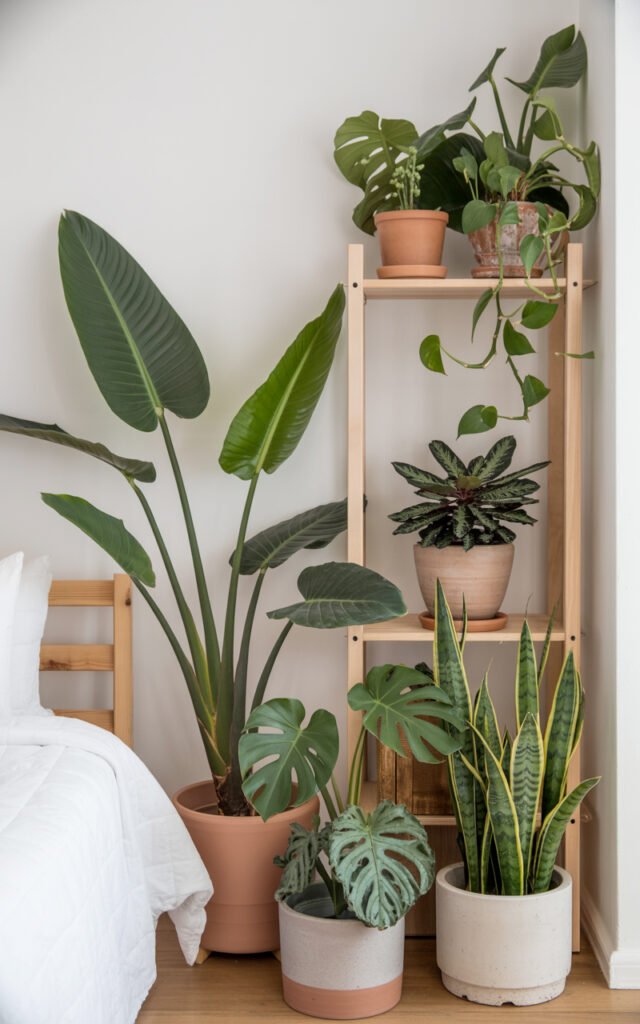
Medium plants:
- Snake plants (unkillable, air-purifying)
- Pothos (trailing, looks great on shelves)
- ZZ plants (tolerates neglect)
- Peace lilies (pretty flowers)
Small plants:
- Succulents on nightstands
- Small ferns
- Trailing plants on shelves
I have a large bird of paradise in one corner, a monstera on a plant stand, and some trailing pothos on my shelving. The green against all the white and natural tones is absolutely perfect.
Planter Choices
Keep planters natural and neutral:
- Terracotta pots
- Ceramic planters in white, cream, or beige
- Woven basket cachepots
- Simple concrete planters
- Natural wood stands
Your plants should enhance the aesthetic, not distract from it with bright colored pots.
Window Treatments for Your Canopy Room
Windows are tricky with canopy beds because you’ve already got a lot of fabric in the room. You don’t want fabric overload, but you also need privacy and light control.
The Best Approach
Keep it simple: This is not the place for heavy, dramatic curtains. You’ve got that drama with your canopy.
Options that work:
- Simple white or cream linen curtains that puddle slightly on the floor
- Bamboo or woven wood shades for texture without fabric
- Sheer white curtains for privacy with light filtering
- Plantation shutters (if you have them, great! If not, don’t install them just for this)
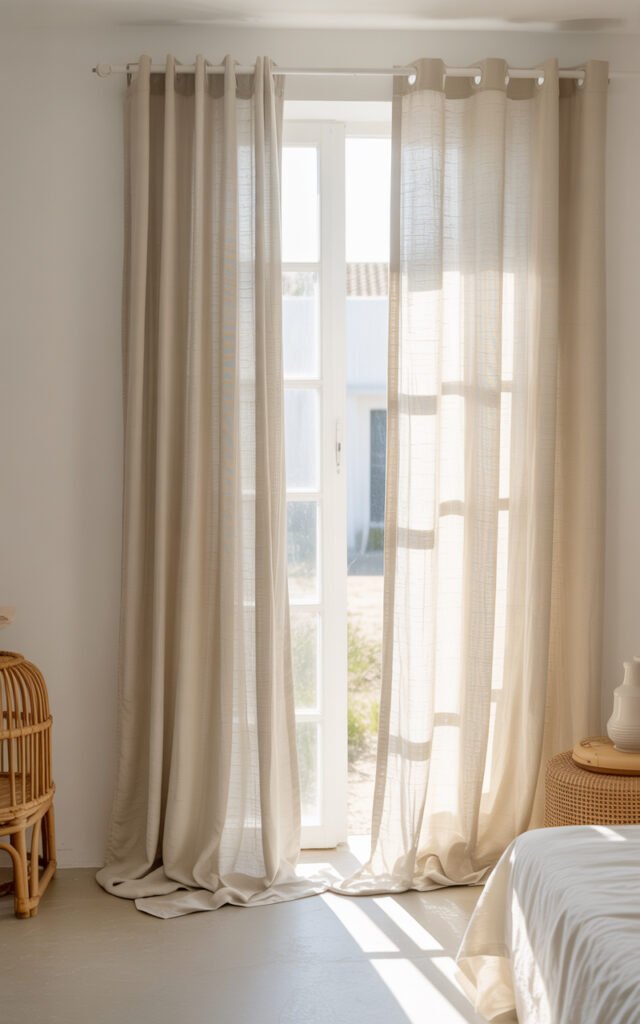
I installed simple linen curtains in the same fabric as my canopy. They’re on a tension rod (renter-friendly!) and can be easily removed. During the day, I keep them open to flood the room with light. At night, they close for privacy.
Avoiding Window Treatment Mistakes
Don’t:
- Match your window curtains exactly to your canopy (too matchy)
- Use heavy, dark curtains (kills the light, airy vibe)
- Over-complicate with layers and valances (this isn’t 1995)
- Block natural light completely
Do:
- Keep it light and minimal
- Prioritize natural light
- Consider the view from outside your window
- Use the same warm white/cream palette
Storage Solutions That Don’t Kill Your Vibe
Let’s be real: you need places to put your stuff. But plastic bins and cluttered surfaces will destroy your carefully curated rattan bedroom decor faster than you can say “organizational nightmare.”
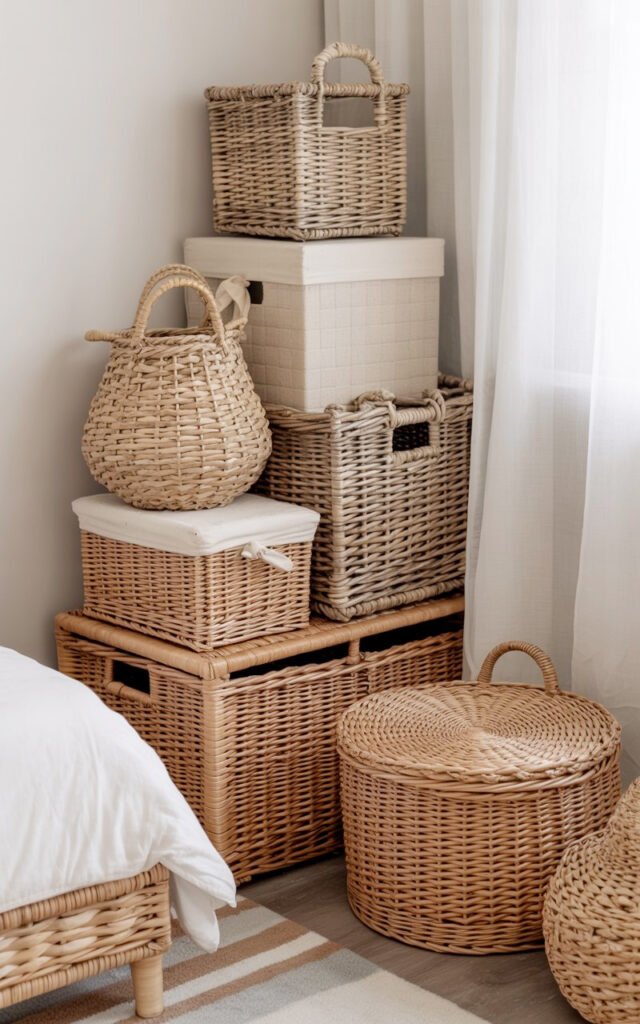
Rattan and Woven Storage
The beauty of this aesthetic is that your storage can be part of the decor:
Under-bed storage: Large woven baskets or rattan storage boxes that slide under your bed. They hide clutter while adding texture.
Baskets, baskets, baskets: Use them everywhere. On shelves, in corners, stacked in a closet. Woven storage baskets in various sizes keep things tidy while looking intentional.
Rattan chests or trunks: Vintage or new, these work as storage and can double as a bench or table.
Woven hampers: Even your dirty laundry can look good in a natural woven hamper.
Furniture with Built-in Storage
Look for rattan furniture that does double duty:
- Nightstands with drawers or shelves
- Benches with storage underneath
- Ottomans that open up
- Shelving units in natural materials
Keep surfaces relatively clear—this style works best with a “less is more” approach to displaying stuff.
Pulling It All Together: The Complete Look
By now, you’ve got all the pieces. Let’s talk about how to arrange them for maximum impact.
Room Layout Considerations
Bed placement: Your canopy bed should be the focal point. Ideally centered on the main wall, with room to walk around it. If space is tight, push it against a wall but leave walking space on at least two sides.
Furniture arrangement: Symmetry works beautifully with canopy beds. Matching nightstands on either side creates balance. Place accent chairs or a bench at the foot of the bed or in a corner.
Traffic flow: Make sure you can actually move around. A gorgeous room you can’t navigate is just frustrating.
Scale: In smaller rooms, stick with a simpler canopy (fewer drapes, thinner posts) and less furniture. In larger spaces, you can go more dramatic.
The Finishing Touches
These details take your room from “nice” to “wow”:
- Books: Stack a few on your nightstand or a side table—choose ones with neutral covers
- Textured objects: A ceramic vase, a woven bowl, simple sculptures in natural materials
- Personal touches: A few meaningful items, but keep it minimal
- Scent: Candles or diffusers with natural scents (eucalyptus, sandalwood, coconut)
- Fresh touches: Change out throw pillows seasonally, rotate plants, refresh flowers
The space should feel personal and lived-in, not like a staged showroom.
Common Mistakes and How to Avoid Them
Learn from my errors so you don’t have to make them yourself:
Mistake #1: Too Much Rattan
I made this mistake initially. I was so excited about the aesthetic that I bought ALL the rattan things. My room looked like a wicker furniture showroom. Not cute.
Fix: Follow the 10% rule I mentioned earlier. Rattan should accent your space, not overwhelm it.
Mistake #2: Forgetting Function
A beautiful bedroom that doesn’t work for actual sleeping, getting ready, and living? That’s a problem.
Fix: Make sure you have adequate lighting for reading, good storage for your stuff, and comfortable bedding. Beauty AND function.
Mistake #3: Cheap Canopy Fabric
I initially tried to save money with the cheapest white fabric I could find. It looked… cheap. See-through, flimsy, and kind of sad.
Fix: Spend a bit more on decent fabric. It doesn’t have to be silk, but get something with some weight and quality to it.
Mistake #4: Ignoring Scale
A massive four-poster canopy bed in a tiny room? Overwhelming. A dinky canopy in a huge room? Gets lost.
Fix: Match your bed size and canopy style to your room size. Be honest about what your space can handle.
Mistake #5: Skipping the Pillows
Your bed needs multiple pillows in various sizes to look styled and feel comfortable. Two standard pillows isn’t enough.
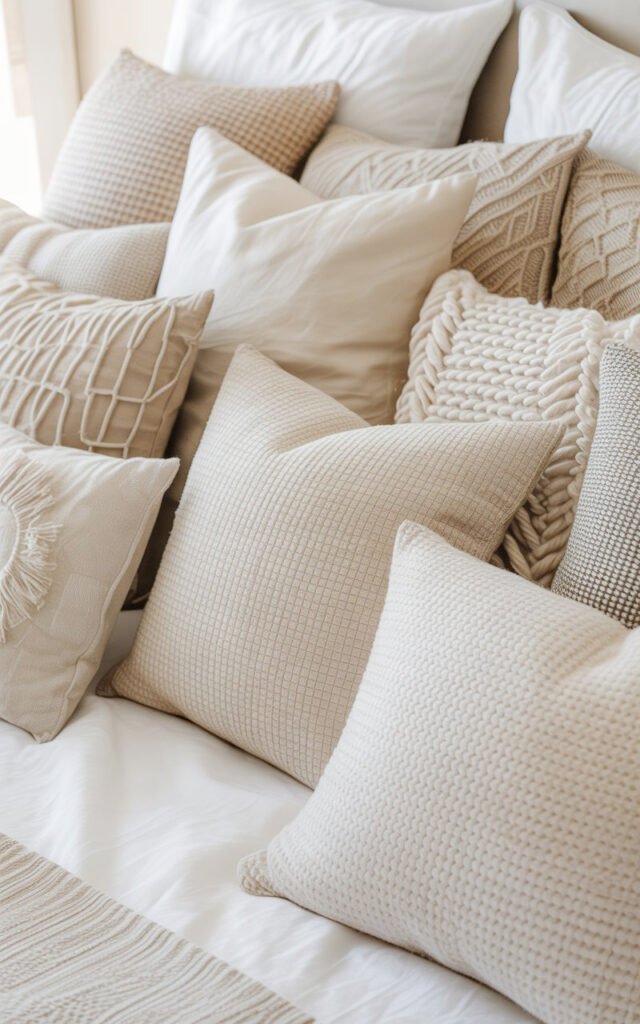
Fix: Invest in a good pillow collection—at least 4-6 pillows in varying sizes with quality pillow covers.
Budget Breakdown: Creating This Look for Less
Since we’re all about realistic budgeting here, let’s talk numbers. Here’s how I’d create this look with different budget levels:
Thrifty Budget ($800-1000)
Bed frame: $150 (secondhand or DIY) Canopy fabric: $100 (15-20 yards on sale) Bedding: $150 (discount store linen-look alternatives) Rattan nightstands: $100 (thrifted or discount store) Lighting: $80 (budget-friendly lamps and string lights) Rug: $100 (jute rug on sale) Plants: $60 (3-4 plants from nursery) Accessories: $60 (baskets, minimal decor)
Total: ~$800
Mid-Range Budget ($1,500-2,000)
Bed frame: $400 (new quality frame) Canopy fabric: $200 (quality linen, more yardage) Bedding: $300 (real linen sheets and quality duvet) Rattan furniture: $300 (nightstands plus one accent piece) Lighting: $200 (quality pendants and lamps) Rug: $200 (larger, better quality jute) Plants and planters: $150 Accessories and decor: $150
Total: ~$1,900
Splurge Budget ($3,000+)
Bed frame: $800-1,200 (designer four-poster) Canopy fabric: $300 (premium linen, custom hemming) Bedding: $500+ (luxury linen bedding) Rattan furniture: $600+ (multiple quality pieces) Lighting: $400 (statement pendants and quality lamps) Rug: $400+ (large, high-quality natural fiber) Plants and planters: $200+ Accessories: $200+
Total: $3,000+
Start with the essentials (bed, bedding, lighting) and add pieces over time as you find them. Rome wasn’t built in a day, and neither is the perfect bedroom.
Making It Work in Different Spaces
Not everyone has a massive primary bedroom. Here’s how to adapt this look:
Small Bedrooms (Under 120 sq ft)
- Choose a simpler canopy—maybe just draped from the ceiling rather than a four-poster
- Use one or two key rattan pieces (like nightstands) rather than multiple items
- Keep the color palette very light to maximize space
- Use wall-mounted lighting to save surface space
- Choose a smaller scale rug
Rental Bedrooms
- Freestanding canopy beds that don’t require installation
- Tension rod curtain systems
- Removable wallpaper or keep walls white
- Furniture that moves with you
- Avoid major installations
Shared Bedrooms
- Use the canopy to create a sense of privacy and separation
- Coordinate with your partner/roommate on the aesthetic
- Keep clutter minimal since there’s more stuff in the space
- Use storage solutions that work for both people
Seasonal Adjustments
Keep your boho bedroom with canopy bed feeling fresh year-round:
Summer
- Lighter, airier canopy draping
- Swap heavy throws for lightweight cotton
- Add more plants
- Keep windows open for breezes
- Lighter color throws and pillows
Winter
- Add an extra layer to your canopy for coziness
- Bring in chunky knit throws
- More candles for warmth
- Warmer lighting
- Maybe a slightly warmer-toned throw pillow
The bones of your room stay the same; you just adjust the soft goods seasonally.
Maintenance and Care
Keeping your rattan bedroom looking good:
Weekly
- Dust rattan furniture with a soft cloth or duster
- Shake out and fluff canopy draping
- Make bed (or at least arrange it to look intentional when unmade)
- Water plants
Monthly
- Vacuum under bed and behind furniture
- Wipe down rattan pieces with slightly damp cloth
- Wash bedding
- Dust plants
- Assess if anything needs replacing or refreshing
Seasonally
- Deep clean canopy fabric (or at least shake it out thoroughly outside)
- Rotate plants if needed
- Evaluate what’s working and what isn’t
- Refresh any tired-looking elements
Rattan is actually pretty low-maintenance. Just keep it clean and dry, and it’ll last for years.
Final Thoughts: Your Personal Paradise
Creating a rattan bedroom decor space with a stunning canopy bed isn’t about following rules perfectly or spending a fortune. It’s about creating a space that makes you feel good—that retreat-like feeling when you walk through the door after a long day.
Start with the essentials: a canopy bed (DIY or purchased), some key rattan pieces, and neutral bedding. Build from there as you find pieces that speak to you. The beauty of this aesthetic is that it’s forgiving—a little imperfection actually adds to the charm.
Don’t stress about getting everything perfect on day one. My bedroom evolved over about six months as I found pieces, tested arrangements, and figured out what worked. Some things I bought didn’t end up fitting the vibe, and that’s okay. Design is iterative.
The most important thing? Make it yours. Add elements that reflect who you are. Maybe you love reading, so you prioritize that cozy hanging chair. Maybe you’re a plant person who wants a full jungle situation. Maybe you want more minimal and clean. All of these can work within this aesthetic framework.
At the end of the day, you’re creating a space where you’ll spend a third of your life. Make it somewhere you actually want to be. Make it peaceful, make it beautiful, and make it yours.
Now go create that canopy bed paradise you’ve been dreaming about. Future you, waking up in that gorgeous space every morning, will thank present you for making it happen.