Let’s be real – scrolling through Pinterest and seeing those gorgeous sage green bedrooms can make you feel like your own bedroom is stuck in 2010. I get it. I’ve been there, staring at my boring beige walls wondering how people create these magazine-worthy spaces without selling a kidney.
Here’s the thing: that dreamy sage green bedroom you’re obsessing over? It’s totally doable on a budget. I’m talking thrift store finds, DIY projects you can knock out this weekend, and tricks that’ll make your space look like you hired an interior designer (spoiler: you didn’t).
After transforming my own bedroom into a sage green sanctuary without breaking the bank, I’m spilling all the secrets. Whether you’re renting and can’t paint, working with a tiny budget, or just want to refresh your master bedroom, I’ve got you covered.
Why Sage Green Bedrooms Are Having Their Moment (And Why It’s Not Going Away)
Sage green isn’t just another trendy color that’ll make your room look dated in two years. This muted, earthy green has been around forever, and there’s a psychological reason it works so well in bedrooms.
It’s scientifically calming. Green is associated with nature, growth, and tranquility. Unlike bright colors that energize you (great for a home office, terrible for where you’re trying to sleep), sage green creates this cocoon-like atmosphere that makes your brain go “ahh, time to relax.”
I noticed this immediately when I added sage green to my bedroom. Those nights when my mind was racing? The color somehow made the space feel more peaceful. It’s like bringing the outdoors inside without the bugs and pollen. 🙂
It’s incredibly versatile. You can pair sage green with warm woods for a Scandinavian vibe, add brass accents for something more luxe, or throw in terracotta for that trendy Scandinese look. It plays well with others, basically.
Understanding the Scandinese Style (And Why Your Bedroom Needs It)
Ever heard of Scandinese? It’s not a new IKEA product line, I promise. It’s this perfect marriage between Scandinavian minimalism and Japanese design principles. Think clean lines, natural materials, and that “less is more” philosophy that actually makes your space feel bigger.
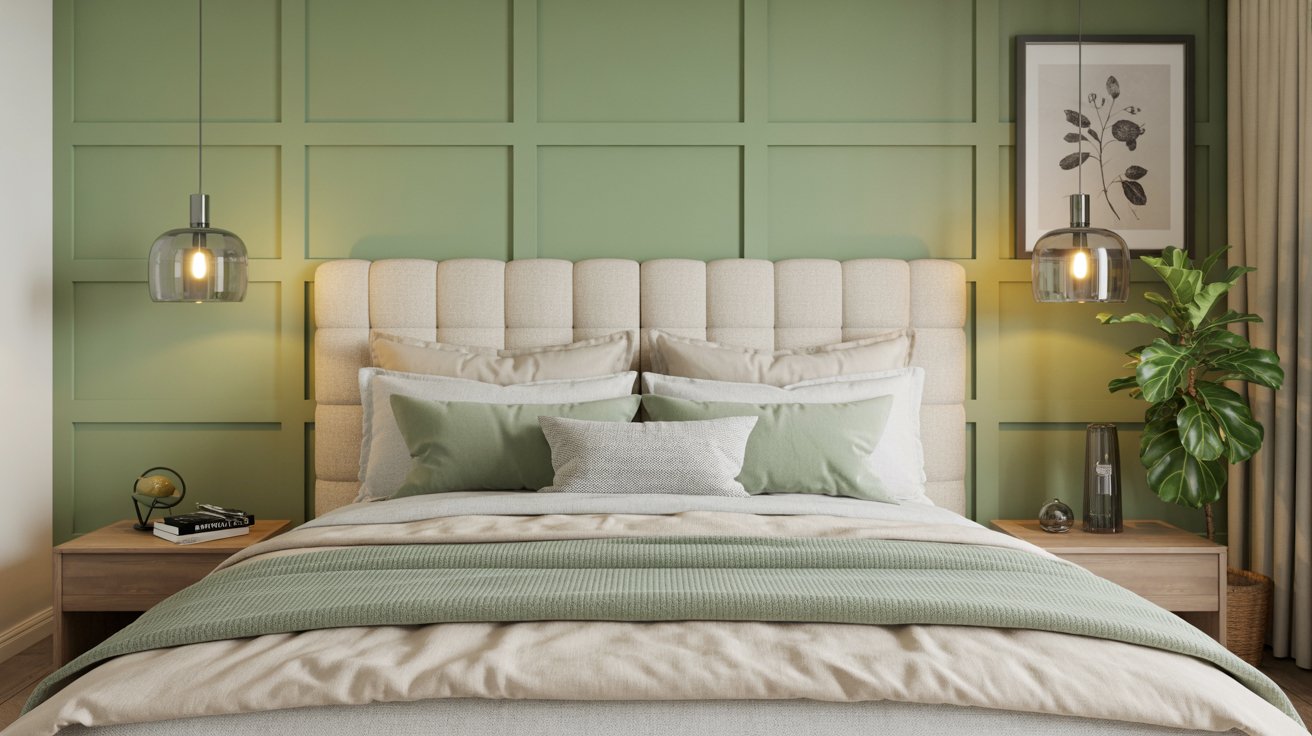
The bedroom in that Pinterest pin you’re lusting after? That’s Scandinese done right. Here’s what makes it work:
- Paneled accent walls that add texture without overwhelming the space
- Neutral base colors (whites, creams, taupes) that let the sage green be the star
- Natural textures—linen bedding, wood furniture, woven rugs
- Minimal clutter because every piece in the room has a purpose
- Soft, layered lighting instead of one harsh overhead fixture
What I love about this style? It’s forgiving for regular people. You don’t need to be perfectly minimal (I’m definitely not), but the emphasis on quality over quantity means you can actually afford to do this right.
Creating That Dreamy Sage Green Accent Wall (Without Professional Help)
That paneled accent wall in the Pinterest pic? It looks expensive, right? Plot twist: it’s one of the most budget-friendly ways to transform your bedroom. I did mine for under $150, and people genuinely think I hired someone.
The DIY Panel Wall Approach
You’ve got two main options here, and both are renter-friendly if you’re careful:
Option 1: MDF Board Panels
Head to your local hardware store and grab some MDF boards. You can have them cut to size right there (most places do this free). Create a grid pattern on your wall, attach with liquid nails or a strong adhesive, fill the seams, and paint everything sage green.
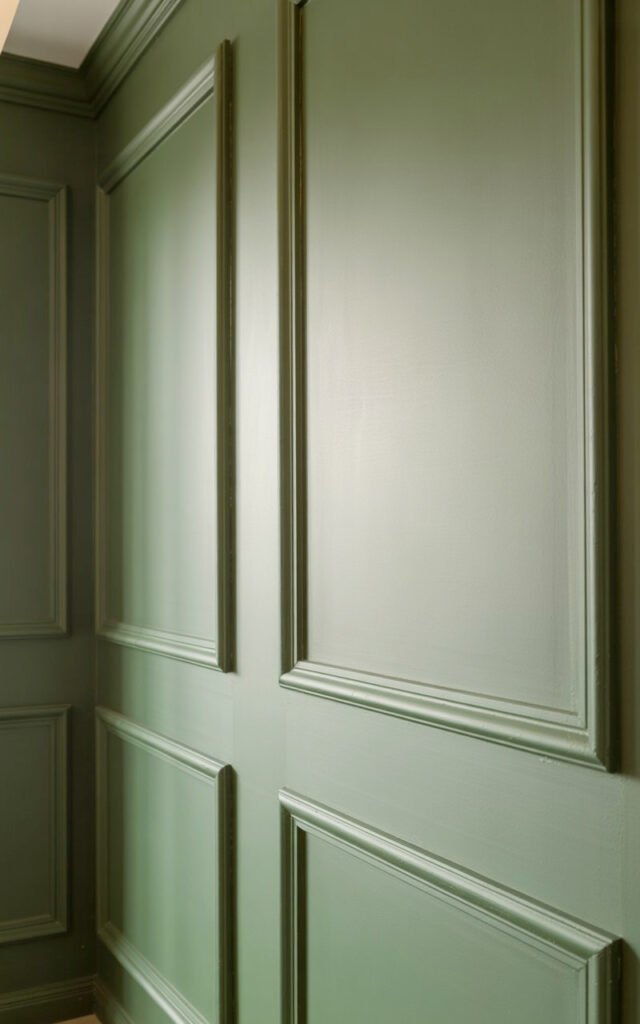
Total cost? About $100-150 depending on your wall size. Time investment? One weekend if you’re taking your time.
Option 2: Picture Frame Molding
This is even cheaper. Buy some basic trim molding, create rectangle frames on your wall, and paint the whole thing. It’s the same elegant look for literally half the price.
FYI, I went with picture frame molding for my first attempt, and it turned out amazing. The key is measuring twice and cutting once (trust me on this one).
Picking The Perfect Sage Green Paint
Not all sage greens are created equal. Some lean too gray and look sad. Others are too bright and give off 1970s vibes. You want that sweet spot – a muted, sophisticated green with just enough warmth.
My top budget-friendly picks:
- Behr “Bok Choy” – A true sage with gray undertones that looks different in every light (in a good way)
- Sherwin Williams “Clary Sage” – Slightly warmer, works beautifully with wood tones
- Benjamin Moore “Saybrook Sage” – The OG sage green that never disappoints
Pro tip: Buy sample pots and paint large swatches on your wall. Look at them in morning light, afternoon light, and evening light. Sage green can look completely different depending on your room’s natural light situation.
Bedroom Wall Designs That Won’t Make You Broke
Beyond the paneled accent wall, there are tons of ways to incorporate sage green into your bedroom walls without spending a fortune. Let’s talk options that actually work in real life.
The Half-Painted Wall Trick
Can’t commit to a full sage green wall? Paint just the bottom half. Add a chair rail or picture rail molding at the division point, paint below it sage green, and keep the top half white or cream.
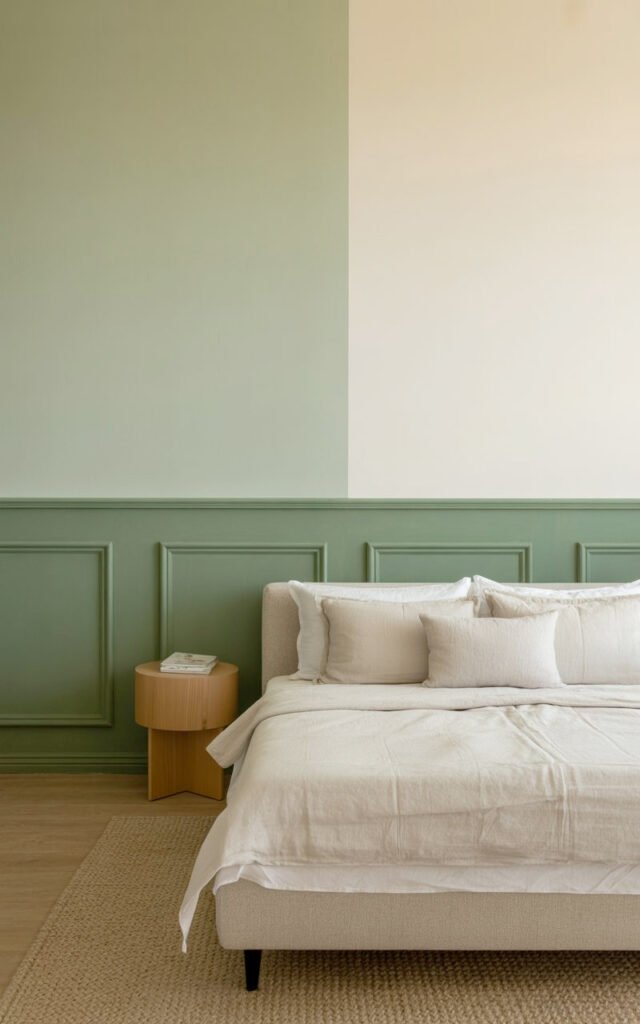
This technique makes low ceilings look higher and uses way less paint. Win-win. I’ve seen people do this in small bedrooms, and it actually makes the space feel bigger rather than chopped up.
Peel-and-Stick Wallpaper (Yes, Really)
Before you roll your eyes – peel-and-stick wallpaper has come a long way. The quality stuff doesn’t look cheap anymore, and it’s perfect for renters who need damage-free solutions.
Look for subtle patterns: botanical prints, abstract textures, or even textured solids in sage green. Apply it to your accent wall behind the bed, and suddenly your room has dimension and character.
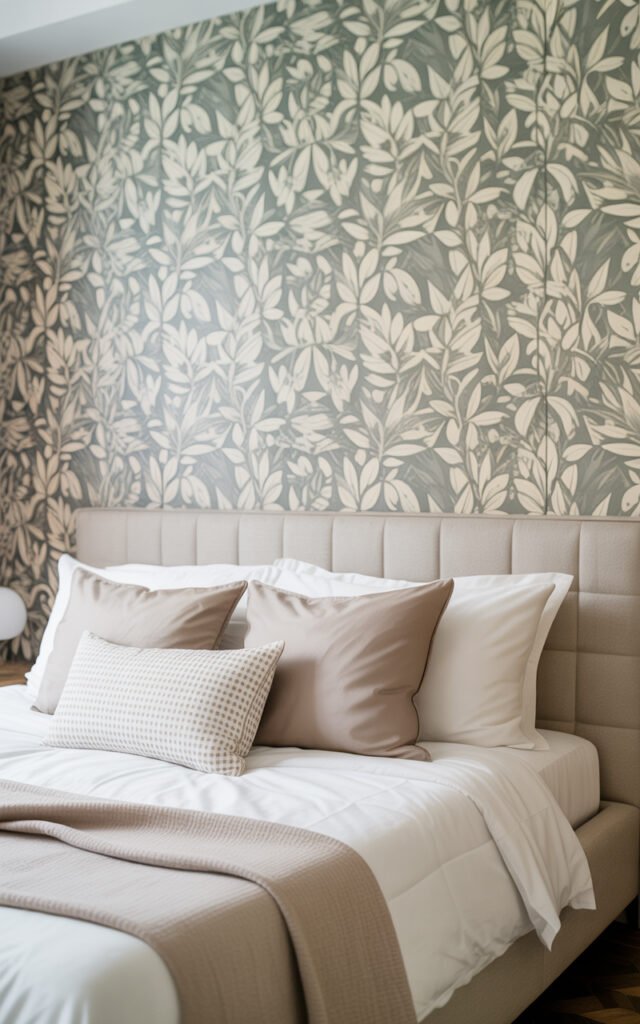
I was skeptical too until I tried it in my rental. Application took maybe three hours, and when I moved out? Peeled right off without damaging the paint underneath. The landlord didn’t even know it was there.
The Gallery Wall Approach
Not ready to paint at all? Create a gallery wall with botanical prints in simple black or wood frames. Mix in some sage green elements through the artwork, and you get the color without the commitment.
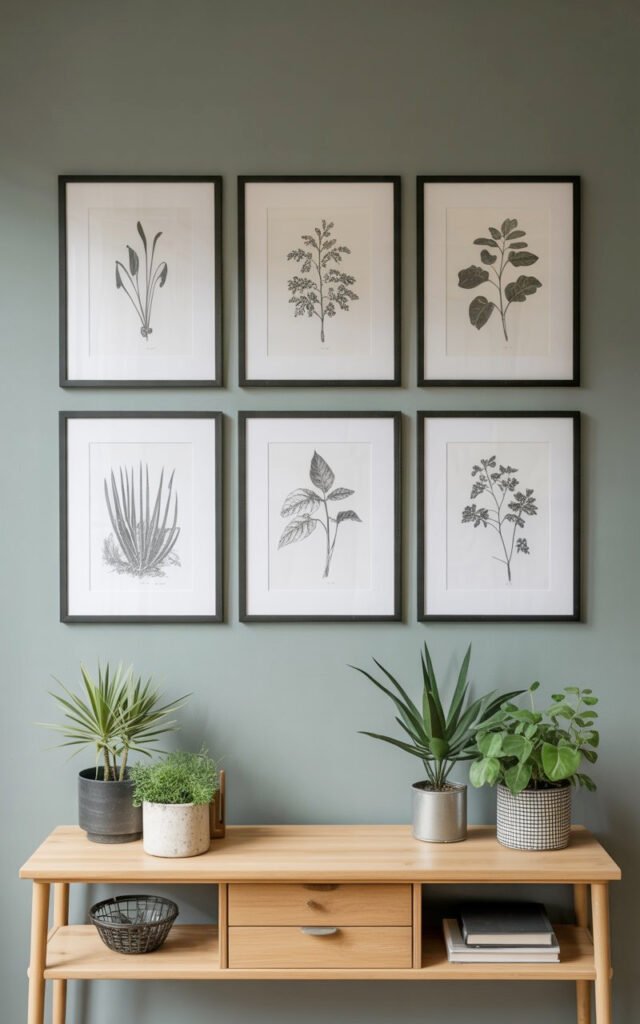
Check thrift stores for frames (I found mine for $2-5 each), and print your own artwork from sites like Unsplash or purchase affordable prints on Etsy. Total gallery wall cost? Under $50 if you’re strategic.
Layering Your Bedding Like a Pro (The Part That Actually Matters)
Here’s something nobody tells you: the bedding makes or breaks a sage green bedroom. You can have perfect walls and terrible bedding, and the whole thing falls flat.
That Pinterest bedroom? Look closer at the bedding. It’s not just thrown together. There’s a method to the layering that makes it look expensive and inviting.
The Foundation Layer
Start with neutral sheets – white, cream, or light gray. This is your base that never changes. Don’t blow your budget here. Target and Amazon have great options under $40.
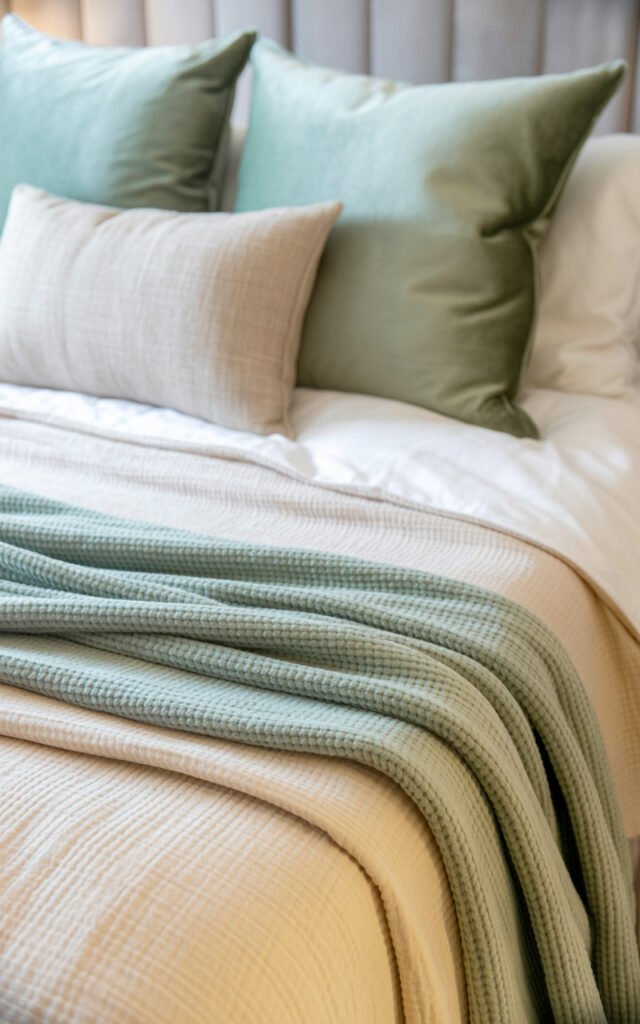
Add a linen duvet cover in a complementary neutral. Linen is key because it has that relaxed, lived-in texture that screams “expensive bedroom.” It wrinkles beautifully (which sounds weird but trust me).
The Color Layer
This is where sage green comes in. Add:
- Two sage green throw pillows (euro size looks more designer)
- A sage green throw blanket draped casually at the foot of the bed
- Maybe a sage green lumbar pillow for extra dimension
Mix textures here. Get one pillow in linen, another in velvet or chenille. Different textures catch light differently and add depth to your bed.
The Finishing Touches
Layer in some darker accent pillows – charcoal, deep green, or even a muted terracotta. These darker tones prevent the sage green from looking washed out.
IMO, the biggest mistake people make is using all the same shade of sage. You need variation. Light sage, medium sage, maybe even a deeper forest green in small doses. That’s what makes styled beds look so good – they’re actually using 3-4 shades of the same color family.
Lighting That Makes Your Sage Green Bedroom Actually Work
Can we talk about lighting for a second? Because it’s literally the difference between “wow, this looks amazing” and “why does my room look like a sad hospital?”
Sage green needs warm, layered lighting. Cold LED lights will make it look gray and depressing. You want lighting that brings out those warm undertones.
Ditch the Overhead Light (Seriously)
That single overhead fixture? It’s doing you dirty. Scandinese design relies on multiple light sources at different heights. Here’s what you need:
- Bedside table lamps or pendant lights – These are functional and create ambiance
- A floor lamp in the corner – Adds height and fills dark corners
- Fairy lights or LED strips – Hidden behind headboards or along shelves for that soft glow
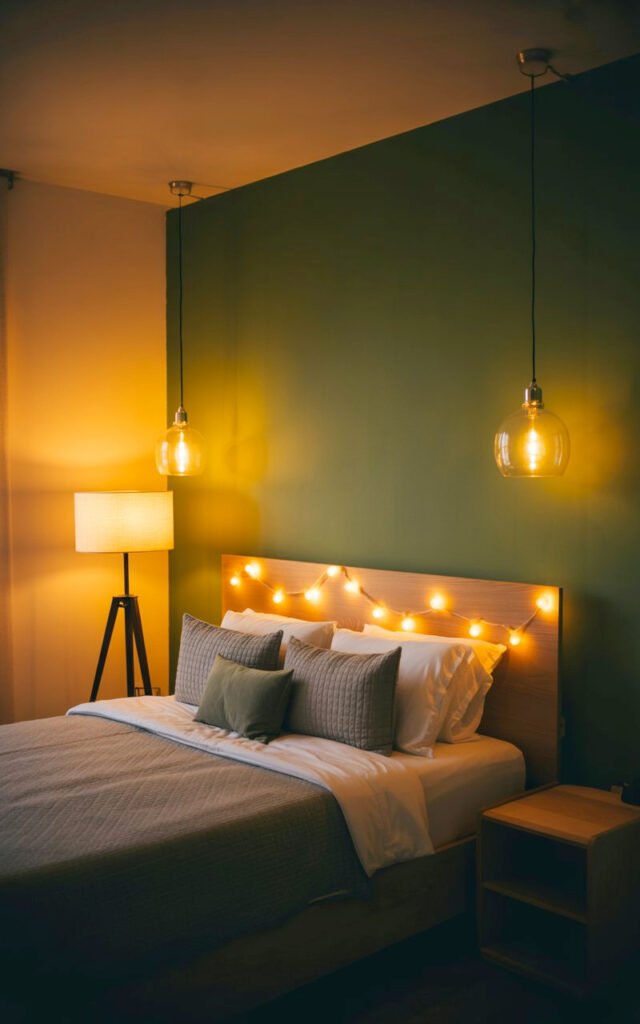
I installed pendant lights on either side of my bed (they’re just plug-in ones with a cord tucked behind), and it transformed the whole vibe. Suddenly my bedroom felt like a boutique hotel.
Bulb Temperature Matters More Than You Think
Get bulbs in the 2700K-3000K range. This is warm white – the same temperature as candlelight. Your sage green walls will look rich and inviting instead of cold and institutional.
Also, dimmer switches are your friend. Install them on every light source if possible. Being able to adjust brightness for different times of day makes your room way more functional.
Furniture and Decor That Completes The Look
Alright, your walls are sage green, your bedding is layered like a pro, and your lighting is on point. Now let’s talk about the finishing touches that pull everything together.
The Headboard Situation
That tufted, upholstered headboard in the Pinterest pic? Yeah, those retail for like $800. But here’s the secret: you can make one for under $100.
Get a piece of plywood cut to size, buy some foam and batting from a fabric store, grab upholstery fabric (linen looks expensive), and staple gun it all together. YouTube has a million tutorials, and it’s honestly easier than it sounds.
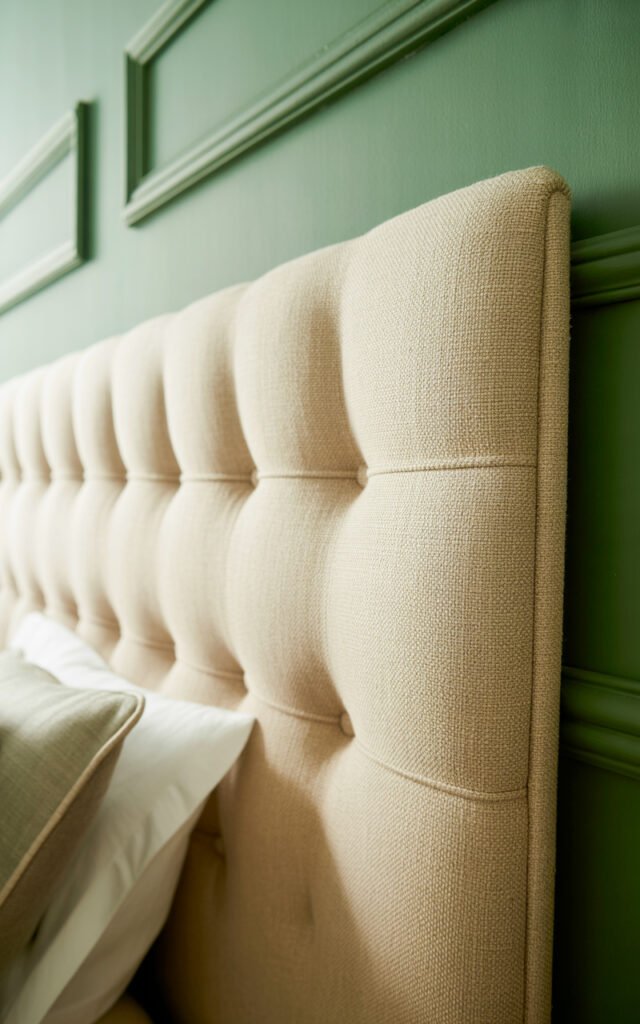
If DIY isn’t your thing, check Facebook Marketplace or thrift stores. I’ve found designer headboards for $50 just because someone was moving. A little paint or reupholstering, and you’ve got a custom piece.
Wood Tones and Sage Green Are Best Friends
Natural wood furniture against sage green walls? Chef’s kiss. The warmth of the wood brings out the green’s earthy qualities.
You don’t need expensive pieces. Look for:
- Simple wood nightstands – Even cheap pine looks good with the right stain
- A wood-framed mirror – Bounces light and adds warmth
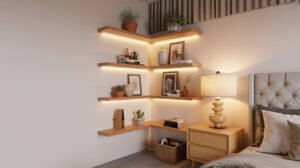
- Floating shelves – Display plants and books while adding horizontal lines
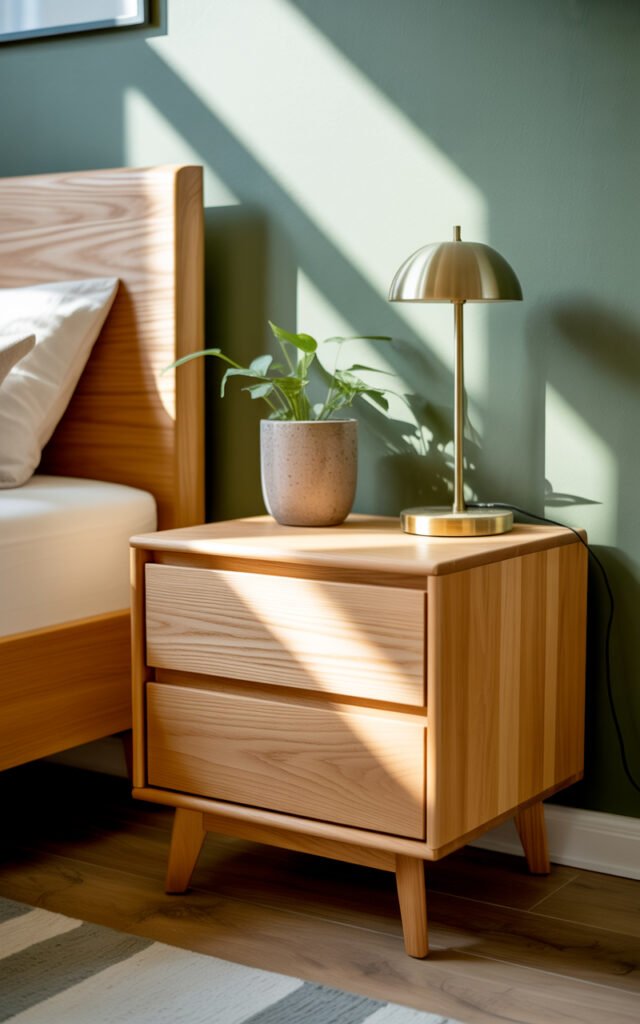
Mix wood tones too. A light oak nightstand with a darker walnut mirror creates more visual interest than matching everything.
Plants Are Non-Negotiable
A sage green bedroom without plants is like pizza without cheese. Technically it exists, but why would you do that to yourself?
Even if you have a black thumb (hi, same), there are foolproof options:
- Snake plants – Literally thrive on neglect
- Pothos – Hard to kill and looks gorgeous trailing from shelves
- Fiddle leaf fig – The Instagram plant, but actually easier than people think
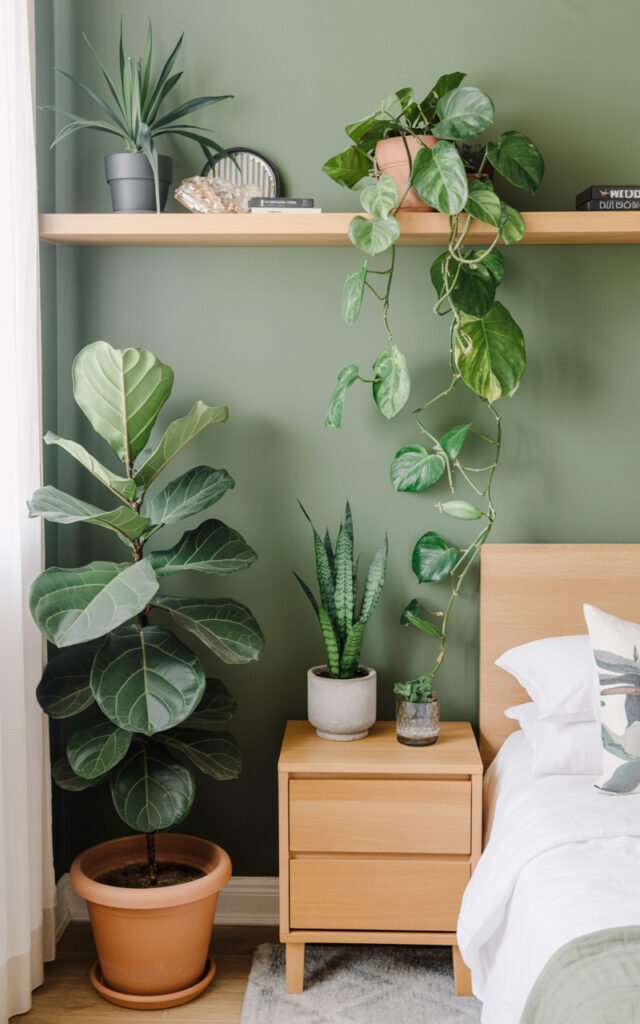
Put them in simple terracotta or ceramic pots. The natural pot colors complement sage green perfectly. Plus, plants improve air quality, so you’re basically being healthy by decorating. :/
Master Bedroom Decor Upgrades That Look Expensive But Aren’t
Want to know the real secrets behind those Pinterest-perfect master bedrooms? It’s all about the details. Small upgrades that cost almost nothing but make a huge visual impact.
Upgrade Your Curtains (It’s Cheaper Than You Think)
Those basic white curtains from Target? They’re fine. But hanging them correctly makes them look custom and expensive.
Here’s the trick: Mount your curtain rod as close to the ceiling as possible, and get curtains that puddle slightly on the floor. This makes your ceilings look higher and your windows look bigger.
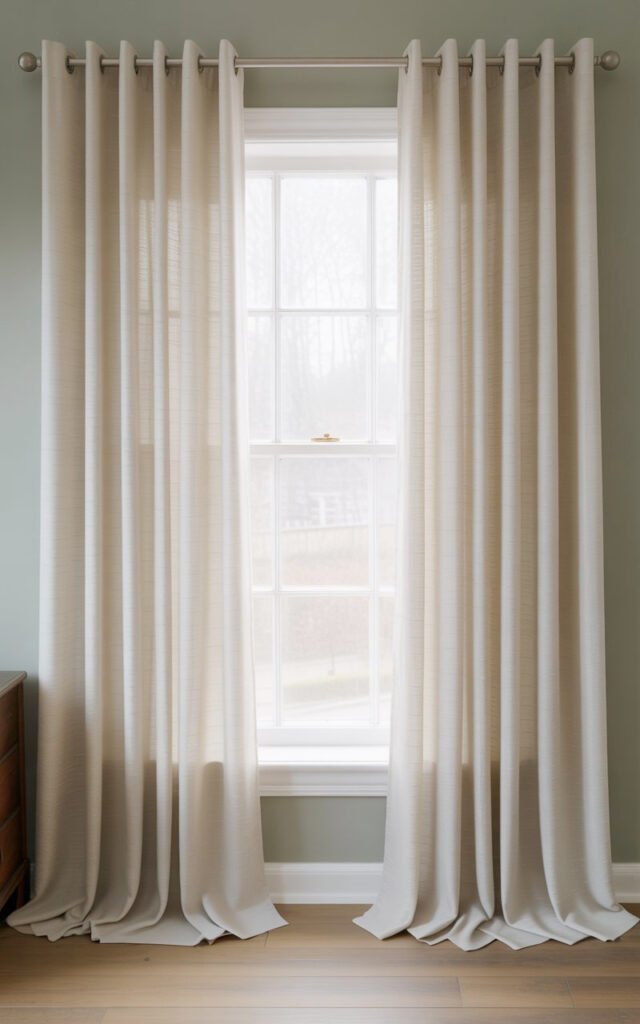
For sage green bedrooms, go with linen curtains in cream or white. They filter light beautifully and have that relaxed, expensive look. Even the budget ones from Amazon look good once they’re hung properly.
The Rug That Grounds Everything
A rug under your bed ties the whole room together. For Scandinese style, you want something textural and neutral – think vintage-look Persian rugs in muted colors, natural jute, or a simple cream shag.
Size matters here. Get one large enough that it extends at least 18 inches beyond both sides of your bed. Too small, and it looks like an afterthought.
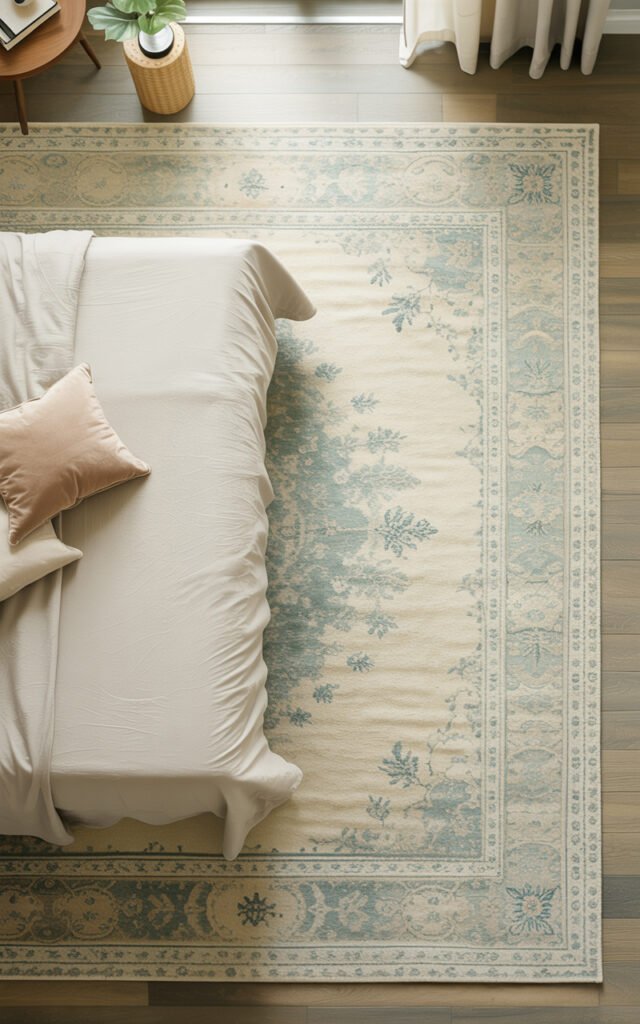
Check Rugs USA, Wayfair during sales, or even HomeGoods. I found a gorgeous 8×10 rug for $150 that people constantly ask about. Everyone assumes it’s way more expensive.
Artwork That Doesn’t Look Basic
Those botanical prints in the Pinterest bedroom? They’re giving the room personality without overwhelming it. Here’s how to recreate that look:
- Print black and white botanical drawings (tons of free downloads online)
- Frame them in simple black or wood frames from IKEA or thrift stores
- Hang them symmetrically on your sage green wall
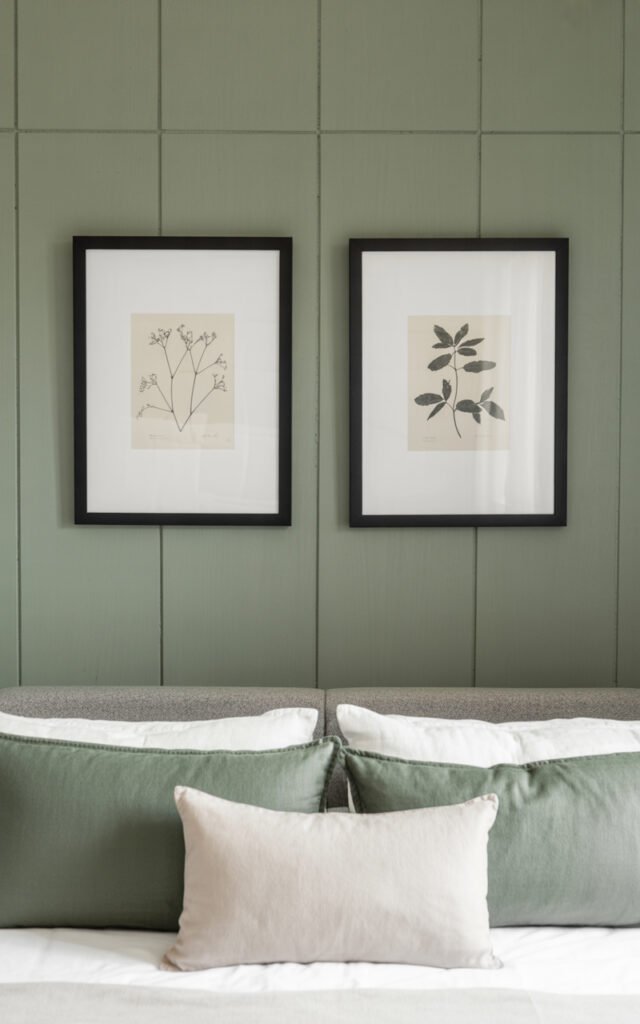
Or get abstract art with sage green, cream, and terracotta tones. Etsy has tons of affordable prints, and society6 often has sales.
The key is keeping frames consistent and hanging art at the right height (center should be at eye level, about 57-60 inches from the floor).
Making It Work for Renters (Because Not Everyone Can Paint)
Renting and can’t paint? I feel you. Most of my decorating years have been in rentals where painting wasn’t an option. But you can still achieve that sage green bedroom aesthetic – it just requires some creative thinking.
Removable Solutions That Actually Look Good
Peel-and-stick wallpaper on one accent wall – I mentioned this earlier, but it’s worth repeating. This is the easiest way to add sage green without touching paint.
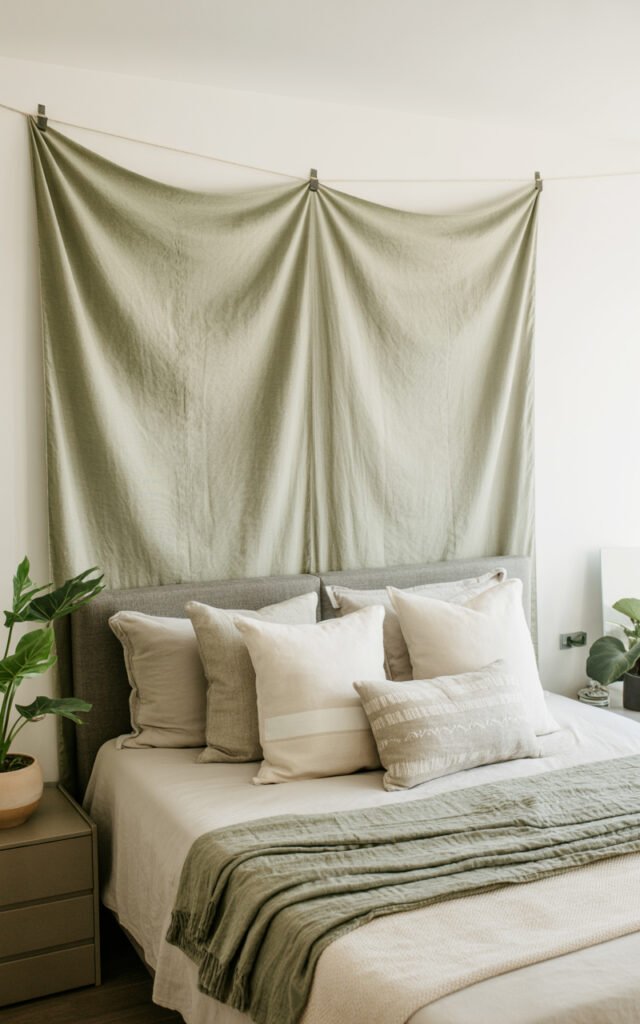
Large tapestries or fabric panels – Hang a large piece of sage green fabric behind your bed using Command hooks. It creates an instant accent wall that you can take down anytime.
Lean large artwork or mirrors – Instead of hanging things, lean oversized pieces against the wall. It’s actually a design trend (thankfully), and it’s 100% damage-free.
Go Heavy on Textiles
If you can’t change the walls, change everything else. Load up on sage green in your:
- Bedding (obviously)
- Curtains or drapes
- Throw pillows on any seating
- Rugs
- Throw blankets
The cumulative effect of all these textiles in sage green and complementary neutrals creates the same vibe as painted walls. Plus, you can take everything with you when you move.
Budget Breakdown: Creating This Look for Under $500
Let’s get real about costs. That Pinterest bedroom probably looks like it cost thousands. But with strategic shopping and some DIY, you can get seriously close for way less.
Here’s how I’d allocate $500:
- Paint and supplies for accent wall: $100 – One gallon of quality sage green paint, primer if needed, MDF boards or molding, and basic supplies
- Bedding: $150 – Neutral duvet cover ($50), sage green throw pillows ($40), throw blanket ($30), new sheets if needed ($30)
- Lighting: $80 – Two plug-in pendant lights or table lamps ($60), new warm bulbs ($20)
- Decor and accessories: $100 – Plants and pots ($40), frames for artwork ($30), small decorative items ($30)
- Rug: $70 – Look for sales or check discount sites
That’s $500 total, and you’ve transformed your entire bedroom. Obviously adjust based on what you already have, but this proves you don’t need thousands to create a beautiful space.
Common Mistakes to Avoid (Learn from My Fails)
I’ve made every mistake in the book while creating my sage green bedroom. Let me save you some time and money by sharing what NOT to do.
Going Too Matchy-Matchy
Everything in the exact same shade of sage green? That’s not a bedroom, that’s a paint commercial. You need variation in your greens – light, medium, dark. Mix in plenty of neutrals too.
The most successful sage green bedrooms use maybe 30% green, 60% neutrals, and 10% accent colors. It keeps things interesting without being overwhelming.
Ignoring Your Room’s Natural Light
North-facing room with minimal light? Sage green might look more gray than green. You’ll need warmer accents and plenty of artificial lighting to compensate.
South-facing room with tons of sun? Lucky you. Your sage green will look gorgeous all day. Just be aware it’ll look different at different times.
Forgetting About Scale
Tiny throw pillows on a king bed look ridiculous. Giant artwork in a small room overwhelms the space. Pay attention to proportions.
A good rule: Your art should take up about 2/3 to 3/4 of the wall space above your furniture. Your rug should extend beyond your bed on all visible sides. Bigger is almost always better than too small.
Seasonal Adjustments That Keep Your Bedroom Fresh
One cool thing about sage green bedrooms? They work year-round, but you can make small seasonal tweaks to keep things feeling current.
Spring/Summer: Lighter, breezier textiles. Swap heavy velvet pillows for linen. Add white or pale pink accents. Keep things feeling airy and fresh.
Fall/Winter: Layer in warmer textures like chunky knit throws, velvet pillows, and maybe some deeper forest green accents. Add string lights for cozy vibes.
These small changes keep your room from feeling stale without requiring a complete overhaul every few months.
Where to Shop for the Best Deals
You didn’t think I’d leave you without sharing my favorite places to find affordable sage green bedroom stuff, did you?
For bedding and textiles: Target (Threshold line is great), H&M Home (seriously underrated), Amazon (read reviews carefully), West Elm sale section
For furniture: Facebook Marketplace, Habitat for Humanity ReStore, estate sales, IKEA with some modifications
For decor: Thrift stores for frames and vases, HomeGoods for trendy stuff cheap, Etsy for art prints, your own printer for botanical drawings
For paint: Behr at Home Depot (good quality, reasonable price), check the “oops paint” section for massive discounts on mixed colors that might be perfect
The Final Touch: Making Your Bedroom Feel Like YOU
Here’s the thing about following design trends and Pinterest inspiration – it’s easy to create a beautiful room that doesn’t actually feel like yours. Don’t let that happen.
That sage green bedroom you’re creating? It should reflect your personality. Love books? Stack them on your nightstand. Into vintage cameras? Display them on a shelf. Have a collection of concert posters? Frame them above your dresser.
The Scandinese style is about intentional minimalism, not sterile perfection. Every piece in your room should serve a purpose or bring you joy. Ideally both.
I’ve got a vintage Kentucky license plate on my wall because it reminds me of road trips with my dad. It has nothing to do with Scandinese design, but it makes me smile every time I see it. That’s what matters.
Ready to Transform Your Space?
Look, creating a sage green bedroom that looks like it belongs on Pinterest isn’t rocket science. It’s about making smart choices, shopping strategically, and not being afraid to DIY when it makes sense.
Start with one element – maybe that accent wall or new bedding – and build from there. You don’t have to do everything at once. In fact, slowly collecting pieces you love creates a more personal, curated look than buying everything in one shopping trip.
Your bedroom should be your sanctuary. The place where you start and end every day. Making it beautiful doesn’t require a massive budget or professional help. It just requires a little creativity and the willingness to try.
So grab that paint sample, hunt for those thrift store treasures, and start creating a sage green bedroom that makes you actually excited to go to bed at night. You’ve got this.