You know that feeling when you walk into a hotel room and immediately think, “Why can’t MY bedroom look like this?” Yeah, I’ve been there too many times to count. But here’s the thing – creating that resort-style, warm and inviting bedroom doesn’t require a designer’s budget or some secret decor magic. It’s totally doable, and I’m about to show you exactly how.
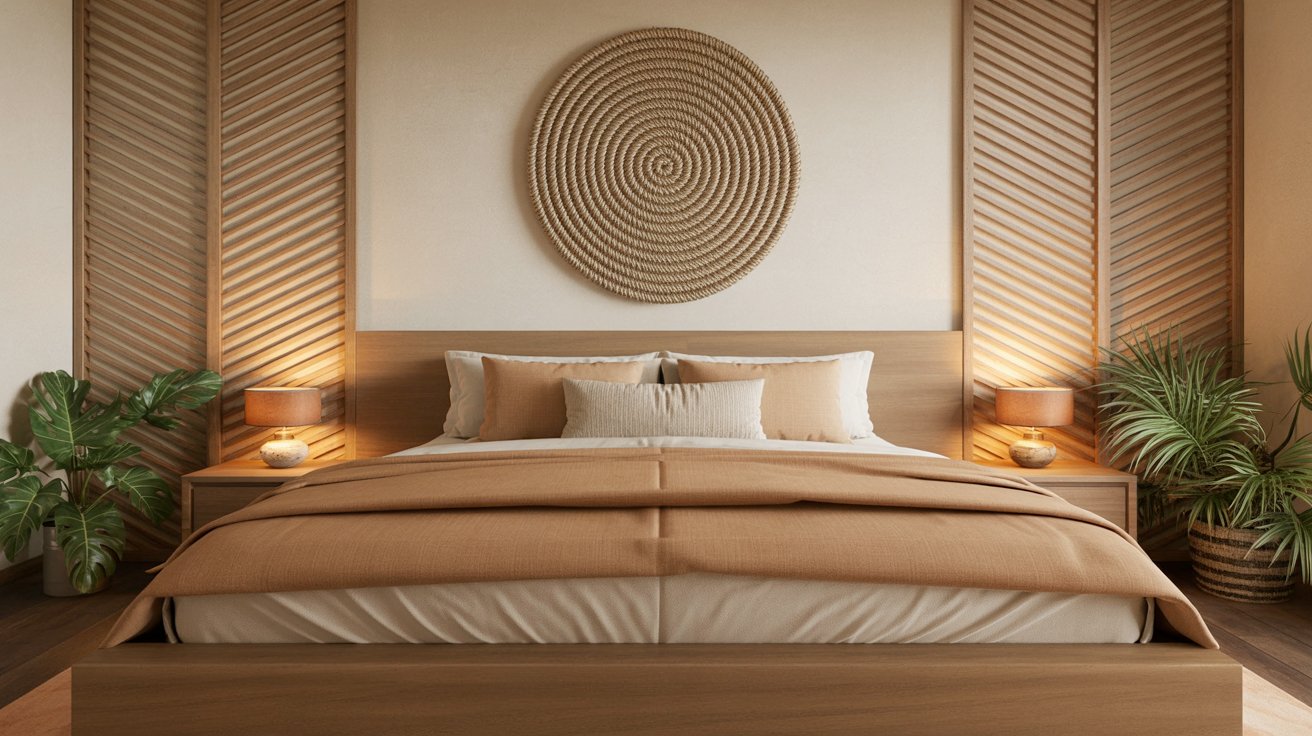
I recently stumbled across this absolutely gorgeous bedroom design (you know, the kind that makes you question all your life choices), and I couldn’t stop thinking about it. The warm wood tones, those incredible textured wall pieces, the perfect lighting… it all came together in a way that felt both luxurious and somehow still cozy. So naturally, I had to break down what makes this style work so well and how you can recreate it in your own space without selling a kidney.
Why Warm, Natural Bedroom Designs Are Having a Major Moment
Let’s be real – we’ve all had enough of the cold, stark minimalist trend. Don’t get me wrong, I appreciate a clean space, but there’s something about walking into a bedroom that feels like a warm hug that just hits different.
Natural, earthy bedroom designs are blowing up right now, and honestly? It’s about time. These spaces use organic materials, warm wood tones, and tons of texture to create an environment that actually helps you relax. The goal isn’t just to have a pretty room – it’s to create a sanctuary where you genuinely want to spend time.
The beauty of this design approach is that it works whether you’re going for modern elegance, bohemian vibes, or something in between. It’s incredibly forgiving and adaptable, which is perfect for those of us who aren’t interior design professionals (raising my hand here).
Breaking Down the Key Elements of This Stunning Bedroom
The Star of the Show: That Textured Wall Art
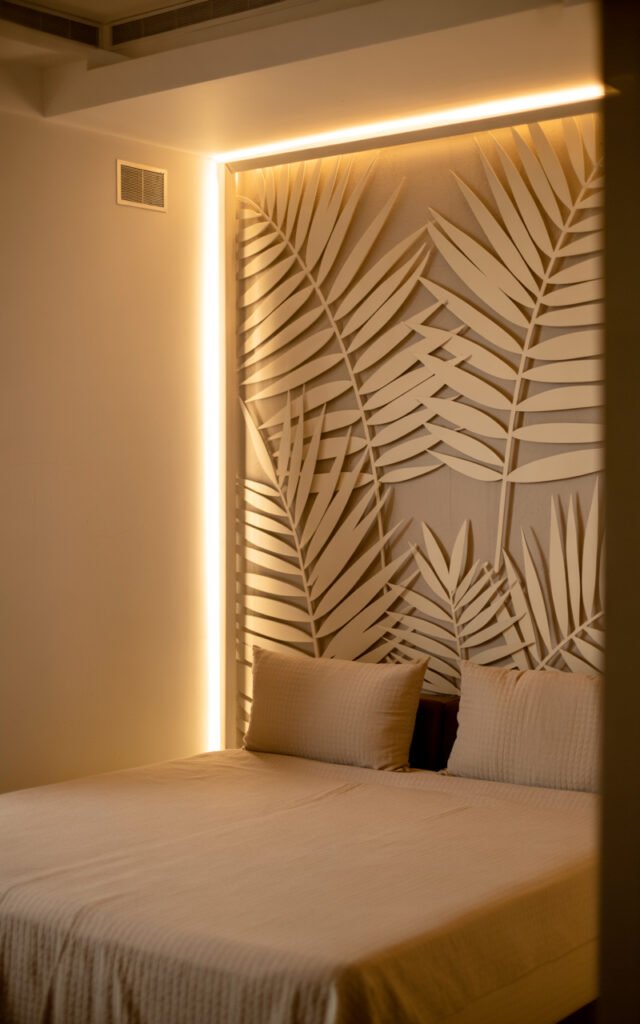
Can we talk about that wall for a second? The combination of the large circular woven piece flanked by those backlit palm leaf panels is absolutely genius. This is what I call “statement wall art done right” – it’s dramatic without being overwhelming.
Here’s what makes it work:
- The circular woven piece adds incredible texture and acts as a focal point above the bed
- The palm leaf panels with backlighting create depth and visual interest on both sides
- The neutral color palette keeps everything cohesive without competing for attention
- The symmetry brings balance to the entire wall
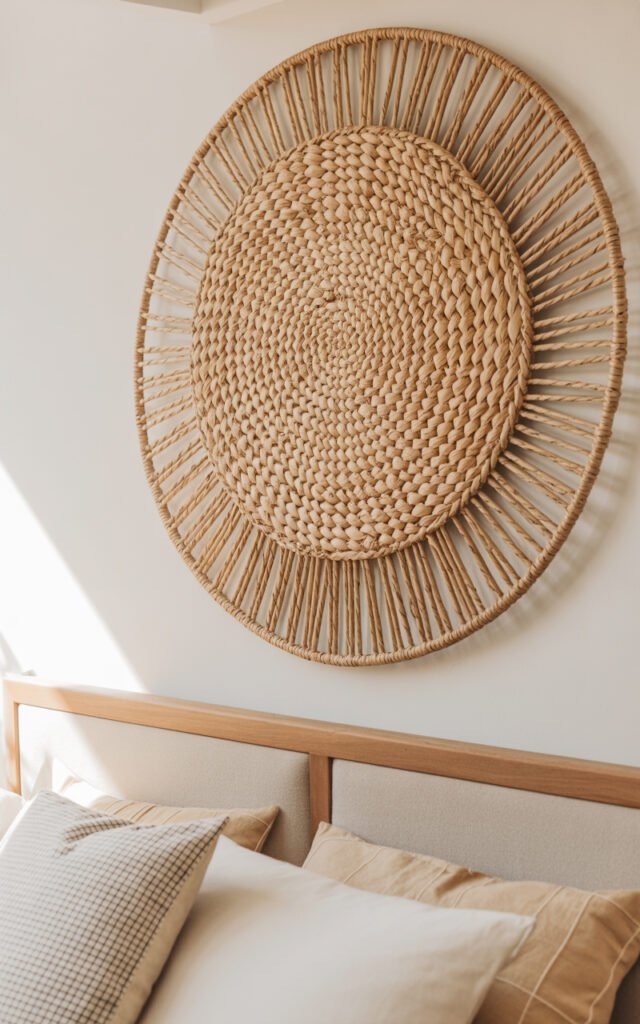
Want to recreate this look on a budget? You don’t need to spend hundreds on custom pieces. Large woven wall hangings (think rattan or jute) can be found at places like HomeGoods, Target, or even online for under $100.
For the backlit panels, you could DIY with palm fronds from artificial plants, a simple frame, and LED strip lights behind them. Total cost? Probably around $150-200 if you’re crafty about it.
Warm Wood Furniture That Doesn’t Feel Heavy
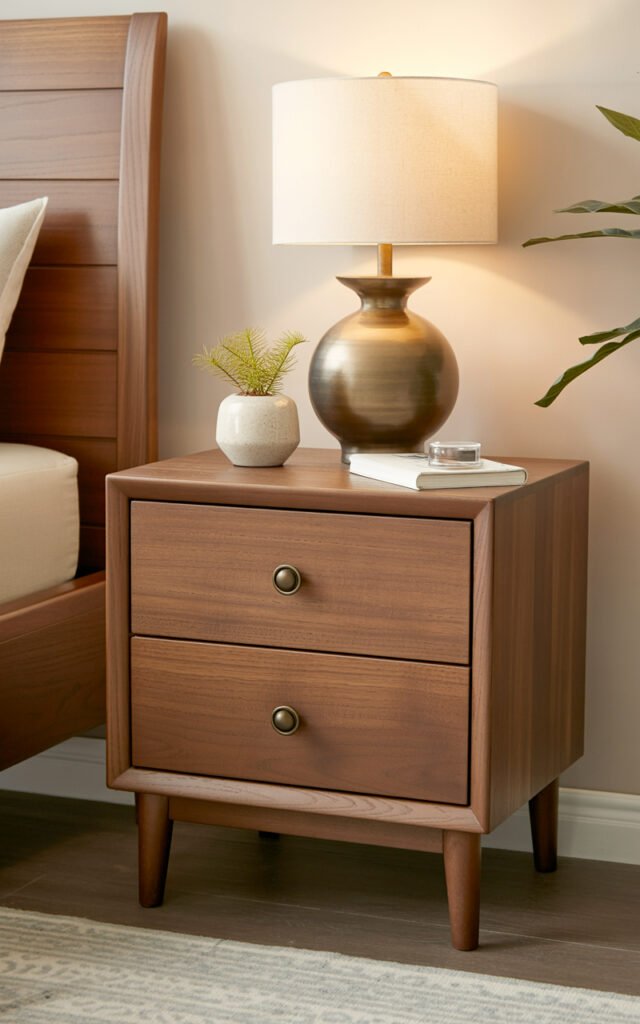
One thing I love about this bedroom is how the wood furniture manages to feel substantial without making the room feel dark or cramped. That’s actually harder to pull off than it sounds. The key is choosing the right wood tone and keeping the design clean and simple.
The bed frame and nightstands here have that perfect medium-warm wood finish – not too light (which can feel cheap), not too dark (which can feel heavy). The lines are clean and modern, which prevents the furniture from reading as “rustic farmhouse” (unless that’s your vibe, no judgment).
If you’re furniture shopping on a budget:
- Check out places like Wayfair or Amazon for solid wood or wood-veneer pieces in similar tones
- Facebook Marketplace and estate sales are goldmines for real wood furniture you can refinish
- Look for pieces with simple hardware – those chunky drawer pulls in a bronze or brass finish add a nice touch without breaking the bank
Pro tip? You don’t need to buy everything as a matching set. Mix and match pieces in similar wood tones for a more curated, high-end look. IMO, perfectly matched bedroom sets can actually look a bit… dated. 🙂
Mastering the Art of Layered, Neutral Bedding
Ever wonder why hotel beds look so impossibly inviting? It’s all about the layers, my friend. This bedroom nails it with what looks like at least 4-5 layers of bedding in complementary neutral tones.
Here’s the formula that works every time:
- Start with crisp white sheets (this is non-negotiable—white sheets just hit different)
- Add a neutral duvet or comforter in cream, beige, or light gray
- Layer a textured throw across the foot of the bed (that knit throw in the photo is chef’s kiss)
- Mix in decorative pillows in varying sizes and textures
- Don’t forget the euro shams behind your sleeping pillows for that “finished” look
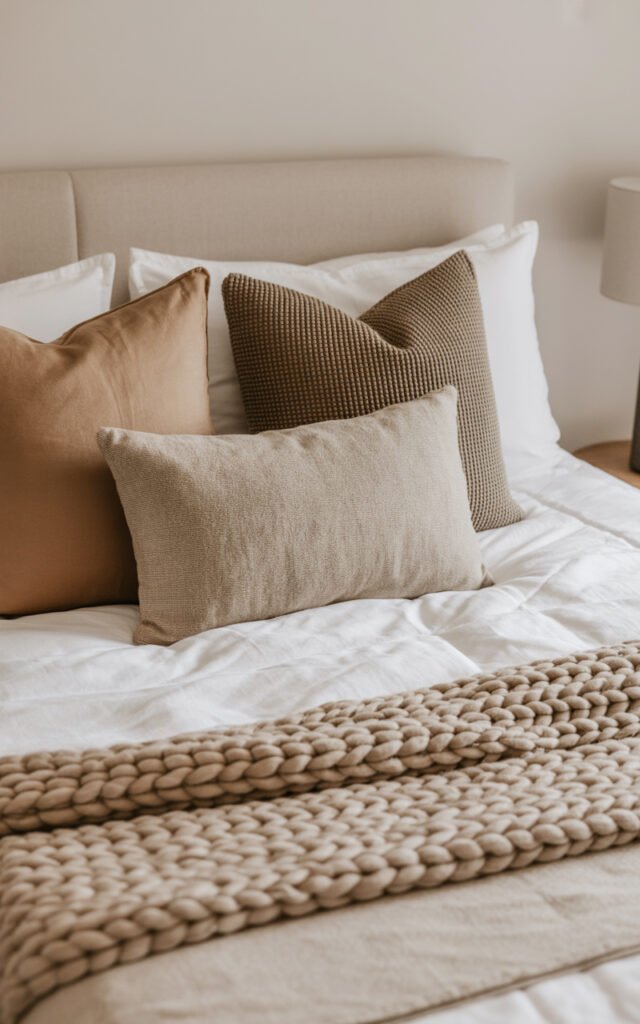
The trick is to stick to a cohesive color palette (like the tans, browns, creams, and whites here) while varying the textures. You want linen, cotton, knit, maybe some velvet – different materials catch the light differently and add visual depth.
FYI, you don’t need to buy everything at once. Start with good quality white sheets (invest here – it’s worth it), then build your collection over time with throws and pillows from places like H&M Home, Zara Home, or even TJ Maxx.
Lighting That Creates Actual Ambiance
Let’s talk about something that too many people overlook: lighting can make or break your bedroom vibe. This room gets it so right with multiple light sources at different levels.
Notice how there’s:
- Recessed ceiling lights for general ambient lighting
- LED strip lighting in the ceiling detail for architectural interest
- Backlit wall panels that create a soft glow behind the bed
- Table lamps on the nightstands for task lighting and symmetry
- Strategic placement that avoids harsh shadows
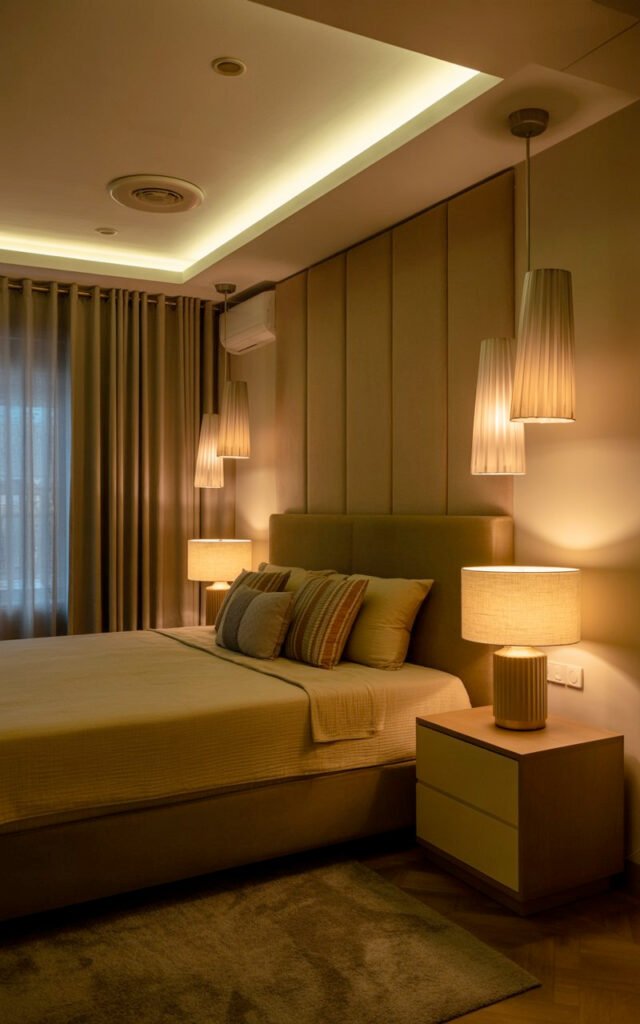
The biggest mistake I see people make? Relying on just one overhead light. That’s a recipe for a bedroom that feels more like an operating room than a cozy retreat. You want to be able to control the mood with different lighting options.
Here’s my budget-friendly lighting strategy:
- Replace overhead lights with a dimmer switch ($20 and an hour of work – life-changing)
- Get matching table lamps with warm-toned bulbs (2700K-3000K) for your nightstands
- Add LED strip lights behind headboards or under shelves ($15-30 on Amazon)
- Use smart bulbs so you can adjust brightness and color temperature from your phone
The goal is to create layers of light that you can mix and match depending on the time of day and your mood. Morning? Bright and energizing. Evening? Soft and relaxing. Date night? Well, you get the idea. 😉
Bringing the Outdoors In with Strategic Greenery
Those tropical plants in the corners aren’t just there to look pretty (though they definitely do). Plants serve multiple purposes in a bedroom: they improve air quality, add life and movement to the space, and soften hard edges with organic shapes.
The plants in this bedroom look like they might be Bird of Paradise or large palms – both are great choices if you have decent natural light and don’t mind a little maintenance. But honestly? If you’re worried about keeping real plants alive (no shame – I’ve killed my fair share), high-quality artificial plants have come a LONG way.
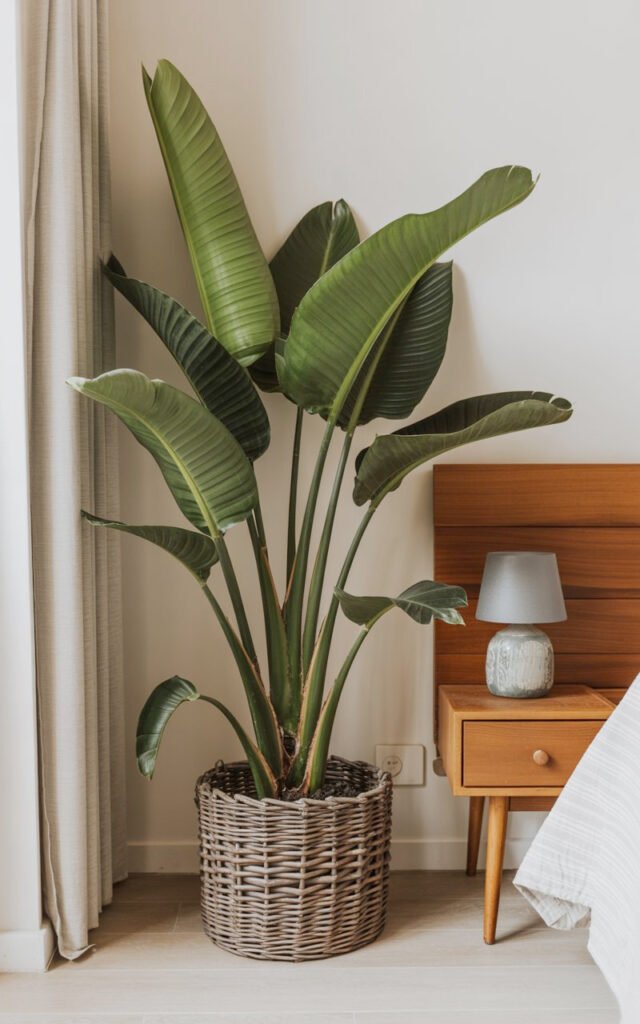
Best plants for bedrooms:
- Snake plants (basically indestructible, purify air)
- Pothos (easy to care for, looks great trailing from shelves)
- Rubber plants (big, bold leaves, tolerates low light)
- Fiddle leaf figs (if you want that Instagram-worthy look and have good light)
- Peace lilies (beautiful white blooms, helps with humidity)
Place larger plants in corners or next to furniture to fill vertical space and create visual interest. Smaller plants can go on nightstands, dressers, or floating shelves. The key is not to go overboard – 2-3 well-placed plants are usually enough unless you’re going full jungle vibes.
The Color Palette: Why Neutrals Work So Well
I know, I know – some people think neutral bedrooms are “boring.” But here’s the thing: neutral doesn’t mean boring if you do it right. This bedroom is proof.
The color palette here is predominantly warm neutrals – creams, tans, warm browns, and touches of white. But look closer and you’ll see there’s actually quite a bit of variation in tone and shade. That’s what keeps it interesting.
Why this palette works so well for bedrooms:
- Promotes relaxation (bright colors can be energizing, which isn’t ideal for sleep)
- Makes the space feel larger (lighter colors reflect more light)
- Provides a versatile backdrop (easy to switch up accessories seasonally)
- Never goes out of style (you won’t look back in 5 years and cringe)
- Pairs well with natural materials (wood, rattan, linen all pop against neutrals)
If you’re worried about the space feeling too monotonous, the solution is texture, texture, texture. Mix smooth with rough, matte with shiny, soft with hard.
That woven wall art, the knit throw, the grain of the wood, the plants – all of these add visual interest without introducing new colors.
Want to add personality? Introduce one or two accent colors through pillows, artwork, or accessories. Just keep them muted and earthy – think rust, sage green, or dusty blue rather than bright primary colors.
Architectural Details That Elevate the Entire Space
Notice those ceiling details? The exposed wood beams and the recessed lighting channel add serious architectural interest.
Now, I get it – not all of us are living in newly built homes with fancy ceiling treatments. But there are budget-friendly ways to add architectural interest to your bedroom.
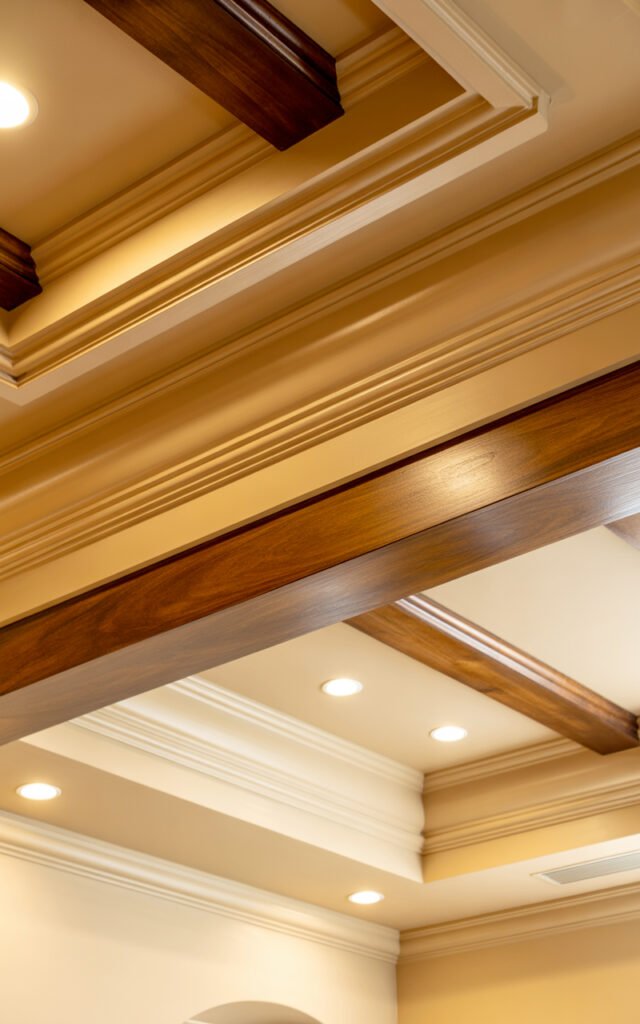
DIY architectural upgrades:
- Add crown molding (easier than you think, and makes a huge difference)
- Install board and batten on an accent wall (super trendy and surprisingly affordable)
- Create a DIY wood beam from lightweight materials (looks real, costs way less)
- Paint ceiling details in a contrasting color (can define spaces without construction)
- Add picture frame molding to walls (creates that expensive, custom look)
Even something as simple as painting your ceiling a different color than your walls can add dimension to your space. Warmer tones on the ceiling can actually make a room feel cozier, while keeping walls lighter maintains that airy feeling.
The Power of Symmetry and Balance
One reason this bedroom feels so put-together is the intentional symmetry. The matching nightstands, the paired lamps, the balanced wall art – it all creates a sense of harmony that’s inherently pleasing to the eye.
Symmetry in bedroom design works because:
- It’s naturally calming to our brains (we’re wired to appreciate balance)
- It makes styling easier (you essentially design one side and mirror it)
- It creates a hotel-like, polished look (think about every nice hotel room you’ve been in)
- It grounds the space visually, especially around the bed
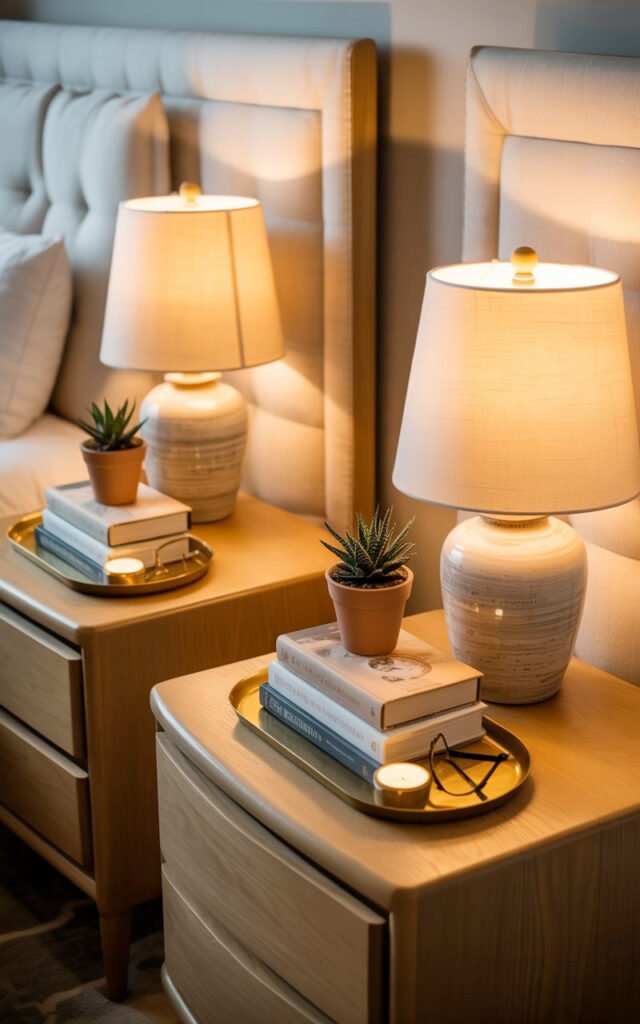
That said, you don’t need to go overboard. Perfect symmetry everywhere can actually feel too rigid. Aim for symmetry around the bed (nightstands, lamps, wall art), but feel free to be more asymmetrical with other elements like plants, seating, or dressers.
If you’re on a tight budget and can only afford one nightstand right now? Get creative – use a small bookshelf, a vintage stool, or even a sturdy stack of books with a tray on top on the other side. As long as the visual weight feels balanced, it doesn’t have to be an exact match.
Texture: The Secret Ingredient You’re Probably Overlooking
I’m going to say something that might sound weird: this bedroom works because you can almost feel it through the photo.
The rough texture of that woven wall hanging, the smooth wood grain, the soft knit throw, the crisp linens – it all creates what designers call “tactile interest.”
Most people focus on color and forget about texture, but texture is what makes a space feel rich and layered rather than flat and one-dimensional. This is especially important in neutral spaces where you’re not relying on color to add interest.
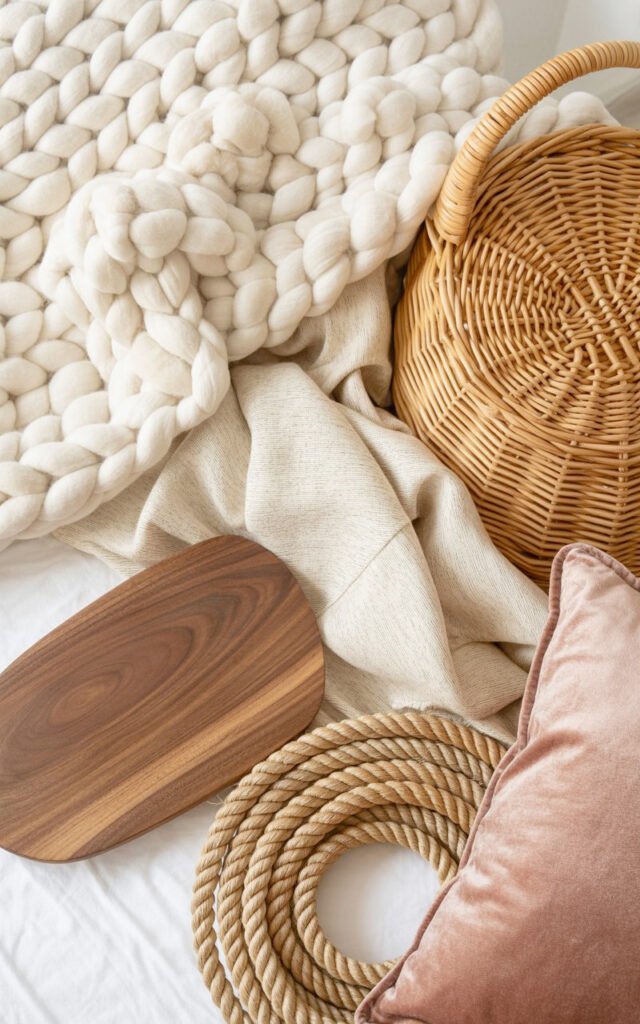
Ways to add texture to your bedroom:
- Layer different textiles: mix linen, cotton, velvet, wool, jute
- Incorporate natural materials: wood, rattan, bamboo, stone
- Add woven elements: baskets, wall hangings, rugs
- Include rough and smooth elements: smooth ceramics next to nubby throws
- Don’t forget the walls: textured wallpaper, grasscloth, or even a textured paint technique
When shopping for decor, run your hand over it. If everything feels the same, you need more variety. The goal is to create a space that engages multiple senses, not just sight.
Creating This Look: Your Action Plan
Alright, so you’re probably thinking, “This all sounds great, but where do I even start?” I’ve got you covered with a prioritized approach that won’t drain your bank account all at once.
Phase 1: Foundation ($500-800)
- Invest in quality bedding (white sheets, neutral duvet)
- Choose your largest piece: bed frame or headboard
- Get the lighting right (dimmer switch + two matching lamps)
Phase 2: Major Impact ($300-500)
- Add the statement wall art (woven piece or DIY alternative)
- Purchase matching nightstands (or creative alternatives)
- Introduce your first large plant
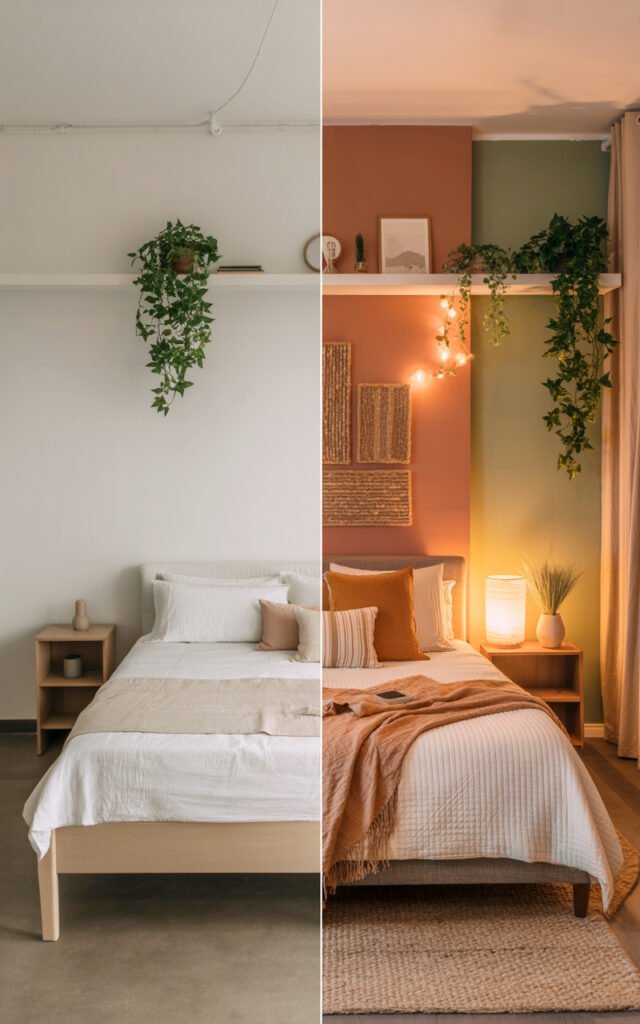
Phase 3: Finishing Touches ($200-400)
- Layer in textured throws and decorative pillows
- Add smaller decorative items (candles, books, trays)
- Include additional plants and woven baskets
- Upgrade curtains or window treatments
Total budget for the full look: $1,000-1,700 (way less if you DIY or thrift!)
The key is to build slowly and intentionally. Don’t rush out and buy everything at once. Live with each addition for a bit, see how it feels, then add the next layer. This approach not only saves money but also helps you create a space that truly reflects your style.
Common Mistakes to Avoid
Look, I’ve made every bedroom decorating mistake in the book, so let me save you some heartache. Here are the biggest pitfalls to avoid when creating this warm, earthy bedroom aesthetic:
Mistake #1: Choosing the wrong wood tone Not all wood furniture plays nicely together. Stick to either warm tones (golden, honey, amber) or cool tones (gray-brown, weathered), but don’t mix them. This bedroom nails it by keeping everything in the warm family.
Mistake #2: Skimping on bedding quality Those $20 sheet sets from big box stores? They’re going to pill, fade, and feel scratchy after a few washes. Invest in decent sheets – you spend a third of your life in bed, for crying out loud.
Mistake #3: Ignoring scale That tiny piece of wall art above your king-sized bed? It’s making your wall look weird. Art should be roughly 2/3 the width of your bed or furniture piece. Go bigger than you think you need.
Mistake #4: Forgetting about the ceiling People call it the “fifth wall” for a reason. Don’t leave it boring builder-white when a coat of warm paint or some architectural detail could elevate the entire space.
Mistake #5: Buying everything brand new from one store Matching bedroom sets can look staged and impersonal. Mix vintage finds, DIY projects, and new purchases for a more collected, authentic look.
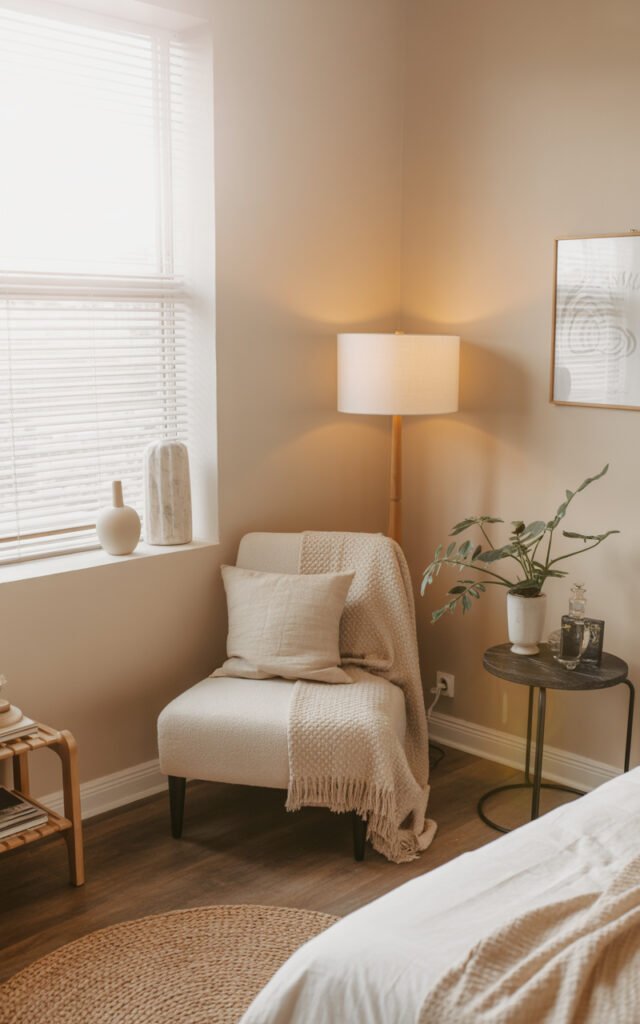
Final Thoughts: Making It Your Own
Here’s the beautiful thing about this warm, earthy bedroom style – it’s incredibly forgiving and adaptable. You can take these core principles and adjust them to fit your personal style, budget, and space constraints.
Maybe you lean more bohemian and want to add some macramé. Perhaps you prefer a more modern approach with cleaner lines and less ornamentation.
Or maybe you’re somewhere in between. The foundation of warm woods, neutral tones, layered textures, and thoughtful lighting works with all of these approaches.
The most important thing? Create a space that makes YOU feel good. Trends come and go, but a bedroom that helps you sleep better, relax more fully, and start each day feeling refreshed? That never goes out of style.
Start with one element that speaks to you – maybe it’s that statement wall art, or the layered bedding, or just painting your walls a warmer neutral. Build from there, be patient with yourself, and remember that creating your dream bedroom is a journey, not a race.
Now if you’ll excuse me, I have some online shopping to do. That woven wall hanging isn’t going to buy itself. 🙂