You know that feeling when you walk into a high-end hotel and the hallway just… glows? Everything feels expensive, intentional, and somehow magical? That’s not accident—it’s strategic lighting design. And here’s the secret: you can absolutely recreate that feeling in your own home.
I used to think hallway lighting meant one boring overhead fixture that cast weird shadows and made everything look flat and uninviting. Then I discovered the power of layered lighting, and my narrow, forgettable hallway became the space people compliment most when they visit my home.
If you’re tired of your hallway feeling like an afterthought—dark, cramped, or just plain boring—these hallway ideas centered around smart lighting design will completely transform your entrance. Let’s turn your hallway into something special.
Why Hallway Lighting Matters More Than You Think
Before we dive into fixtures and placement, let’s talk about why lighting in hallway design is actually one of the most important (and most neglected) aspects of home design.
The Psychology of First Impressions
Your hallway sets the tone: It’s the first interior space guests see and the transition zone between outside and home.
Lighting affects mood: Dark, poorly lit hallways feel cramped and unwelcoming. Well-lit hallways feel open, safe, and inviting.
It impacts your daily experience: You walk through your hallway multiple times every day. Good lighting makes that experience pleasant instead of depressing.
Safety matters: Proper lighting prevents trips and falls, especially at night.
What Makes Hallway Lighting Challenging
Narrow spaces: Most hallways don’t have much width to work with.
Limited natural light: Many hallways have no windows at all.
Long, tunnel-like proportions: Can feel cave-like without proper lighting.
Multiple functions: Needs to work for arriving home, leaving, passing through, and nighttime navigation.
Height considerations: Many hallways have standard 8-foot ceilings that limit options.
The good news? Strategic lighting can solve ALL of these challenges and actually make your hallway a design feature rather than just a pass-through space.
The Power of Wall Sconces: Your Secret Weapon
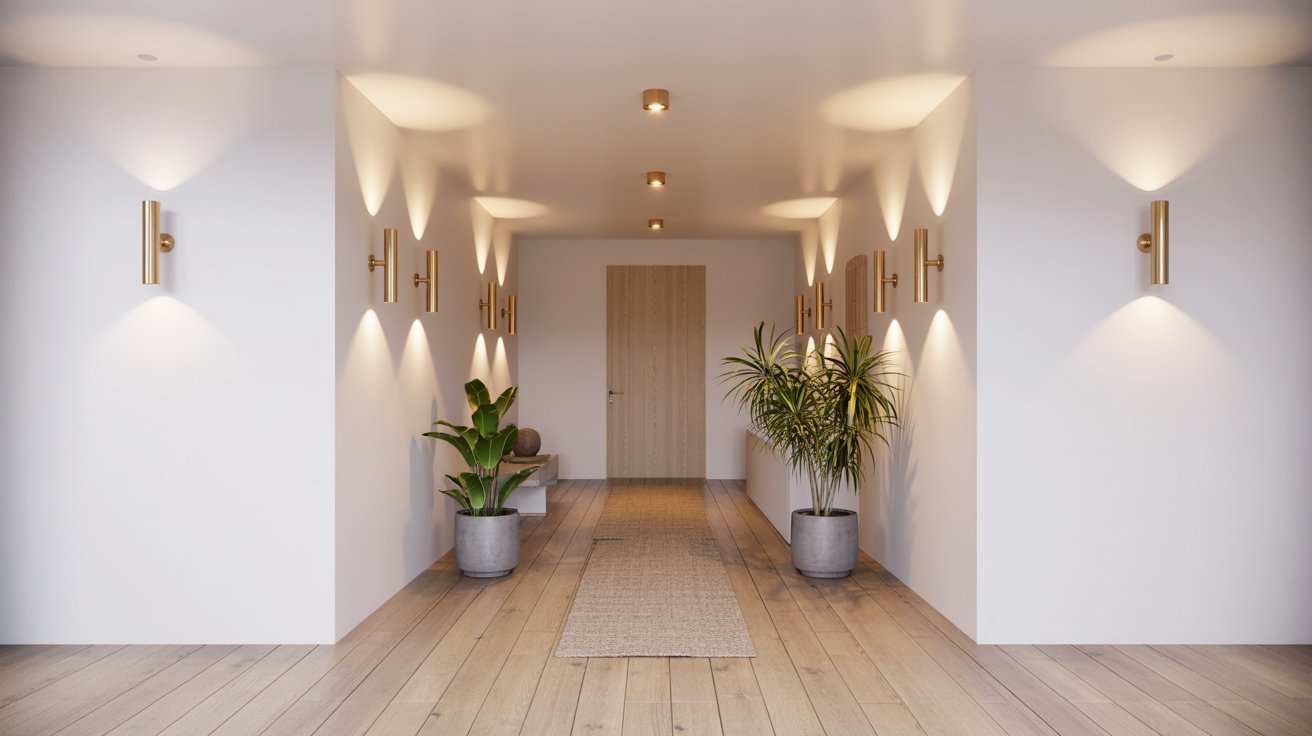
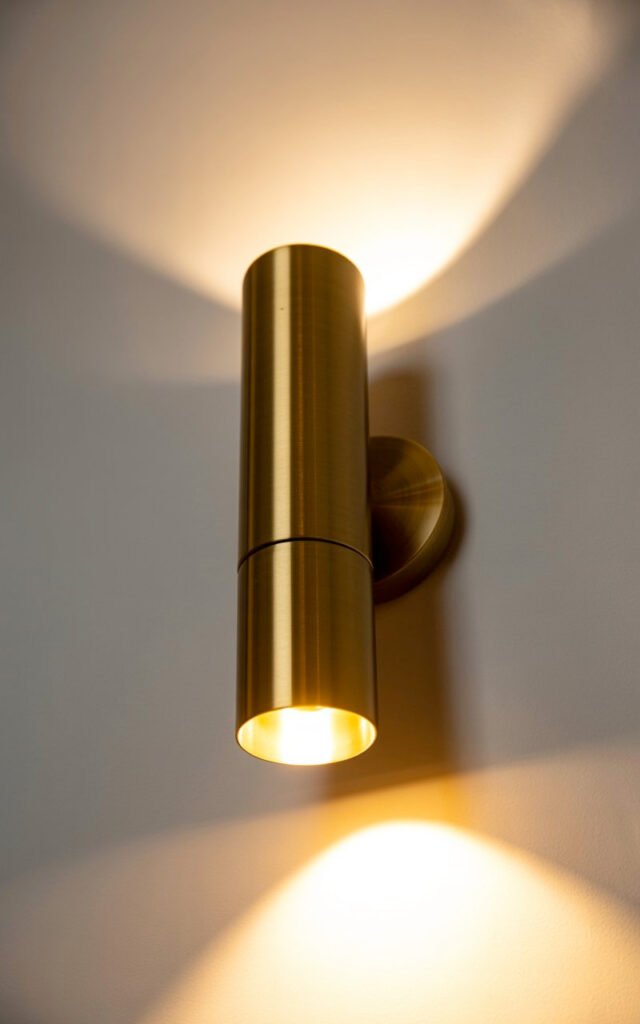
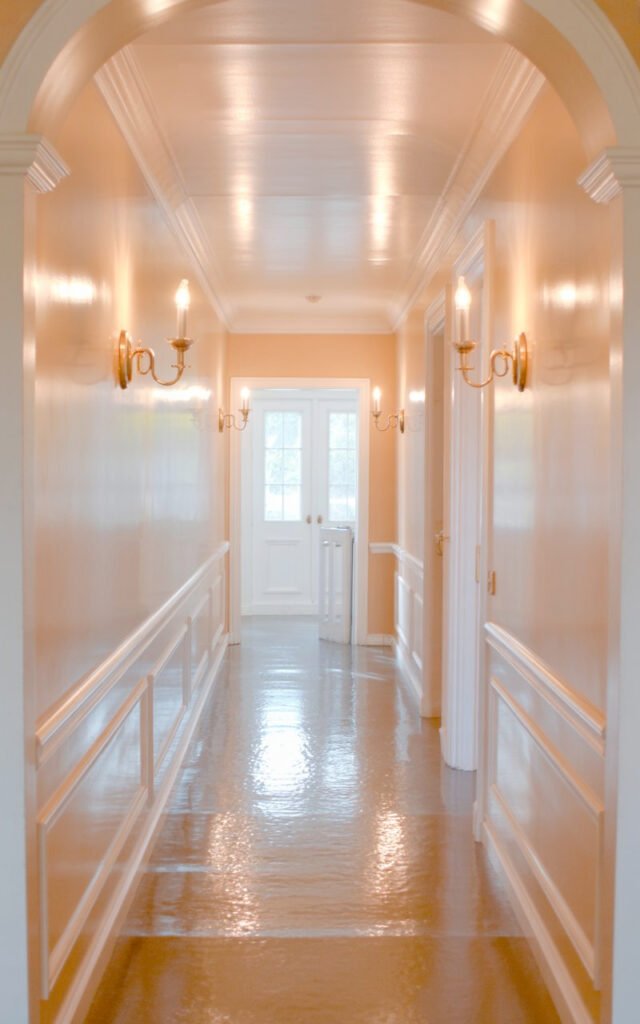
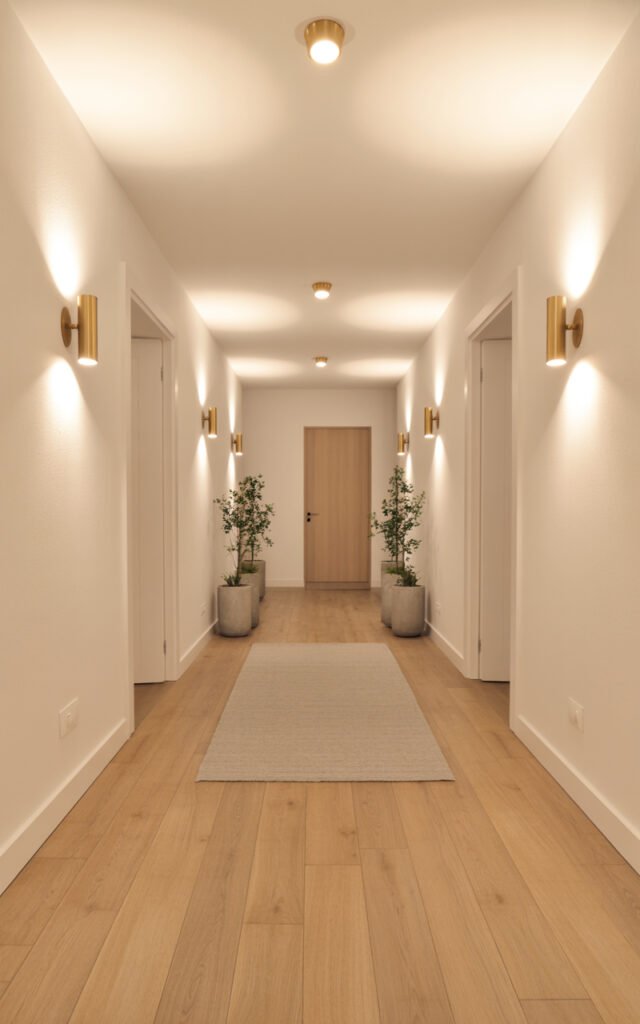
Look at those gorgeous brass/gold cylindrical sconces in the inspiration image? THAT’S what transforms a basic hallway into something special. Let me explain why entryway decor wall sconces are absolute game-changers.
Why Wall Sconces Are Perfect for Hallways
Save ceiling space: In hallways with low ceilings or existing fixtures, sconces add light without crowding overhead.
Create vertical interest: Draw the eye up, making ceilings feel higher.
Provide ambient glow: The up-and-down light pattern creates beautiful shadows and highlights.
Add architectural detail: Become decorative elements themselves.
Illuminate walls: Show off wall color and texture while reducing harsh shadows.
Work in narrow spaces: Don’t take up floor space like lamps would.
Choosing the Right Sconces
Style options:
Modern cylindrical (like the inspo image):
- Clean lines, contemporary
- Brass, gold, black, or brushed nickel finishes
- Up/down light projection
- Currently very trendy
Traditional candle-style:
- Classic, timeless
- Works in traditional homes
- Usually brass or bronze
Industrial pipe sconces:
- Exposed bulb style
- Black metal or aged brass
- Edgy, modern farmhouse vibe
Minimalist geometric:
- Square or angular shapes
- Ultra-modern
- Often in matte black or white
Finish selection:
- Brass/Gold: Warm, luxurious (like the inspo)
- Matte Black: Modern, dramatic contrast
- Brushed Nickel: Cool, contemporary
- Bronze: Traditional, warm
- Chrome: Shiny, modern (can feel cold)
Placement and Spacing
Height:
- Install at 60-66 inches from floor to center of sconce
- Higher if you have tall ceilings (up to 72″)
- Should be roughly eye-level to avoid glare
Spacing:
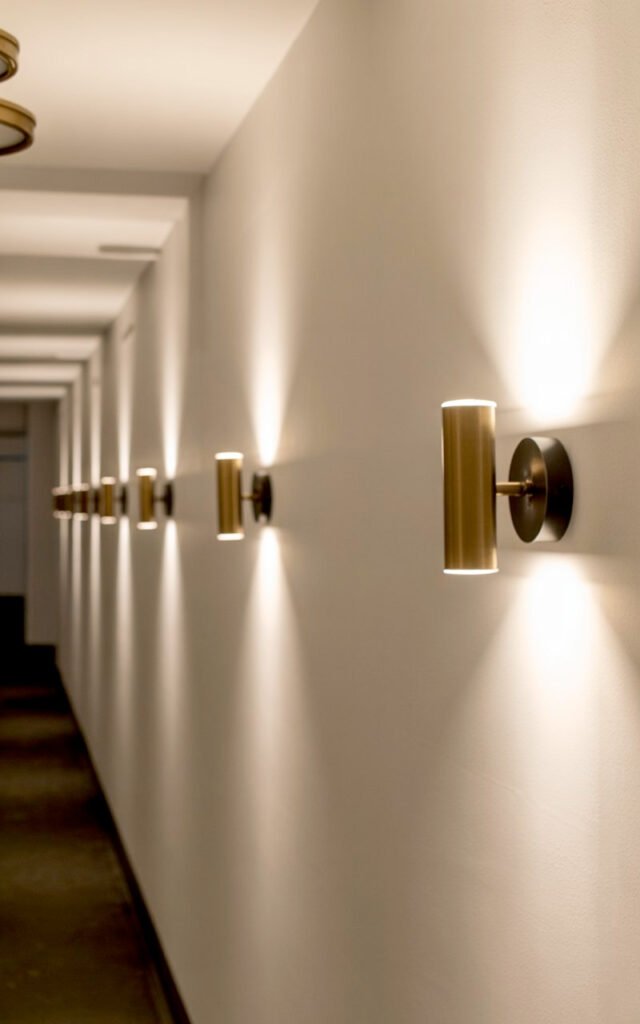
- Every 6-8 feet along a hallway
- Symmetrical placement looks most intentional
- Stagger on alternating walls if hallway is very narrow
How many:
- Minimum 2 for a standard hallway
- 4-6 for long hallways (like the inspiration image shows)
- Always in even numbers for symmetry
I installed four brass cylindrical sconces in my 12-foot hallway, spaced 6 feet apart and alternating walls. Cost about $280 for all four fixtures. The transformation was immediate and dramatic—my hallway went from forgettable to “wow, I love your hallway!”
Installation Considerations
Electrical requirements:
- Need to be hardwired (not plug-in)
- Requires electrical box in wall
- Hire an electrician unless you’re experienced ($80-150 per fixture for installation)
For renters or no-electrical situations:
- Battery-operated LED sconces exist
- Plug-in sconces with cord covers
- Picture light-style fixtures that don’t require hardwiring
Dimmer switches:
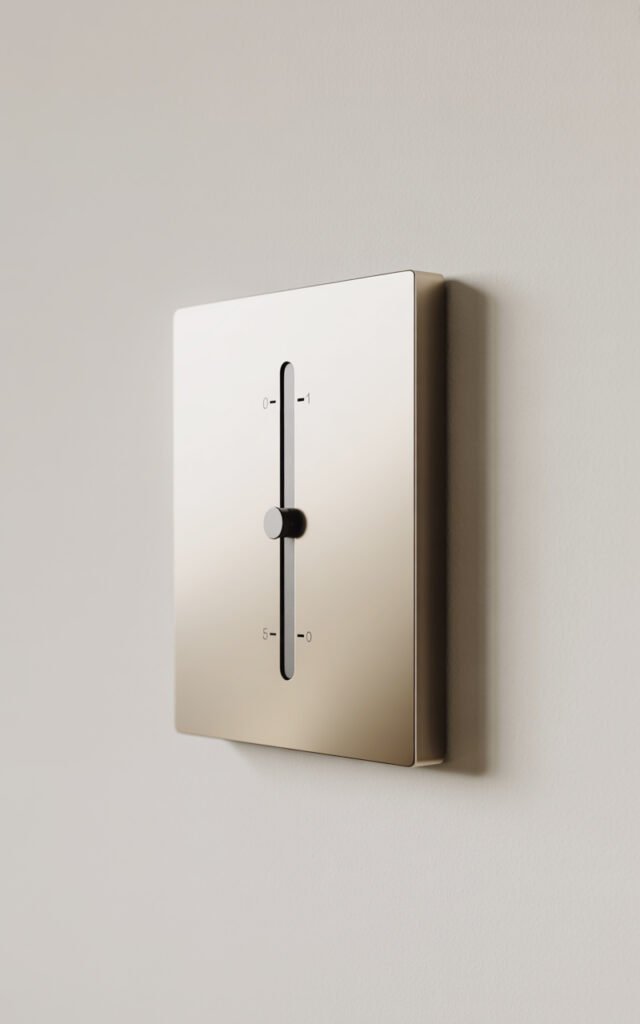
- ESSENTIAL for sconces
- Allows you to adjust brightness for time of day
- Creates ambiance options
Recessed Lighting: The Invisible Game-Changer
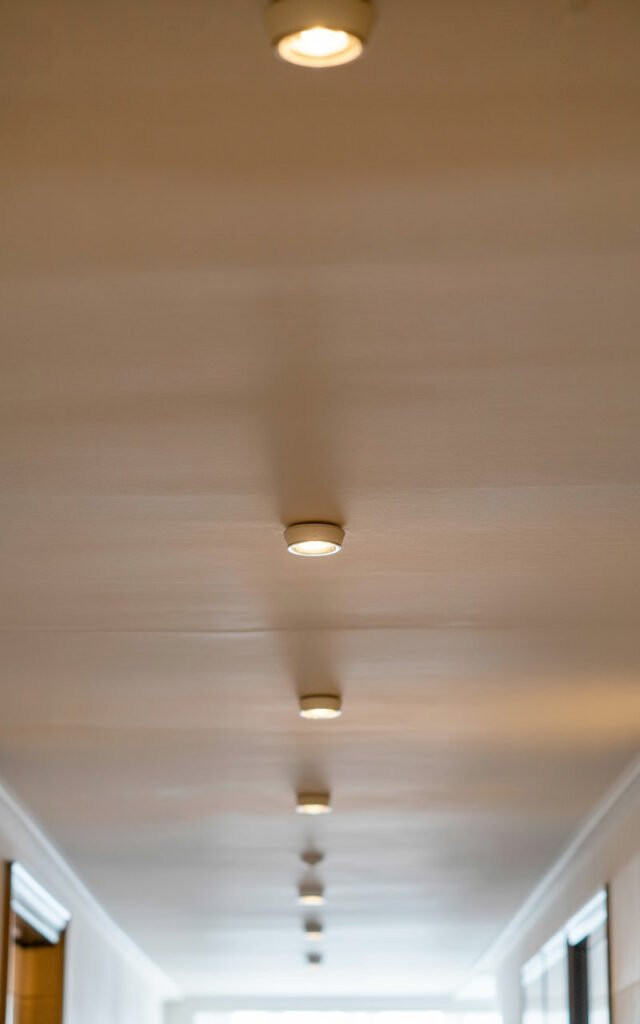
Those small, subtle recessed lights in the ceiling of the inspiration image? They’re working hard to provide overall illumination. Let’s talk about hallway ideas minimalist lighting with recessed fixtures.
Why Recessed Lights Work
Flush with ceiling: No visual clutter, perfect for low ceilings.
Even illumination: Properly spaced recessed lights eliminate dark spots.
Modern aesthetic: Clean, contemporary look.
Flexible: Can be directed or fixed, depending on type.
Background layer: Provides the foundation lighting while sconces add drama.
Recessed Lighting Layout
Spacing formula:
- Divide ceiling height by 2 = spacing in feet
- Example: 8-foot ceiling ÷ 2 = 4 feet apart
- For hallways, typically 4-6 feet apart down the center
Size selection:
- 4-inch cans: Standard for hallways
- 6-inch cans: If you have higher ceilings or want more light
- LED panels: Slim, modern alternative
Beam angle:
- Narrow (25-40°): Focused light, dramatic
- Medium (40-60°): Most common, balanced
- Wide (60°+): Flood light, even coverage
Can You Add Recessed Lights?
In new construction or renovation: Absolutely, plan for them.
In existing homes:
- Possible but requires cutting into ceiling
- Easier if you have attic access above
- Electrician needed ($100-200 per light installed)
- Consider LED retrofit kits for existing can locations
Alternatives if you can’t:
- Track lighting (more visible but adjustable)
- Multiple flush-mount fixtures
- Very bright sconces that provide ambient light too
I don’t have recessed lighting in my hallway (old house, no attic access), but I compensated with brighter sconces and a semi-flush ceiling fixture. It works, but if I could add recessed lights, I absolutely would.
LED Strip Lighting: The Hidden Magic
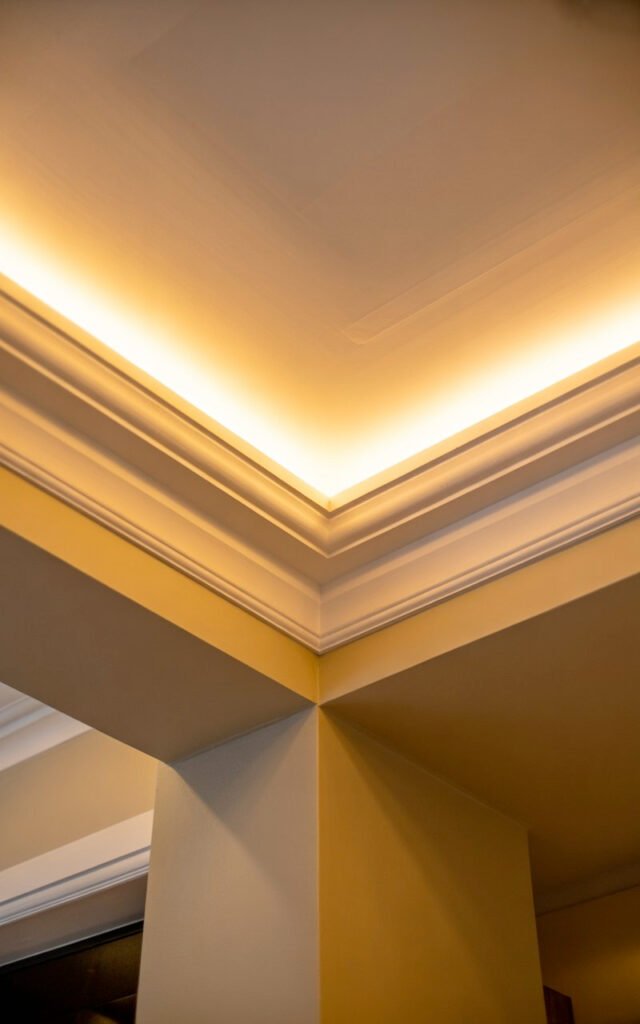
See how there might be subtle LED strips creating that glow along architectural details in the inspiration image? Lighting in hallway design increasingly includes LED strips for dramatic effect.
Where to Use LED Strips in Hallways
Above crown molding:
- Creates soft uplight that bounces off ceiling
- Makes ceiling feel higher
- Indirect, gentle ambiance
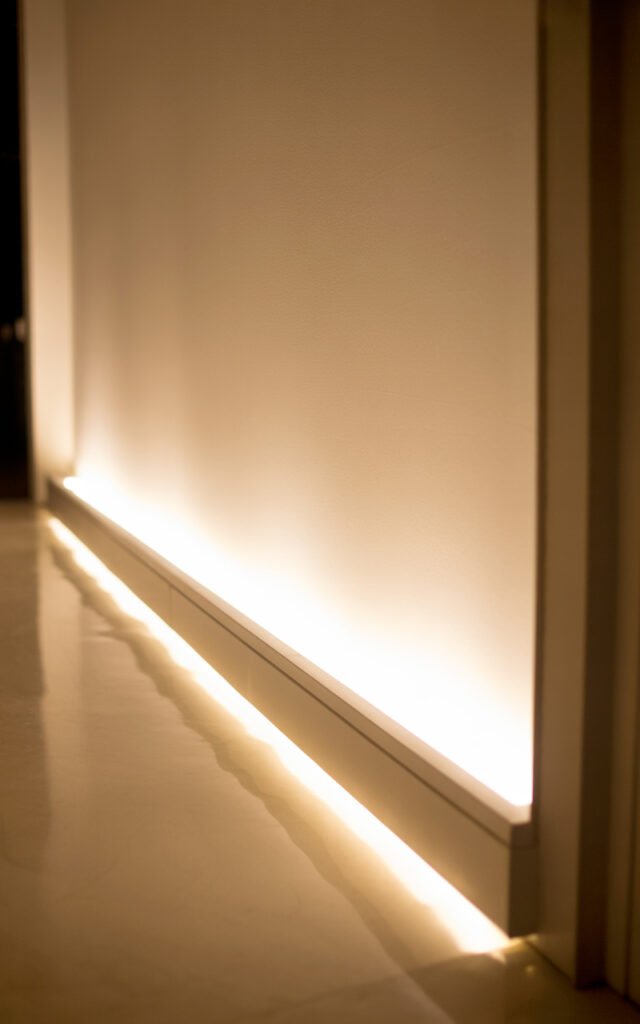
Under baseboards:
- Provides soft floor-level glow
- Great for nighttime navigation
- Modern, hotel-like effect
Behind floating panels or art:
- Creates halo effect
- Adds depth and dimension
- Artistic lighting feature
In recessed ceiling details:
- If you have tray or coffered ceilings
- Highlights architectural features
Along stair treads:
- If your hallway includes stairs
- Safety + aesthetics
Choosing LED Strips
Color temperature:
- 2700K: Warm white (cozy, residential)
- 3000K: Soft white (balanced, welcoming)
- 4000K+: Cool white (too clinical for homes)
- RGB: Color-changing (fun but often looks gimmicky)
Brightness:
- For ambient: 200-400 lumens per foot
- For accent: 100-200 lumens per foot
- Dimmable is essential
Installation:
- Most are adhesive-backed (easy DIY)
- Need power source (plug-in or hardwired)
- Can be cut to exact length needed
- Diffuser channels make them look more polished
I installed warm white LED strips (2700K) above my crown molding for about $45. They’re on a separate dimmer switch and create the most beautiful soft glow in the evenings. It’s like having architectural uplighting without the expense.
The Ceiling Fixture Decision
Even with sconces and accent lighting, you probably still need a main ceiling fixture. Here’s how to choose.
Best Ceiling Fixtures for Hallways
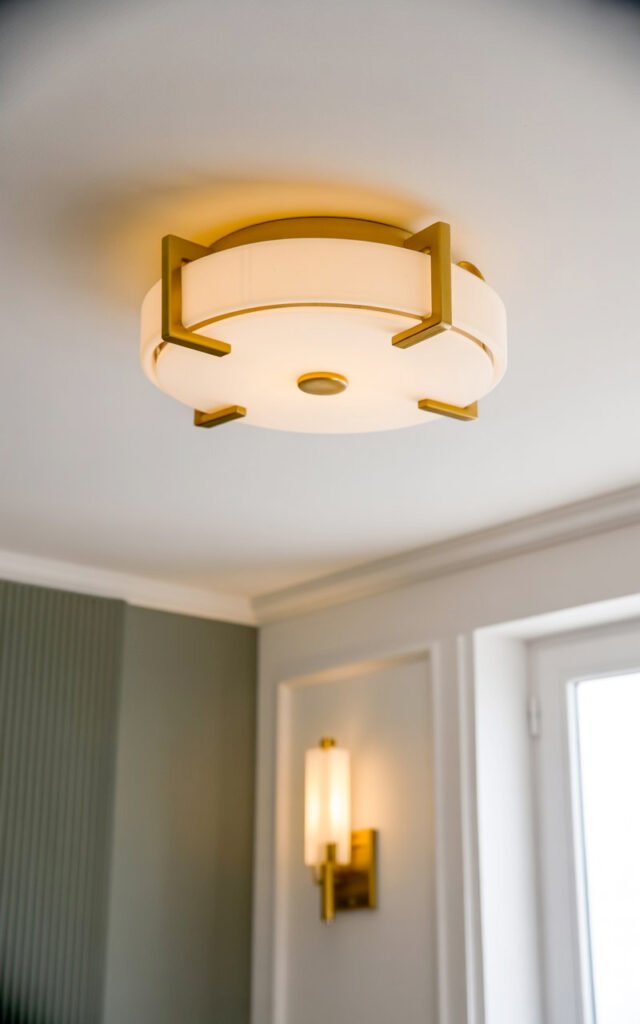
Flush-mount fixtures:
- For 8-foot or lower ceilings
- Sits directly against ceiling
- Provides general ambient light
- Available in endless styles
Semi-flush mount:
- For 8-9 foot ceilings
- Hangs 4-12 inches from ceiling
- More decorative than flush-mount
- Slightly more presence
Linear suspension:
- For wider hallways (48″+ wide)
- Long, narrow fixture
- Very modern
- Makes a statement
Small pendants in series:
- Multiple small pendants spaced along hallway
- Decorative and functional
- Needs adequate ceiling height (9’+ ideal)
What to avoid:
- Large chandeliers (too much for most hallways)
- Fixtures that hang too low (head-bumping hazard)
- Overly ornate fixtures in minimal spaces
Sizing Your Ceiling Fixture
For flush/semi-flush:
- Measure your hallway width
- Fixture should be roughly 1/3 to 1/2 the width
- Example: 42″ wide hallway = 14-21″ fixture
For linear fixtures:
- Can span most of the length
- Leave at least 12″ from walls on each end
Light output:
- 100 lumens per square foot minimum
- 150-200 lumens per square foot for well-lit
- Example: 4×12 hallway = 48 sq ft = 4,800-9,600 lumens needed
I have a 16-inch brass flush-mount fixture in my hallway providing ambient light. It coordinates with my brass sconces and provides plenty of light while staying unobtrusive.
Color Temperature: Getting the Warmth Right
This might seem technical, but decoration for home lighting is ALL about color temperature. Get this wrong and everything else won’t matter.
Understanding Color Temperature
Measured in Kelvins (K):
- Lower number = warmer, more yellow/orange
- Higher number = cooler, more blue/white
The ranges:
- 2700K: Warm white (cozy, residential)
- 3000K: Soft white (welcoming, still warm)
- 3500K: Neutral white (commercial)
- 4000K+: Cool white (office, sterile)
Best Color Temperature for Hallways
Residential hallways: 2700-3000K
Why warm white works:
- Feels inviting and comfortable
- Complements skin tones (important for mirrors)
- Creates cozy atmosphere
- Works with warm-toned walls and wood
When to go slightly cooler (3000K):
- Very modern, minimalist design
- All-white color scheme
- You prefer crisper, clearer light
- Commercial or office-adjacent spaces
The cardinal rule: All your light sources in the hallway should be the SAME color temperature. Mixing 2700K and 4000K looks awful and inconsistent.
I use 2700K in all my hallway fixtures—sconces, ceiling fixture, and LED strips. Everything glows with the same warm, cohesive tone. This consistency is KEY to making your lighting look professional.
Hallway Ideas Minimalist: Less Is More
The inspiration image is the perfect example of hallway ideas minimalist design—clean lines, uncluttered, but with impactful lighting.
Minimalist Hallway Principles
Simple color palette:
- White or light neutral walls
- Natural wood or light flooring
- Minimal contrast
Clean lines:
- No ornate molding or details
- Smooth surfaces
- Geometric fixtures
Strategic lighting instead of decor:
- Let lighting BE the design feature
- Less artwork and accessories
- Quality over quantity
Functional focus:
- Everything serves a purpose
- No decorative clutter
- Form follows function
Creating Minimalist Lighting
Choose simple, geometric fixtures:
- Cylindrical sconces
- Square or round flush-mounts
- Clean lines, no fuss
Limit fixture types:
- Pick 2-3 lighting types maximum
- Repeat them consistently
- Create rhythm through repetition
Hide the mechanics:
- Conceal cords and wiring
- Use recessed lights for invisibility
- LED strips hidden in architectural features
Use dimmers:
- Control intensity
- Create mood without changing fixtures
- Essential for minimalism
The beauty of minimalist hallway lighting is that you’re investing in a few HIGH-QUALITY fixtures rather than a bunch of mediocre ones. Better to have four excellent sconces than a mishmash of cheap fixtures.
Plant Placement for Living Elements
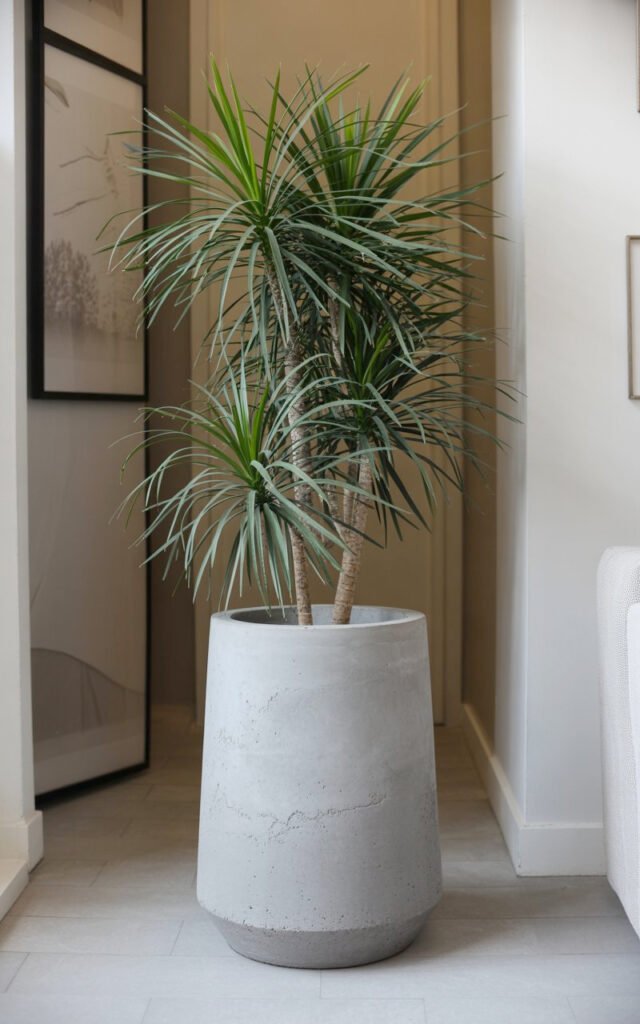
Those gorgeous plants in the inspiration image aren’t just decor—they’re strategic design elements that complement the lighting.
Why Plants Work in Hallways
Bring life: Literally and figuratively add vitality.
Soften hard lines: Contrast with geometric architecture.
Fill vertical space: Tall plants like in the inspo draw eyes up.
Benefit from artificial light: Your new sconces and recessed lights help them thrive.
Add organic element: Balance modern, minimal design.
Best Hallway Plants
For bright, well-lit hallways (like your new lighting will create):
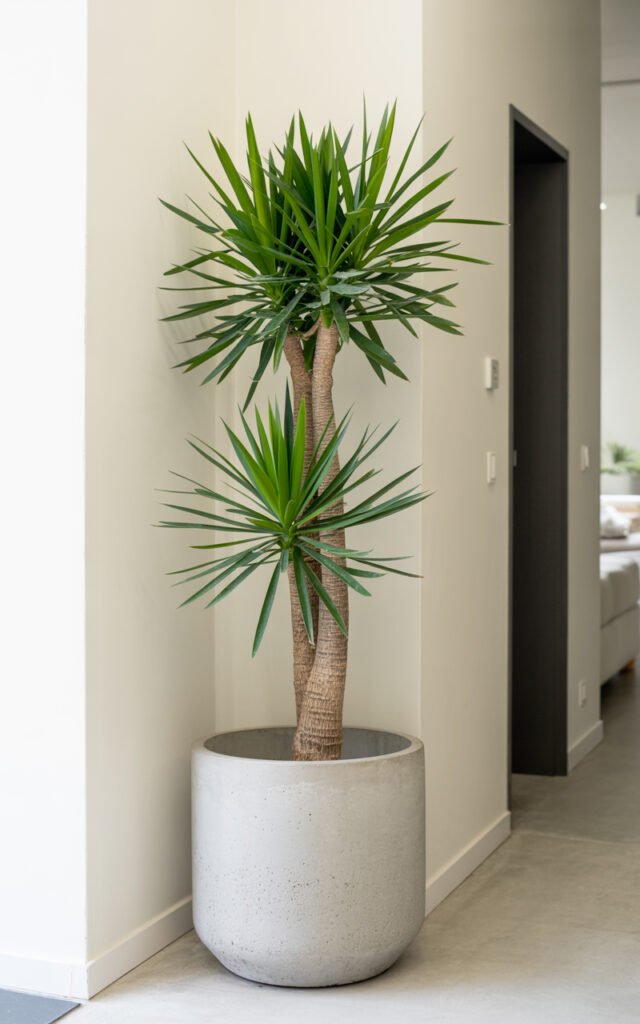
Dracaena (like in the inspo):
- Tall, architectural
- Tolerates various light levels
- Low maintenance
- Makes a statement
Fiddle leaf fig:
- Dramatic, large leaves
- Needs bright indirect light
- Statement piece
Bird of paradise:
- Tall, tropical
- Loves bright light
- Sculptural
Monstera deliciosa:
- Large, dramatic leaves
- Adapts to light levels
- Trendy, beautiful
For lower-light hallways:
Snake plant:
- Architectural, vertical
- Tolerates low light
- Nearly indestructible
Pothos:
- Trailing or upright
- Survives in low light
- Easy care
ZZ plant:
- Glossy, architectural leaves
- Tolerates neglect and low light
- Modern look
Plant Placement Strategy
Use substantial planters:
- Large ceramic or concrete pots (like the inspo)
- Weighted bases so they don’t tip
- Proportional to plant size
Symmetrical placement:
- One on each side of door or hallway end
- Creates balance and intention
- Frames the space
Corner placement:
- Uses dead space effectively
- Softens harsh corners
- Doesn’t block walkway
Near light sources:
- Position where your new sconces illuminate them
- Creates beautiful shadows
- Helps plant health
I have two large snake plants in concrete planters flanking my entryway. They thrive under my new sconce lighting and add life to the space without requiring much maintenance.
Wall Color for Maximum Light Impact
Your wall color dramatically affects how your color for home lighting performs. The inspiration image uses a warm white or very light beige—strategic choice.
Best Wall Colors for Lit Hallways
Light neutrals (like the inspo):
Warm white/cream:
- Benjamin Moore: White Dove, Chantilly Lace
- Sherwin Williams: Alabaster, Pure White
- Reflects maximum light
- Feels clean and fresh
Soft beige/greige:
- Benjamin Moore: Edgecomb Gray, Revere Pewter
- Sherwin Williams: Accessible Beige, Agreeable Gray
- Adds subtle warmth
- Still light and reflective
Light warm gray:
- Benjamin Moore: Gray Owl, Stonington Gray
- Sherwin Williams: Repose Gray
- Modern, soft
- Works with brass fixtures
How Color Affects Light
Light colors (like the inspo):
- Reflect up to 80% of light
- Make spaces feel larger
- Require less artificial light
- Show sconce light patterns beautifully
Dark colors:
- Absorb up to 70% of light
- Make spaces feel smaller
- Require much more light
- Can work but need serious lighting investment
The finish matters too:
- Matte/Flat: Hides imperfections, absorbs some light
- Eggshell: Slight sheen, good balance
- Satin: More reflective, easier to clean, best for hallways
- Semi-gloss: Very reflective, shows imperfections
I painted my hallway Benjamin Moore’s “Simply White” in satin finish. It reflects light beautifully from my sconces and makes the narrow space feel much more open.
Flooring That Complements Your Lighting
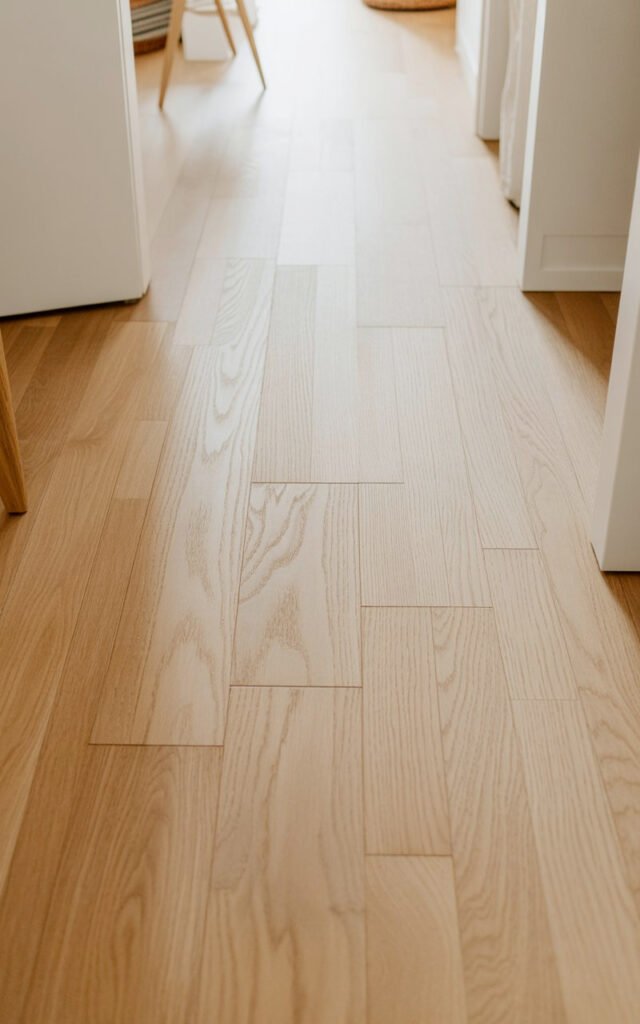
The light wood flooring in the inspiration image isn’t accidental—it works WITH the lighting to create the overall effect.
Best Flooring for Well-Lit Hallways
Light wood (like the inspo):
- Oak, ash, maple in natural or light stain
- Reflects light
- Feels warm and welcoming
- Shows lighting patterns beautifully
Luxury vinyl plank (LVP):
- Looks like wood but more durable
- Light colors work best
- Affordable
- Easy DIY install
Light tile:
- Cream, beige, light gray
- Highly reflective
- Durable
- Can feel cold without rugs
Polished concrete:
- Modern, industrial
- Very reflective
- Durable
- Pairs well with warm lighting to offset coolness
Flooring to Avoid in Lighting Design
Very dark floors:
- Absorb light
- Show every speck of dust
- Make spaces feel smaller
- Fight against your lighting investment
Busy patterns:
- Compete with lighting effects
- Create visual noise
- Detract from clean, minimal aesthetic
The Runner Rug Decision
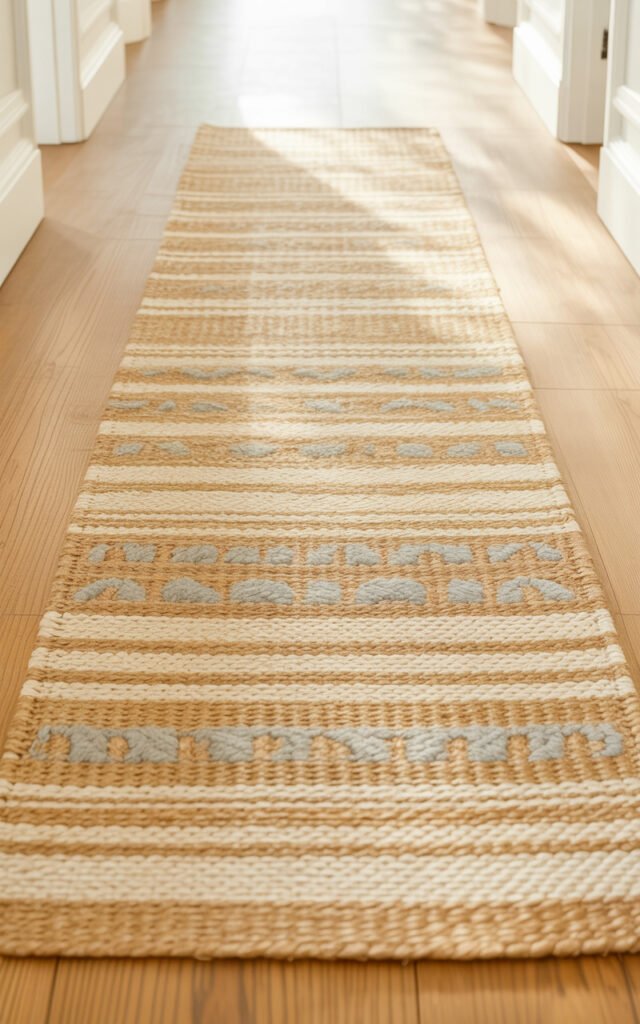
That simple, neutral runner in the inspiration image is the perfect finishing touch. Here’s how to choose yours.
Why Runner Rugs Work
Define the space: Create a path and purpose.
Add warmth: Soften hard flooring visually and physically.
Absorb sound: Reduce echo in hardwood hallways.
Protect floors: High-traffic area protection.
Add texture: Layer in another design element.
Choosing a Hallway Runner
Size:
- Should run most of the length of your hallway
- Leave 4-6 inches of floor showing on each end
- Leave 3-4 inches on each side
- Standard widths: 2’3″ or 2’6″
Material:
- Natural fibers (jute, sisal): Texture, durability, neutral
- Wool: Soft, durable, higher price
- Cotton: Soft, washable, affordable
- Synthetic: Durable, stain-resistant, affordable
Pattern and color:
- Neutrals work best (like the inspo)
- Subtle patterns or solid
- Light to medium tones
- Avoid dark (shows light-colored dirt and debris)
Backing:
- NON-SLIP is essential
- Rug pad underneath
- Nobody wants a sliding rug hazard
I have a natural jute runner that’s 2.5 feet wide and runs the length of my 12-foot hallway. It cost $90, adds warmth and texture, and the neutral color lets my lighting shine (literally).
Budget Breakdown: Hallway Lighting Transformation
Here’s how to allocate a $800 budget for a dramatic lighting upgrade:
Wall sconces (4): $280
- $70 each for quality brass cylindrical sconces
- Biggest visual impact
Electrician installation: $400
- $100 per sconce for installation
- (DIY if you’re capable and save this)
Dimmer switches: $60
- $30 each for quality dimmers
- Two separate zones (sconces + ceiling)
LED strip lighting: $50
- Above crown molding or baseboards
- DIY installation
Light bulbs: $40
- LED bulbs for all fixtures
- All same color temperature (2700K)
Total: ~$830
If budget is tighter:
- Start with 2 sconces instead of 4 ($140 + $200 install = $340)
- DIY the sconce installation if capable (saves $400)
- Skip LED strips initially (saves $50)
- Add more sconces over time
The key is that even TWO good sconces will transform your hallway more than any other single upgrade.
Common Hallway Lighting Mistakes
Let me save you from these errors:
Mistake #1: Only One Overhead Light
A single ceiling fixture creates harsh shadows and feels institutional. Always layer your lighting.
Mistake #2: Mixing Color Temperatures
Using 2700K in some fixtures and 3500K in others looks unprofessional and disjointed. Pick ONE and stick with it.
Mistake #3: Fixtures Too Low
Sconces placed below 60″ create glare. Hanging fixtures too low = head-bumping hazard.
Mistake #4: Inadequate Dimming
Not having dimmers means your lighting works for only one scenario. Dimmers are NON-NEGOTIABLE.
Mistake #5: Wrong Fixture Scale
Tiny sconces in a large hallway or huge fixtures in a narrow hallway both look wrong. Scale matters.
Mistake #6: Ignoring Direction of Light
All downlights creates harsh shadows. Mix up/down light (like sconces) with ambient ceiling light.
Mistake #7: Too Bright or Too Dim
Calculate lumens needed for your space and install accordingly. Too much light is sterile, too little is depressing.
Ideas for House: Making It Your Own
These ideas for house lighting work in various styles. Here’s how to adapt:
Modern/Contemporary
- Sleek geometric sconces in matte black or brass
- Recessed lighting only
- Minimal decoration
- Clean lines everywhere
Traditional/Classic
- Candle-style sconces in brass or bronze
- Crown molding with hidden LED strips
- Elegant flush-mount ceiling fixture
- Warmer color temperature (2700K)
Industrial/Urban
- Exposed bulb sconces
- Black metal fixtures
- Concrete or brick walls
- Edison-style LED bulbs
Scandinavian/Minimalist
- Simple cylindrical sconces (like the inspo)
- White walls
- Natural wood floors
- Minimal accessories
- Warm, cozy lighting
Transitional
- Mix of traditional and modern
- Brushed nickel or bronze fixtures
- Balanced between formal and casual
- Versatile, timeless
The fundamentals (layered lighting, proper color temperature, dimmers) work across ALL styles. Just choose fixtures that match your aesthetic.
Maintenance and Upkeep
Keep your beautifully lit hallway looking great:
Weekly
- Dust sconces and ceiling fixtures
- Clean light switches and dimmers
- Quick floor sweep/vacuum
Monthly
- Clean light bulbs (dust reduces light output)
- Check for burned-out bulbs and replace
- Wipe down walls if needed
Yearly
- Deep clean all fixtures
- Check that LED strips are still adhered
- Replace any dimming or burnt-out LEDs
- Touch up wall paint if scuffed
Good lighting is only good if it’s maintained. A dusty, half-burnt-out fixture ruins the whole effect.
Final Thoughts: Light Transforms Everything
Your hallway doesn’t have to be boring. It doesn’t have to be just a pass-through space you tolerate. With strategic, layered lighting, it can become one of the most beautiful, functional spaces in your entire home.
The inspiration image we’ve been working from proves it: warm white walls, light wood floors, brass sconces creating up-and-down light patterns, subtle recessed lighting providing even illumination, and thoughtful plants adding life. It’s hotel-level design, and you can absolutely recreate it.
Start with what will make the biggest impact in YOUR hallway. For most people, that’s adding wall sconces. Even just two sconces will dramatically change how your space feels. Then layer in the other elements—better ceiling fixture, LED strips, dimmers—as budget allows.
I transformed my hallway for under $500 (I did the sconce installation myself). Every single day when I come home, I love what I see. It feels welcoming, intentional, and so much more expensive than it actually was.
Your hallway is waiting for you to give it the attention it deserves. Good lighting isn’t optional—it’s transformative. Now go create a hallway that makes you smile every time you walk through it. 🙂